What Does Code P0172 Mean?
DTC P0172 signifies “Fuel Trim System Too Rich (Bank 1).” This code is registered by the Engine Control Module (ECM), also commonly referred to as the Powertrain Control Module (PCM), when its continuous monitoring of the fuel system indicates an excessively rich air-fuel mixture on Bank 1. Bank 1 refers to the side of the engine containing cylinder #1; on inline engines, this is typically the only bank. The ECM utilizes data from various sensors, including the Mass Air Flow (MAF) sensor, Manifold Absolute Pressure (MAP) sensor, Throttle Position Sensor (TPS), Engine Coolant Temperature (ECT) sensor, and primarily, the upstream oxygen sensor (O2S) for Bank 1. These inputs allow the ECM to calculate and adjust fuel delivery to maintain an optimal stoichiometric air-fuel ratio (14.7:1 for gasoline engines).
The ECM employs short-term fuel trim (STFT) for immediate, dynamic adjustments and long-term fuel trim (LTFT) for learned, baseline adjustments over time. When the upstream O2 sensor on Bank 1 consistently reports a rich condition (high voltage, typically above 0.8 volts for zirconium dioxide sensors), the ECM attempts to compensate by significantly reducing fuel delivery. If the LTFT for Bank 1 reaches or exceeds a negative threshold (often -20% to -25%) for a sustained period, indicating the ECM is constantly pulling fuel to correct a rich condition, the P0172 code is set, and the Malfunction Indicator Lamp (MIL) is illuminated. This indicates a fundamental issue within the fuel delivery or air measurement subsystem on Bank 1 that the ECM’s adaptive learning cannot fully overcome.
Common Symptoms
- Check Engine Light (CEL) Illumination: The most immediate and common symptom.
- Reduced Fuel Economy: Excessive fuel consumption due to the rich mixture.
- Rough Idle: Engine may run unevenly, particularly at idle, due to incomplete combustion.
- Engine Hesitation or Poor Acceleration: Over-fueling can impede efficient combustion, leading to sluggish performance.
- Misfires: Spark plugs can foul with carbon deposits from rich combustion, leading to misfires.
- Black Smoke from Exhaust: Visible indication of unburnt fuel, especially during acceleration.
- Strong Fuel Odor: Unburnt fuel passing through the exhaust system.
- Failed Emissions Test: High levels of unburnt hydrocarbons (HC) and carbon monoxide (CO).
- Sooty Spark Plugs or Exhaust Tips: Visual evidence of excessive richness.
What Causes the Code P0172?
- Faulty Mass Air Flow (MAF) Sensor: A MAF sensor that erroneously reports a higher-than-actual volume of air entering the engine will cause the ECM to inject too much fuel, leading to a rich condition. Conversely, a contaminated MAF sensor can sometimes misreport, leading to incorrect fuel calculations.
- Leaking Fuel Injectors: One or more fuel injectors on Bank 1 may be stuck open, partially open, or dripping, delivering excessive fuel into the combustion chambers.
- Excessive Fuel Pressure: A malfunctioning fuel pressure regulator or a failing fuel pump can cause the fuel rail pressure to be too high, forcing too much fuel through the injectors.
- Faulty Oxygen Sensor (O2S) (Upstream, Bank 1): Although less common, an O2 sensor can become contaminated or faulty and inaccurately report a lean condition, prompting the ECM to enrich the mixture excessively, resulting in an actual rich condition that it then struggles to correct. More often, it correctly reports the rich condition.
- Faulty Engine Coolant Temperature (ECT) Sensor: If the ECT sensor reports an erroneously low engine temperature, the ECM will command a richer mixture for cold-start enrichment, which then persists even after the engine has warmed up.
- Malfunctioning EVAP System Purge Valve: An EVAP purge valve stuck in the open position allows excessive fuel vapors from the charcoal canister to be drawn into the intake manifold, leading to an over-rich condition.
- Malfunctioning PCV (Positive Crankcase Ventilation) System: A PCV valve stuck open or a ruptured PCV hose can allow excessive oil vapor (hydrocarbons) into the intake, contributing to a rich mixture, or can be misdiagnosed as an air leak that causes other issues. For P0172, a PCV valve can contribute if it’s allowing excessive blow-by gases and unburnt fuel into the intake, or if it’s jammed open leading to a metering error.
- Restricted Air Intake: A severely clogged air filter or intake restriction can lead to reduced airflow while the MAF sensor might still report normal flow or the PCM compensates poorly, leading to an imbalance. However, this often presents as other performance issues first.
How to Diagnose and Troubleshoot
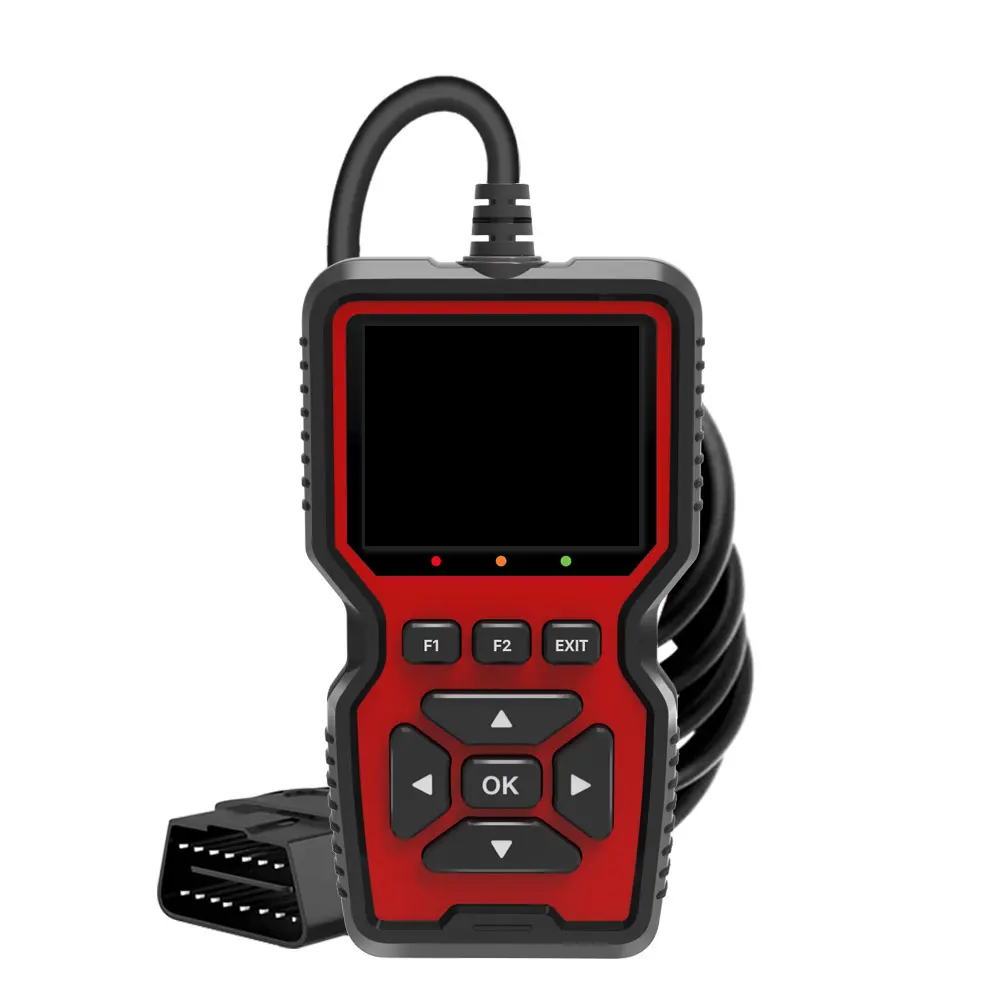
Diagnosing P0172 requires systematic evaluation using an OBD-II scanner, a digital multimeter (DMM), and potentially a mechanical fuel pressure gauge. Follow these steps:
- Initial Scan Tool Data Analysis:
- Connect an OBD-II scanner and record any freeze frame data associated with P0172.
- Monitor Short Term Fuel Trim (STFT) and Long Term Fuel Trim (LTFT) for Bank 1. Expect significantly negative LTFT values (e.g., -20% to -35%) and STFT fluctuating around a negative value as the ECM tries to correct.
- Observe the upstream O2 sensor voltage for Bank 1. It should consistently read high (above 0.8V) indicating a rich condition.
- Review Mass Air Flow (MAF) sensor readings (grams/second at idle, and at 2500 RPM). Compare these readings against manufacturer specifications or known good values for your specific vehicle. A MAF reading that is too high at idle (e.g., > 5-7 g/s for a typical 2.0L engine) can indicate a faulty sensor.
- Check Engine Coolant Temperature (ECT) sensor reading. Ensure it matches ambient temperature when cold and rises appropriately to thermostat opening temperature (typically 195-210°F or 90-100°C) when warm.
- Visual Inspection:
- Inspect the air filter for excessive dirt or obstruction.
- Examine the MAF sensor wiring and connector for damage or corrosion.
- Check the PCV valve and its associated hoses for cracks, disconnections, or a stuck-open valve.
- Inspect the EVAP purge valve and vacuum lines for proper connection and operation. Listen for a continuous hiss or feel for vacuum at the purge valve with the engine idling (it should not be open at idle).
- Look for any signs of external fuel leaks around the fuel rail or injectors.
- MAF Sensor Testing:
- With the engine running, observe fuel trims. Briefly disconnect the MAF sensor electrical connector. If the engine’s fuel trims (STFT/LTFT) revert closer to zero or become less negative, the MAF sensor is highly suspect. The ECM will revert to a default fuel map.
- Clean the MAF sensor element using only specialized MAF sensor cleaner. Re-evaluate fuel trims.
- Using a DMM, backprobe the MAF signal wire and measure voltage or frequency output (refer to service manual for specific signal type and expected values) at idle and 2500 RPM. Compare to specifications.
- Fuel System Pressure Test:
- Connect a mechanical fuel pressure gauge to the fuel rail.
- Start the engine and observe fuel pressure at idle. Compare to manufacturer specifications (typically 35-60 psi depending on vehicle).
- Monitor pressure as engine RPM is increased. If pressure is consistently above specification, suspect a faulty fuel pressure regulator (if applicable) or a failing fuel pump.
- Fuel Injector Testing:
- Perform an injector balance test (if available with your scanner) to identify a leaking injector by monitoring RPM drop per cylinder.
- Alternatively, with the engine off and fuel pressure built, listen for dripping from injectors using a stethoscope.
- A “clear flood” procedure (holding the accelerator pedal to the floor while cranking) can sometimes indicate if a cylinder is heavily rich/flooded.
- Check injector resistance with a DMM; compare to specifications to rule out shorted or open injectors (though these often cause misfire codes).
- O2 Sensor & ECT Sensor Verification:
- While monitoring the upstream O2 sensor for Bank 1, ensure it’s not “stuck” high (rich) due to internal failure, rather than actually sensing a rich condition. Introduce a known lean condition (e.g., small vacuum leak after MAF) or rich condition (e.g., propane enrichment) to see if the O2 sensor responds quickly and accurately.
- Verify ECT sensor accuracy by comparing its reading on the scanner to an actual thermometer placed in the coolant reservoir (when cold) or by measuring its resistance at various temperatures with a DMM and comparing to a resistance-temperature chart.
Recommended Repairs and Solutions
Once the root cause of P0172 has been identified through proper diagnosis, the following repairs are typically recommended:
- Replace Faulty MAF Sensor: If the MAF sensor’s readings are consistently out of specification or if cleaning did not resolve the issue, replacement with an OEM-quality sensor is necessary. Avoid cheap aftermarket sensors that may provide inaccurate data.
- Replace Leaking Fuel Injectors: If specific injectors are confirmed to be leaking, they must be replaced. It is often recommended to replace all injectors on the affected bank, or even all injectors, especially on high-mileage vehicles, to ensure even fuel delivery and prevent future issues. Always use new O-rings and seals.
- Replace Faulty Fuel Pressure Regulator: If fuel pressure is excessively high due to a failing regulator, replace it. Verify proper pressure after replacement.
- Replace Faulty Oxygen Sensor (Upstream, Bank 1): If the upstream O2 sensor itself is determined to be providing inaccurate readings despite accurate exhaust gas composition, it must be replaced. Contamination from silicone sealants or fuel additives can damage these sensors.
- Replace Faulty Engine Coolant Temperature (ECT) Sensor: If the ECT sensor is misreporting engine temperature, replace it. This is a relatively inexpensive repair.
- Repair EVAP or PCV System Issues: Replace a stuck-open EVAP purge valve, PCV valve, or any cracked/disconnected associated hoses. Ensure the PCV system is sealed and functioning correctly.
- Perform Fuel System Cleaning: While not a primary fix for severe issues, a professional fuel system cleaning or the use of a high-quality fuel system cleaner may help with minor carbon deposits or slightly clogged injectors if other major faults are ruled out.
Important Mechanics’ Tips: After any repair, clear the DTCs with your OBD-II scanner. Perform a thorough test drive, including varying engine speeds and loads, to ensure the repair has resolved the issue and allow all readiness monitors to set. Recheck fuel trims after the drive cycle; both STFT and LTFT for Bank 1 should be oscillating closer to 0% (typically within +/-10%) for optimal engine operation.