What Does Code P0173 Mean?
DTC P0173 signifies a Fuel Trim Malfunction on Bank 2. The Engine Control Module (ECM), also known as the Powertrain Control Module (PCM), continuously monitors the engine’s air/fuel ratio using input from the upstream (pre-catalytic converter) oxygen sensors (O2S) and the Mass Air Flow (MAF) sensor. To maintain an optimal stoichiometric air/fuel ratio (approximately 14.7:1 for gasoline engines), the ECM employs a strategy called fuel trim, making adjustments to the fuel injector pulse width.
Fuel trim adjustments occur in two forms: Short Term Fuel Trim (STFT), which are immediate, dynamic corrections, and Long Term Fuel Trim (LTFT), which are learned, cumulative adjustments stored over time to compensate for systematic deviations. When the ECM determines that the STFT and LTFT values for Bank 2 have consistently exceeded or fallen below a predefined calibration threshold – indicating an inability to effectively compensate for either a persistently lean (too much air, not enough fuel) or rich (too much fuel, not enough air) condition – it sets the P0173 code. Unlike P0171/P0174 (System Too Lean) or P0172/P0175 (System Too Rich) which specify the direction of the deviation, P0173 is a generic “malfunction” code, indicating a broad issue where the fuel trim system on Bank 2 is unable to stabilize within its operational parameters, irrespective of the specific lean/rich bias, or oscillating wildly outside normal ranges. Bank 2 refers to the cylinder bank that does not contain cylinder #1.
Common Symptoms
- Illumination of the Malfunction Indicator Lamp (MIL), commonly known as the Check Engine Light.
- Reduced Engine Performance: Noticeable lack of power, hesitation during acceleration, or misfires.
- Rough Idling: The engine may run unevenly or stall, especially at low RPMs.
- Decreased Fuel Economy: Due to inefficient fuel combustion, whether too lean or too rich.
- Unusual Odors from Exhaust: A strong fuel smell (if excessively rich) or sulfurous odor (due to catalytic converter strain).
- Difficulty Starting: Especially when the engine is cold or hot.
What Causes the Code P0173?
- Vacuum Leaks on Bank 2: Unmetered air entering the intake system, leading to a lean condition. Common sources include cracked vacuum hoses, intake manifold gasket leaks, PCV system leaks, or a leaking brake booster.
- Faulty Mass Air Flow (MAF) Sensor: Incorrect reporting of incoming air volume can cause the ECM to miscalculate fuel delivery. If the MAF sensor under-reports airflow, the ECM will command less fuel, leading to a lean condition. If it over-reports, it commands more fuel, resulting in a rich condition.
- Malfunctioning Upstream Oxygen Sensor (Bank 2, Sensor 1): A slow-responding, biased, or electrically faulty O2 sensor on Bank 2 can provide inaccurate feedback to the ECM, causing it to make incorrect fuel trim adjustments.
- Exhaust Leaks Before Upstream O2 Sensor (Bank 2): Allows ambient air to be drawn into the exhaust stream, falsely enriching the O2 sensor’s reading, causing the ECM to trim fuel lean.
- Fuel Delivery Issues:
- Low Fuel Pressure: Caused by a weak fuel pump, clogged fuel filter, or faulty fuel pressure regulator, leading to a lean condition.
- Leaking or Clogged Fuel Injectors (Bank 2): Leaking injectors cause a rich condition, while clogged injectors cause a lean condition.
- Positive Crankcase Ventilation (PCV) System Malfunction: A stuck-open PCV valve can create a vacuum leak (lean condition), while a clogged system can lead to excessive crankcase pressure and potential issues.
- Engine Mechanical Problems: Less common, but issues like low compression on one or more cylinders in Bank 2, or valve train problems, can affect combustion efficiency and throw off fuel trims.
- ECM/PCM Software Glitch or Internal Failure: Rare, but possible, where the control module itself is faulty or requires a software update.
How to Diagnose and Troubleshoot
A systematic diagnostic approach is crucial for P0173:
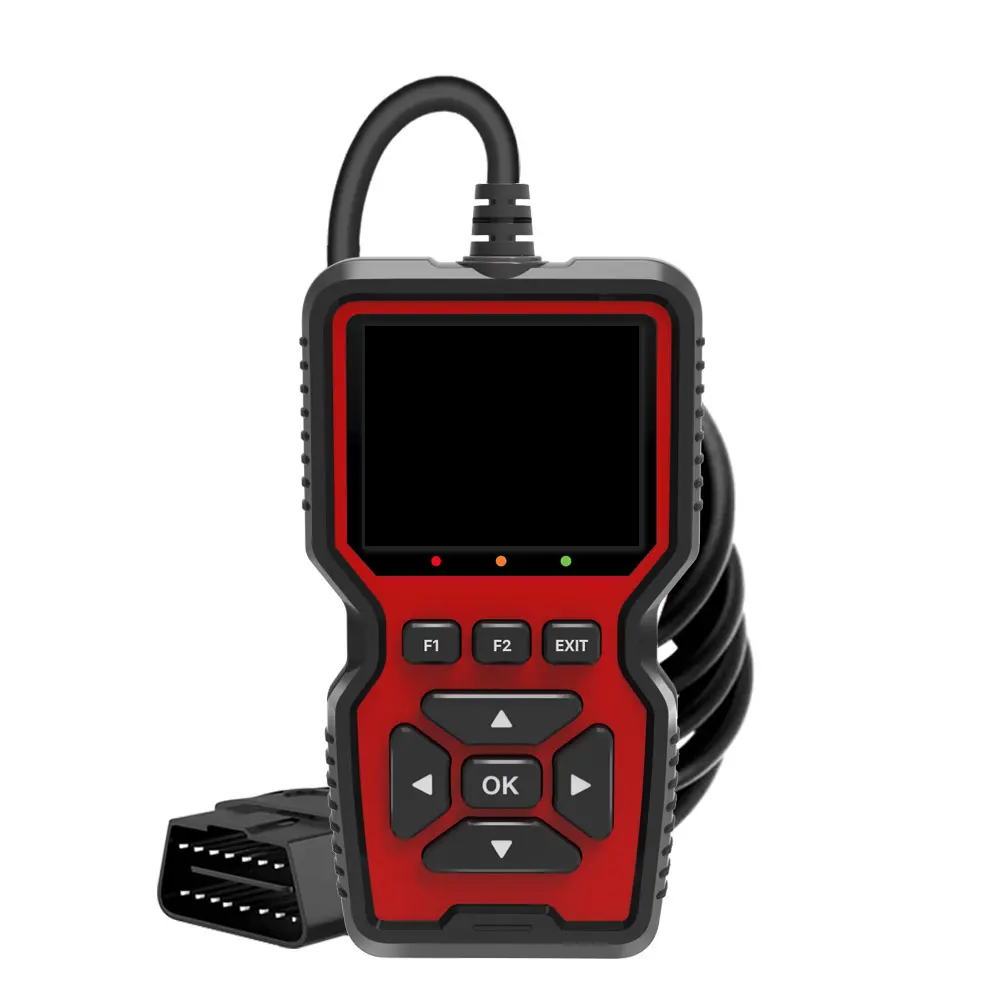
- Retrieve Freeze Frame Data: Connect an OBD-II scanner and record the conditions (RPM, engine load, temperature, fuel trims) under which the P0173 code was set. This provides invaluable context.
- Visual Inspection:
- Thoroughly inspect all vacuum lines, PCV hoses, intake manifold gaskets, and the brake booster for cracks, disconnections, or signs of leaks on Bank 2.
- Examine the exhaust system upstream of the Bank 2 Sensor 1 O2 sensor for any leaks (e.g., rusted pipes, loose connections).
- Check wiring harnesses and connectors for the Bank 2 Sensor 1 O2 sensor and fuel injectors for damage, corrosion, or poor connections.
- Live Data Analysis (OBD-II Scanner):
- Fuel Trims (STFT B2 and LTFT B2): Monitor these values closely. If they are consistently positive (e.g., +15% to +25%), the ECM is adding fuel, indicating a lean condition. If consistently negative (e.g., -15% to -25%), the ECM is removing fuel, indicating a rich condition. P0173 suggests these values are outside normal acceptable ranges (typically +/-10%).
- Upstream O2 Sensor (B2S1) Voltage: Once in closed-loop operation, this sensor should rapidly oscillate between approximately 0.1V (lean) and 0.9V (rich). A slow response, flat line, or reading consistently high or low indicates a faulty sensor or an extreme lean/rich condition.
- MAF Sensor Reading: Check the Grams/Second (g/s) or Hertz (Hz) reading at idle and at 2500 RPM. Compare to specifications or known good values for your vehicle. A dirty or faulty MAF can cause incorrect air mass calculations.
- Engine Coolant Temperature (ECT) Sensor: Ensure it provides accurate readings. An inaccurate ECT can affect cold-start fuel enrichment.
- Vacuum Leak Testing:
- The most effective method is using a smoke machine to inject smoke into the intake system. Smoke escaping from any area identifies a leak.
- Alternatively, use an unlit propane torch or a can of carb cleaner to spray around suspected vacuum leak areas (e.g., intake manifold gaskets, vacuum hoses). Listen for changes in engine RPM, which indicates the engine is drawing in the test gas/liquid.
- Fuel System Integrity Test:
- Connect a fuel pressure gauge to the fuel rail on Bank 2. Verify fuel pressure against manufacturer specifications at idle, under load, and after the engine is turned off (key-off pressure retention). Low pressure indicates a weak pump, restricted filter, or faulty regulator. High pressure indicates a restricted return line (if applicable).
- Perform an injector balance test (if scanner supports it) or physically check the resistance of each injector on Bank 2 with a Digital Multimeter (DMM). Listen for clicking sounds with a mechanic’s stethoscope to confirm injector operation.
- O2 Sensor Performance Test: If live data suggests an issue with B2S1, back-probe the sensor’s signal wire with a DMM to confirm voltage readings independently of the scanner. Check the resistance and voltage supply to the O2 sensor’s heater circuit.
Recommended Repairs and Solutions
Once the root cause is identified through thorough diagnosis, the appropriate repair can be made:
- Repair Vacuum Leaks: Replace all cracked or brittle vacuum lines, intake manifold gaskets, PCV valve, or the brake booster if found to be leaking. This is a very common solution for lean conditions.
- Clean or Replace MAF Sensor: Start by cleaning the MAF sensor element carefully with a specialized MAF sensor cleaner. If cleaning does not restore proper function, replacement with an OEM-quality sensor is recommended.
- Replace Upstream Oxygen Sensor (Bank 2, Sensor 1): If diagnostic tests confirm the O2 sensor is slow, lazy, or giving inaccurate readings, replace it. Always use high-quality, OEM-specified sensors.
- Repair Exhaust Leaks: Weld or replace any sections of the exhaust system exhibiting leaks upstream of the Bank 2 Sensor 1.
- Address Fuel System Components: Depending on the diagnosis, replace the fuel filter, fuel pump, fuel pressure regulator, or individual faulty fuel injectors on Bank 2. If replacing injectors, consider replacing them as a set for that bank for balanced performance.
- Service PCV System: Replace a stuck PCV valve or clear any clogged PCV passages and hoses.
- ECM/PCM Software Update: In rare cases, especially after extensive repairs that haven’t fully resolved fuel trim issues, consult a dealership for potential ECM software updates or re-flashes that may address known calibration issues.
Mechanic’s Tip: After performing any repairs, always clear the DTCs from the ECM. Then, perform a comprehensive drive cycle under varying conditions (city, highway, idle) to allow the ECM to relearn its fuel trims. Re-check live data to ensure that the STFT and LTFT values on Bank 2 have normalized to within ±5% (ideally 0% ± 3%) under various operating conditions. This confirms the repair was successful and prevents recurrence of P0173.