
Since 2014, the company’s factories have been producing the 3.0-liter Audi CREC 3.0 TFSI turbo engine, which powers popular German models like the A6, A7, and Q7 crossover. This unit is part of the EA837 EVO series and has combined fuel injection.
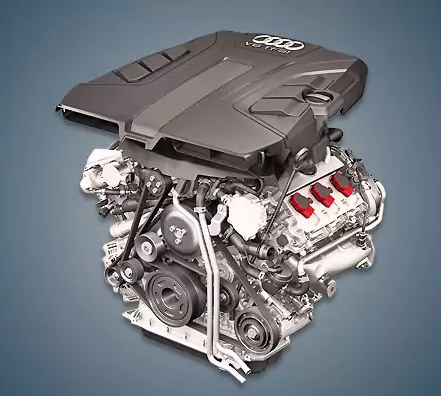
The EA837 series includes: BDW, AUK, BDX, CAJA, CGWA, CGWB, CREC.
Specifications
| Production years | since 2014 |
| Displacement, cc | 2995 |
| Fuel system | MPI + FSI |
| Power output, hp | 333 |
| Torque output, Nm | 440 |
| Cylinder block | aluminum V6 |
| Block head | aluminum 24v |
| Cylinder bore, mm | 84.5 |
| Piston stroke, mm | 89 |
| Compression ratio | 10.8 |
| Features | DOHC |
| Hydraulic lifters | yes |
| Timing drive | chain |
| Phase regulator | on all shafts |
| Turbocharging | compressor |
| Recommended engine oil | 5W-30 |
| Engine oil capacity, liter | 6.8 |
| Fuel type | petrol |
| Euro standards | EURO 6 |
| Fuel consumption, L/100 km (for Audi Q7 2016) — city — highway — combined |
9.4 6.8 7.7 |
| Engine lifespan, km | ~250 000 |
The engine was installed on:
- Audi A6 C7 (4G) in 2014 – 2017;
- Audi A7 C7 (4G) in 2014 – 2016;
- Audi Q7 2 (4M) since 2015.
Disadvantages of the Audi CREC engine
Scuffing was virtually eliminated with the use of new cast-iron sleeves.
Catalysts made from inferior fuel, however, decompose equally quickly.
The most common cause of severe timing chain crackling is hydraulic tensioner wear.
The unpredictable high-pressure fuel pump frequently fails under challenging operating conditions.