
Overview & Design Features
The Chery 481FC is a significant gasoline internal combustion engine developed by the Chinese automotive manufacturer Chery Automobile Co., Ltd. Primarily a 2.0-liter (1971 cc) naturally aspirated inline four-cylinder unit, this engine represented a crucial step in Chery’s initial independent powertrain development phase. It played a pivotal role in establishing the brand’s presence in various market segments, particularly during the mid-2000s to early 2010s, by offering a balance of performance and cost-effectiveness for its target vehicles. Its robust design and widespread application underscore its historical importance within Chery’s engine lineage, paving the way for subsequent, more advanced powertrain offerings.
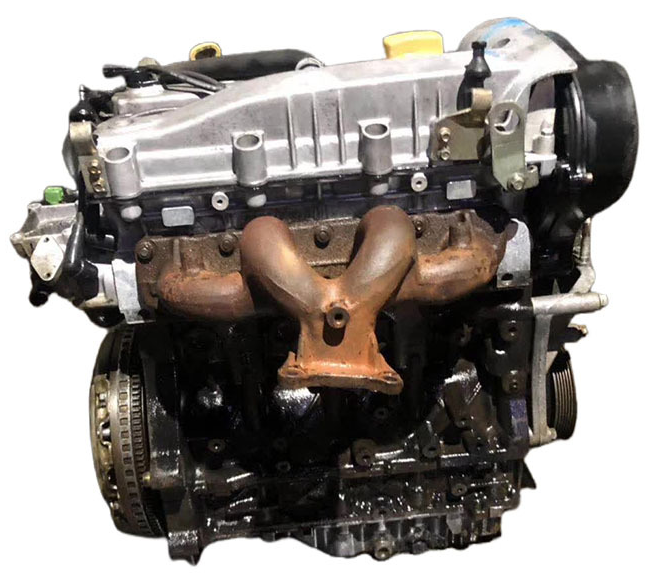
Engineered for reliability and efficiency within its operational parameters, the 481FC features a dual overhead camshaft (DOHC) 16-valve valvetrain, promoting efficient airflow and combustion. The cylinder block is typically constructed from cast iron for durability, while the cylinder head is often an aluminum alloy, contributing to overall weight reduction and heat dissipation. Fuel delivery is managed by a Multi-Point Fuel Injection (MPI) system, a common and proven technology of its era, which precisely meters fuel into the intake runners before the combustion chambers. This combination of design elements ensured a relatively straightforward and maintainable powerplant suitable for mass-market applications.
The Chery 481FC engine found extensive deployment across a range of Chery’s popular models. Key vehicles equipped with this engine include the Chery A5 (also known as Fora or Eastar in some markets) from approximately 2006 to 2010, the first-generation Chery Tiggo 3 (T11) SUV from 2005 onwards, and the Chery Cowin 3. It also powered certain variants of the Chery Fulwin 2 and Riich G3, serving as a workhorse engine that underlined the versatility and strategic importance of its design within the company’s product portfolio for over half a decade.
Technical Specifications
| Specification | Value |
|---|---|
| Displacement (cc) | 1971 |
| Max Power (hp (kW) @ RPM) | 129 hp (95 kW) @ 5750 RPM |
| Max Torque (Nm (kg*m) @ RPM) | 170 Nm (17.3 kg*m) @ 4000 RPM |
| Fuel Type | Unleaded Gasoline (RON 93/95 recommended) |
| Fuel Consumption (l/100 km) | 7.5 – 9.0 (Combined Cycle, varies by vehicle) |
| Engine Type | Inline 4-cylinder, Naturally Aspirated |
| Compression Ratio | 10.0:1 |
| Cylinder Bore (mm) | 83 |
| Piston Stroke (mm) | 91 |
| Valvetrain | DOHC (Dual Overhead Camshaft) |
| Valves per Cylinder | 4 (16 valves total) |
| Additional Info | Multi-Point Fuel Injection (MPI) |
Common Problems & Reliability
The Chery 481FC engine, while generally robust for its class, exhibits a few common issues typical of engines from its production era. One frequent complaint involves the ignition coil failures, which can lead to misfires, reduced power, and an illuminated check engine light. This often manifests as rough idling or hesitation during acceleration. Another area of concern can be oil leaks, particularly from the valve cover gasket or the front timing cover, which, if left unaddressed, can lead to oil consumption and potential damage to other components. Additionally, issues with certain sensors, such as the oxygen sensor or crankshaft position sensor, are occasionally reported, impacting fuel economy or engine starting.
Despite these potential drawbacks, the 481FC is largely considered a reliable engine, capable of an expected service life of 200,000 to 250,000 kilometers before requiring a major overhaul, provided it has been subjected to consistent and proper maintenance throughout its operational life. Component failures tend to be manageable and repairable, rather than catastrophic.
Maintenance Tips & Service Schedule
Adhering to a stringent maintenance schedule is crucial for maximizing the longevity and performance of the Chery 481FC engine. Engine oil and filter changes should be performed every 7,500 to 10,000 kilometers or every six months, whichever comes first. A high-quality semi-synthetic or full-synthetic engine oil with a viscosity of 5W-30 or 5W-40, meeting API SN or higher standards, is recommended. Spark plugs typically require replacement every 30,000 to 40,000 kilometers to ensure efficient combustion and prevent misfires.
The 481FC utilizes a timing chain, which is generally designed for the engine’s lifespan and does not require routine replacement like a timing belt. However, inspection for excessive slack or noise is advisable after 150,000 kilometers. Coolant flushes and replacements should occur every 40,000 to 60,000 kilometers or every 2-3 years, using an ethylene glycol-based coolant specified for aluminum engines. Air filters and fuel filters should be inspected at every service and replaced as per manufacturer guidelines, typically every 15,000 to 30,000 kilometers, to maintain optimal fuel efficiency and engine health.
Conclusion
The Chery 481FC engine represents a foundational and generally dependable powertrain for Chery vehicles from its era. Its straightforward design, proven MPI technology, and the use of common materials contribute to its overall reliability and ease of maintenance. For a used vehicle buyer, a car equipped with the 481FC can be considered a safe and economical choice, provided the vehicle has a documented history of consistent maintenance. While potential buyers should be aware of common issues such as ignition coil and sensor failures, these are typically minor and repairable. With diligent adherence to recommended service intervals and prompt addressing of any emerging concerns, the 481FC engine can continue to provide many kilometers of reliable service, making it a viable option for those seeking an affordable and functional pre-owned vehicle.