
Overview & Design Features
The Cadillac Z28NET is a 2.0-liter (1998 cubic centimeters) turbocharged inline four-cylinder engine, part of General Motors’ Ecotec family of engines. Specifically designated for Cadillac applications, it represents a potent and efficient powertrain option for its era. Originating from the L850 engine architecture, the Z28NET demonstrates GM’s commitment to delivering competitive performance and economy through forced induction. While its Cadillac nomenclature suggests exclusivity, its core design shares lineage with engines found in Saab and Opel vehicles, highlighting its robust, multi-platform engineering.
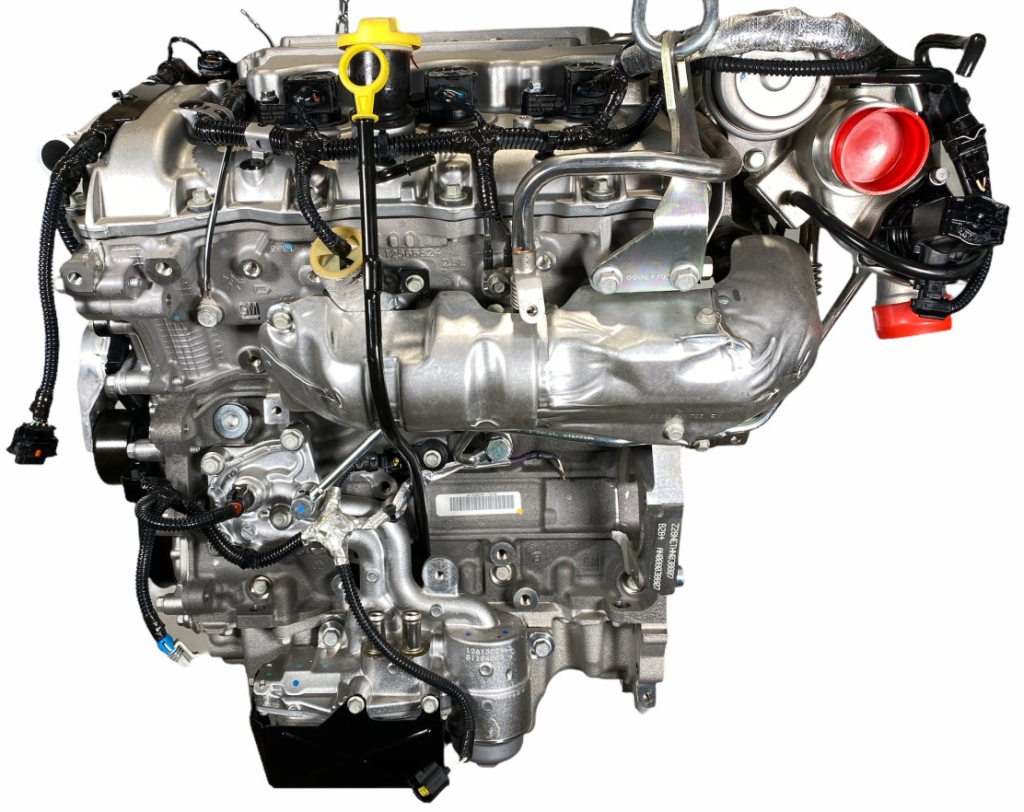
Constructed primarily from lightweight aluminum for both its cylinder block and cylinder head, the Z28NET emphasizes weight reduction and thermal efficiency. It features a dual overhead camshaft (DOHC) valvetrain with four valves per cylinder, incorporating variable valve timing (VVT) on both the intake and exhaust camshafts to optimize performance across the RPM range and enhance fuel economy. Fuel delivery is managed by a multi-point electronic fuel injection (MPEFI) system, a proven technology known for reliable fuel atomization. Forced induction is provided by a single turbocharger, significantly boosting power and torque output over naturally aspirated counterparts.
The Cadillac Z28NET engine was primarily deployed in the Cadillac BLS, specifically the 2.0T models produced from 2006 to 2009. Outside the Cadillac brand, closely related variants of this LDK/A20NFT engine family were also utilized in the Saab 9-3 (2003-2011) and Saab 9-5 (2004-2009 in certain markets), as well as various Opel/Vauxhall models such as the Vectra C and Signum, often under different internal codes but sharing the fundamental architecture and design principles.
Technical Specifications
| Displacement (cc) | 1998 |
| Max Power (hp (kW) @ RPM) | 210 hp (154 kW) @ 5500 RPM |
| Max Torque (Nm (kg*m) @ RPM) | 300 Nm (30.6 kg*m) @ 2500 RPM |
| Fuel Type | Premium Unleaded (RON 95/98 recommended) |
| Fuel Consumption (l/100 km) | 8.5 – 10.0 (Combined, varies by vehicle/conditions) |
| Engine Type | Inline 4-cylinder, Turbocharged, MPEFI |
| Compression Ratio | 9.5:1 |
| Cylinder Bore (mm) | 86 |
| Piston Stroke (mm) | 86 |
| Valvetrain | DOHC, 16-valve, Variable Valve Timing (VVT) |
| Valves per Cylinder | 4 |
| Additional Info | Cast aluminum cylinder block and head, single turbocharger, electronic throttle control |
Common Problems & Reliability
The Cadillac Z28NET, while generally robust, exhibits a few identifiable common issues over its lifespan. One prevalent concern relates to the Positive Crankcase Ventilation (PCV) system, where diaphragm failure can lead to increased oil consumption, rough idling, or even turbocharger damage due to excessive crankcase vacuum or pressure. Another frequent problem involves ignition coil failures, which manifest as misfires and can affect engine smoothness and power delivery. Furthermore, at higher mileages, turbocharger oil seals can degrade, contributing to increased oil consumption and visible smoke from the exhaust.
While the timing chain is generally durable, neglect of oil changes or prolonged use of unsuitable oil can accelerate wear on the chain and tensioners, potentially necessitating replacement beyond 150,000 kilometers. With diligent maintenance, including regular oil changes with specified lubricants and addressing known issues promptly, the Z28NET engine can reliably achieve service lives exceeding 200,000 to 250,000 kilometers before requiring major internal overhaul.
Maintenance Tips & Service Schedule
Optimal longevity and performance from the Z28NET engine are contingent on adherence to a strict maintenance regimen. Engine oil and filter changes are critical, recommended every 10,000 kilometers or 6 months, whichever comes first. Use a high-quality synthetic engine oil, typically a 5W-30 or 0W-40 viscosity, meeting GM Dexos 2 or equivalent specifications. This is particularly important for turbocharged engines.
Spark plugs should be inspected and replaced every 60,000 to 80,000 kilometers, using specified iridium or platinum plugs. The engine air filter requires replacement annually or every 20,000 kilometers to ensure proper airflow and filtration. The coolant system should be flushed and refilled with suitable long-life coolant every 5 years or 100,000 kilometers. Routine inspection of the PCV system and vacuum pump for leaks is also advised. While the timing chain is designed for the engine’s life, it is prudent to have its tensioners and guides inspected at major service intervals (e.g., every 100,000 kilometers) to preempt potential issues.
Conclusion
The Cadillac Z28NET engine, when properly maintained, represents a generally reliable and capable powertrain for a used vehicle buyer. Its turbocharged performance offers a good balance of power and efficiency, making it an engaging choice. Prospective buyers should prioritize vehicles with a comprehensive service history, particularly verifying consistent oil changes and addressing known issues like PCV system integrity and turbocharger health. A pre-purchase inspection by a qualified mechanic, focusing on these specific areas, can help ensure a confident acquisition. With proactive maintenance, the Z28NET can deliver many more years of satisfactory operation.