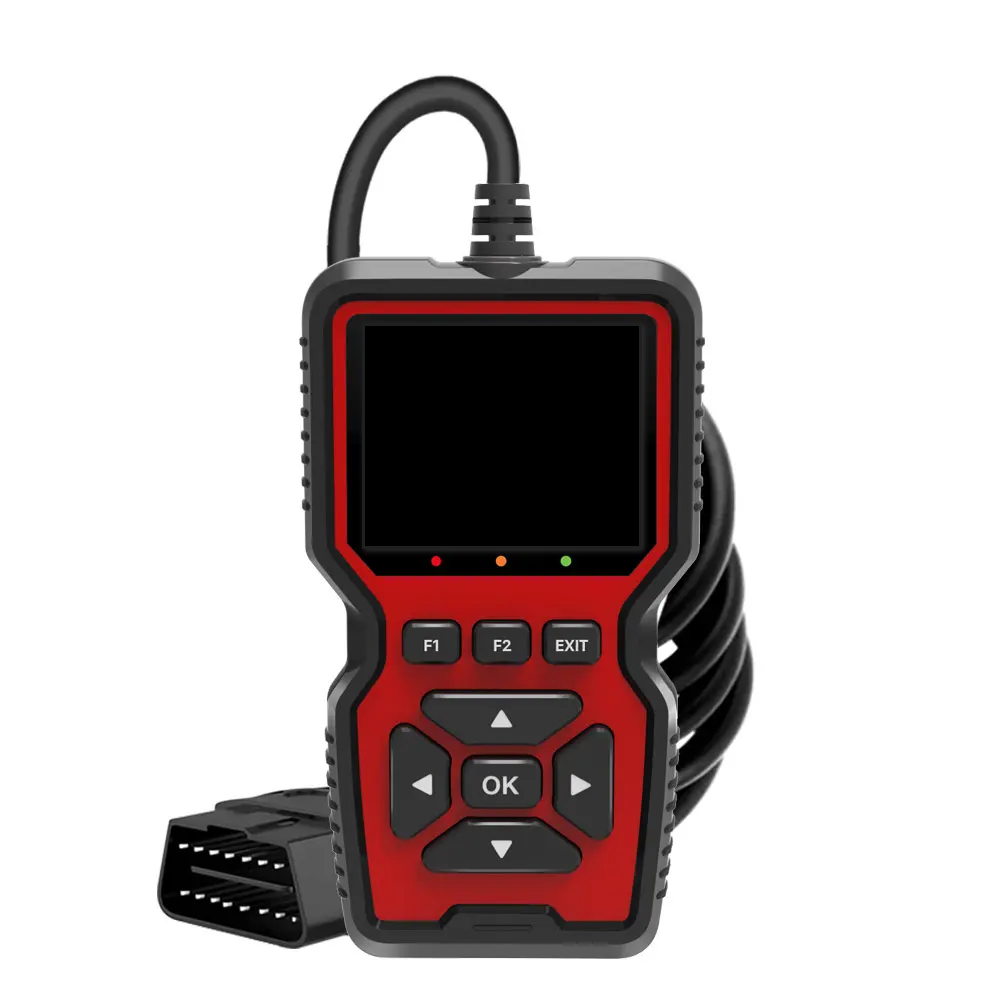
What Does Code B1430 Mean?
DTC B1430 indicates a malfunction within the seat belt buckle switch circuit, specifically detecting a short to ground. This code is typically set by the Restraint Control Module (RCM) or Airbag Control Module (ACM), which are responsible for monitoring the Supplemental Restraint System (SRS) components. While the original brief mentions the Engine Control Module (ECM/PCM), for B-codes concerning safety systems like seat belts and airbags, the primary diagnostic module is the RCM/ACM, which may then communicate relevant fault data to the ECM/PCM or other network modules. The seat belt buckle switch is a critical input for the RCM/ACM, providing information on whether the occupant’s seat belt is fastened. This data is used for various functions including controlling the seat belt reminder chime/light, determining airbag deployment strategy, and potentially pre-tensioner activation. A short to ground in this circuit means that the signal wire, which should normally fluctuate in voltage or resistance based on the switch’s state (buckled/unbuckled), is inadvertently making continuous contact with a vehicle ground. This causes the RCM/ACM to receive an implausible or constant “buckled” signal, regardless of the actual state, or an electrical fault condition, leading the module to register a circuit fault and set code B1430.
Common Symptoms
- SRS Warning Light Illuminated: The most common and critical symptom, indicating a fault within the Supplemental Restraint System.
- Seat Belt Reminder Chime/Light Malfunction: The reminder may not activate when the seat belt is unbuckled, or it may remain on/off incorrectly even when the belt state changes.
- Airbag System Disabled: In some cases, the RCM/ACM may disable parts of or the entire airbag system when a critical input fault like this is detected, to prevent unintended deployment or ensure system integrity.
What Causes the Code B1430?
- Faulty Seat Belt Buckle Switch: An internal electrical short circuit within the switch itself, causing it to continuously short to its internal ground or a ground plane.
- Damaged Wiring Harness: The wiring leading to or from the seat belt buckle switch is physically chafed, pinched, or otherwise damaged, causing direct contact between the signal wire and a grounded metal component of the vehicle.
- Corroded Connectors: Water ingress or exposure to elements can cause corrosion within the seat belt buckle switch connector or the wiring harness connectors leading to the RCM/ACM, creating an unintended low-resistance path to ground.
- Faulty Restraint Control Module (RCM/ACM): Although less common, an internal malfunction within the RCM/ACM could erroneously detect a short to ground or cause one internally, setting the code.
How to Diagnose and Troubleshoot
Diagnosis of DTC B1430 requires careful electrical testing and adherence to safety protocols for SRS components.
- Safety First: Before beginning any work on SRS components, always disconnect the vehicle’s negative battery terminal and wait at least 5-10 minutes to allow the SRS capacitor to discharge. This prevents accidental airbag deployment or pre-tensioner activation.
- Visual Inspection:
- Inspect the seat belt buckle assembly for any physical damage.
- Carefully trace the wiring harness from the seat belt buckle switch, underneath the seat, and along its path for any signs of chafing, pinching, cuts, or corrosion, particularly where it passes through seat frames or chassis components.
- Check the electrical connector at the seat belt buckle switch and any in-line connectors for corrosion, loose pins, or damage.
- OBD-II Scanner with SRS Capabilities:
- Connect an advanced diagnostic scanner capable of communicating with the RCM/ACM.
- Access live data for the seat belt buckle switch. Observe the switch status (e.g., “buckled” or “unbuckled”) while manually buckling and unbuckling the seat belt. A short to ground might cause the scanner to always read “buckled” or show an “invalid” state.
- Digital Multimeter (DMM) Testing:
- Isolate the Circuit: Disconnect the electrical connector at the seat belt buckle switch. This isolates the switch from the wiring harness leading to the RCM/ACM.
- Test for Short in Wiring Harness: With the seat belt buckle switch disconnected, use a DMM to measure resistance between the signal wire terminal in the harness connector (refer to vehicle-specific wiring diagrams) and a known good chassis ground. If the resistance is very low (near 0 ohms), there is a short to ground in the wiring harness. Flex the harness gently while monitoring the DMM to check for intermittent shorts.
- Test the Seat Belt Buckle Switch: With the switch disconnected from the vehicle harness, measure resistance across the switch terminals (again, refer to wiring diagrams for correct pins).
- If it’s a Normally Open (NO) switch, it should show infinite resistance (open circuit) when unbuckled and very low resistance (near 0 ohms) when buckled. A shorted NO switch might show low resistance consistently.
- If it’s a Normally Closed (NC) switch, it should show very low resistance when unbuckled and infinite resistance when buckled. A shorted NC switch might show low resistance to ground consistently or between its terminals when it should be open.
- Also, measure resistance between each switch terminal and the metallic body of the buckle. Any low resistance here indicates an internal short to ground within the switch.
- Voltage Drop Test: If no direct short is found but symptoms persist, perform a voltage drop test on the power and ground circuits of the switch (if applicable) while the system is powered (reconnect battery carefully, but only after all other safety checks). High voltage drop indicates excessive resistance or poor connection.
- RCM/ACM Verification: If all wiring and switch tests confirm integrity, and no short is found, the RCM/ACM itself might be faulty. This is a rare occurrence for a single B1430 code and should only be considered after thoroughly ruling out all other possibilities.
Recommended Repairs and Solutions
Based on the diagnostic findings, the following repairs are typically recommended:
- Repair or Replace Damaged Wiring: If the visual inspection or DMM testing identifies a shorted wire in the harness, the damaged section must be repaired or replaced. Use appropriate automotive-grade wire, heat shrink tubing, and connectors to ensure a durable and secure repair. Avoid quick fixes like electrical tape alone, especially in safety-critical circuits.
- Replace the Seat Belt Buckle Assembly: If the seat belt buckle switch is found to be faulty (internally shorted or not operating correctly), the entire seat belt buckle assembly usually needs to be replaced as the switch is integrated. Ensure the replacement part is OEM quality or equivalent and follow manufacturer’s torque specifications for mounting bolts.
- Clean and Secure Connectors: If corrosion or loose pins are identified in the connectors, use an electrical contact cleaner to thoroughly clean the terminals. Re-pin any loose terminals if possible, or replace the connector housing. Ensure all connectors are fully seated and latched.
- RCM/ACM Replacement: If, and only if, all wiring and switch components have been thoroughly tested and verified to be operating correctly, and the code B1430 persists, the RCM/ACM may require replacement. This is a complex and costly repair, often requiring specialized programming or calibration by a dealership or a shop with advanced diagnostic tools. This should be a last resort.
- Clear Codes and Verify: After any repair, clear the DTC B1430 using an OBD-II scanner. Perform several key cycles and, if safe, a test drive to confirm the SRS warning light extinguishes and the code does not return. Verify proper function of the seat belt reminder system.