What Does Code B1443 Mean?
DTC B1443 signifies an “Open Circuit” condition detected within the door handle switch circuit. This code is typically set by the Body Control Module (BCM), Door Control Module (DCM), or a similar intelligent control unit responsible for passive entry and door security functions, rather than the Powertrain Control Module (PCM/ECM). The BCM monitors the electrical continuity and resistance of the door handle switch circuit, which is often part of a capacitive or momentary switch system used for keyless entry (also known as “comfort access” or “passive entry/go”). When the BCM detects an unexpectedly high resistance or a complete lack of continuity in this circuit, indicating a broken wire, disconnected connector, or an internal switch failure, it interprets this as an “open circuit” fault and stores the B1443 code. This directly impacts the vehicle’s ability to respond to a user’s attempt to unlock the door by simply touching or grasping the handle, as the module is not receiving the expected electrical signal from the switch.
Common Symptoms
- Inoperable Passive Entry/Keyless Unlocking: The most prominent symptom is the inability to unlock the specific door by touching or grasping the handle, while other doors or the remote key fob may still function normally.
- No Interior Light Activation: If equipped, the interior lights may not illuminate upon grasping the affected door handle, as the vehicle’s system does not detect the “request to enter.”
- Intermittent Door Lock/Unlock Functionality: In some cases, the issue may be intermittent, with the passive entry system working sometimes but failing at other times.
- Dashboard Warning Lights: While less common for a B-code, a general “Keyless Entry System Malfunction” or “Security System Service” message might appear on the instrument cluster.
- Reduced Security System Response: The vehicle’s security system might behave unexpectedly or log additional faults related to the door monitoring.
What Causes the Code B1443?
- Faulty Door Handle Switch: The most common cause is an internal failure of the door handle switch itself. These switches are exposed to the elements and can fail due to moisture ingress, corrosion, or mechanical wear from repeated use.
- Damaged Wiring Harness: An open circuit can result from a broken, frayed, or corroded wire within the door handle wiring harness. This is particularly common in areas where the wiring flexes, such as in the door jamb boot between the door and the vehicle body.
- Corroded or Loose Electrical Connectors: Poor connection at the door handle switch, the door control module, or the BCM due to corrosion, improper seating, or damaged pins can lead to an open circuit.
- Faulty Door Control Module (DCM): While less frequent, an internal malfunction within the Door Control Module (if present) or the Body Control Module could result in an incorrect interpretation of the switch signal or a failure to supply necessary power/ground, leading to a false B1443 code.
- Physical Damage to the Door Handle Assembly: Impact damage or improper installation/repair of the door handle can compromise the integrity of the integrated switch or its wiring.
How to Diagnose and Troubleshoot
Diagnosing B1443 requires a systematic approach, often involving a digital multimeter (DMM) and a capable OBD-II scanner:
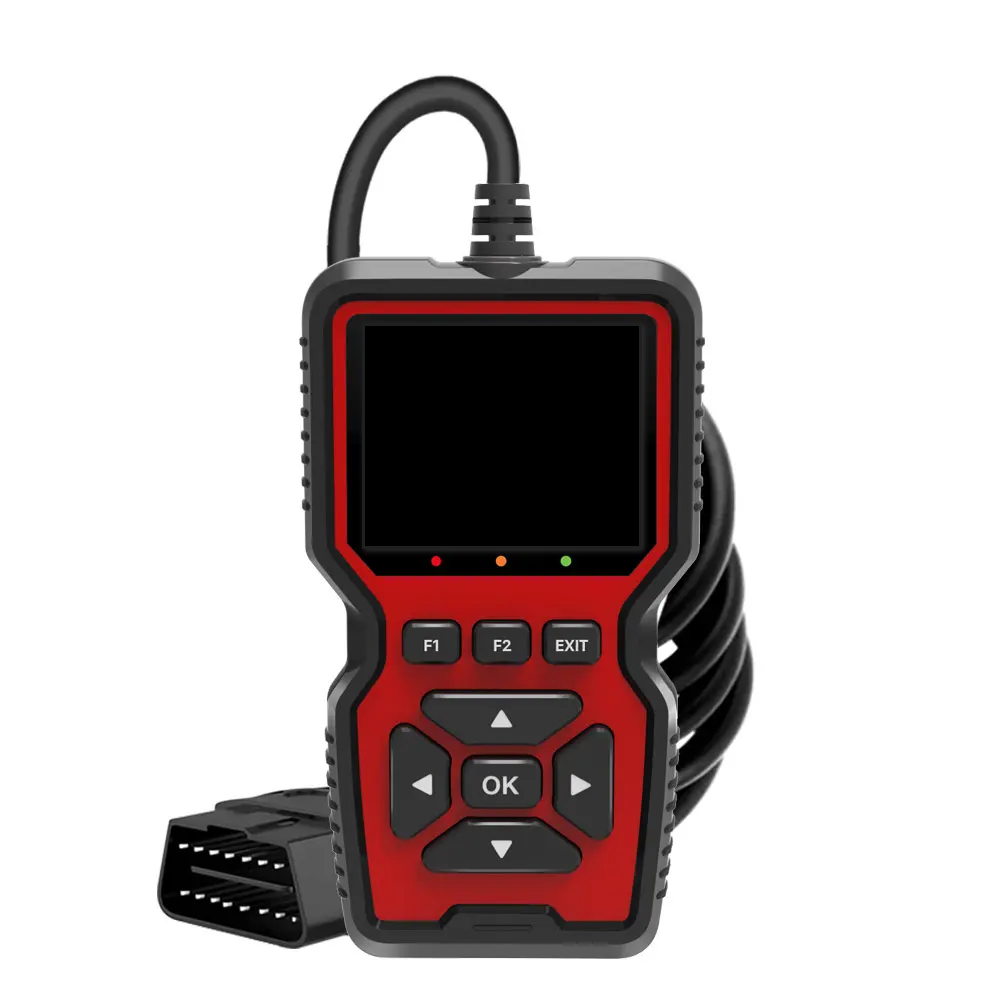
- Retrieve and Confirm DTCs: Connect an OBD-II scanner to the vehicle’s DLC. Confirm the presence of B1443 and check for any related B-codes that might provide additional context. Note any freeze frame data.
- Visual Inspection:
- Inspect the exterior of the affected door handle for any signs of physical damage, loose components, or obstructions.
- Carefully remove the door panel to access the interior of the door handle assembly and its wiring.
- Inspect the wiring harness connecting to the door handle switch for any visible signs of damage, fraying, cuts, or corrosion, especially where it passes through the door jamb boot.
- Check all electrical connectors in the circuit for corrosion, bent pins, or signs of improper seating.
- Wiring Diagram Analysis: Obtain the precise wiring diagram for the vehicle’s door handle switch circuit. This will be critical for identifying the correct wires, pinouts, and expected voltage/resistance values.
- Continuity Test with DMM:
- Isolate the Switch: Disconnect the electrical connector from the door handle switch.
- Test Switch Continuity: Using a DMM set to continuity or resistance mode, test the switch itself. Depending on the switch type (momentary, capacitive), its behavior will vary. For a simple momentary switch, you should see continuity when pressed and an open circuit when released. For capacitive types, specific resistance values may be expected across certain terminals, or a dedicated diagnostic function may be required from the BCM/DCM. Consult service information for exact specifications. An “open circuit” reading where continuity is expected confirms a faulty switch.
- Test Wiring Harness Continuity: With the switch disconnected, back-probe the vehicle-side connector for the door handle switch and trace the wires back to the Door Control Module or BCM connector. Use the DMM to check for continuity between the corresponding pins. An “open circuit” reading indicates a break in the wiring. Perform a “wiggle test” on the wiring harness, particularly in the door jamb boot, while monitoring continuity to identify intermittent breaks.
- Voltage and Ground Check (if applicable): If the switch circuit requires power and ground, use the DMM to verify that the correct voltage is present at the switch connector and that the ground circuit has low resistance to chassis ground. A missing voltage or poor ground can mimic an open circuit condition.
- Live Data Monitoring (Advanced Scanner): If the scanner supports BCM/DCM live data, monitor the status of the door handle switch. Actuating the switch (if possible) should show a change in state. If no change is observed despite proper switch operation and wiring, the fault might lie within the control module.
Recommended Repairs and Solutions
Once the root cause of the B1443 code has been accurately identified through diagnosis, the following repairs are typically recommended:
- Replace the Door Handle Switch: This is the most frequent repair. If the DMM tests indicate an internal fault within the switch, replace the entire door handle switch assembly. These are often integrated into the handle itself or are available as a separate component that can be replaced after removing the door panel.
- Repair or Replace Damaged Wiring: If the wiring harness is found to be open, carefully repair the damaged section using appropriate soldering and heat-shrink tubing for automotive applications. Ensure the repair is robust and can withstand vibration and flexing. If the damage is extensive or involves multiple wires, it may be more practical to replace the entire section of the door harness.
- Clean or Repair Corroded Connectors: If corrosion is present, clean the connector terminals using electrical contact cleaner and a small brush. If pins are bent, broken, or heavily corroded, they may need to be carefully straightened, replaced, or the entire connector replaced. Ensure connectors are fully seated and latched after cleaning.
- Replace the Door Control Module (DCM) or Body Control Module (BCM): Only pursue this option after thoroughly ruling out the door handle switch and all associated wiring and connectors. Module replacement often requires specialized programming or coding to integrate it with the vehicle’s immobilizer and other systems, which typically necessitates dealer-level diagnostic equipment.
- Verify Proper Reassembly: After any repair, ensure that all components are reinstalled correctly, connectors are fully latched, and wiring is routed to prevent pinching or future damage, especially in the door jamb boot.
- Clear DTCs and Test: After completing repairs, use an OBD-II scanner to clear the B1443 code. Then, perform several tests of the passive entry system on the affected door to confirm the repair is successful and the system is functioning as intended.