What Does Code P0355 Mean?
DTC P0355 signifies an detected malfunction within the primary or secondary circuit of ignition coil ‘E’. The Engine Control Module (ECM), also commonly referred to as the Powertrain Control Module (PCM), is responsible for monitoring the operational integrity of the ignition system for each individual cylinder. In a typical coil-on-plug (COP) or coil-per-cylinder ignition system, the ECM controls the primary circuit by supplying a ground signal to the coil, which completes the low-voltage circuit and allows current to flow through the primary windings. This rapidly builds a magnetic field. When the ECM removes the ground, the magnetic field collapses, inducing a high voltage (tens of thousands of volts) in the secondary winding, which is then directed to the spark plug to ignite the air-fuel mixture in cylinder ‘E’.
The ECM continuously monitors the voltage and current flow through both the primary and secondary circuits of each ignition coil. When the ECM detects an electrical anomaly—such as an open circuit (no current flow), a short circuit (excessive current flow to ground or power), or an out-of-range resistance within the designated time frame for ignition coil ‘E’—it logs the P0355 code. This directly impacts the ability of cylinder ‘E’ to fire correctly, leading to misfires and impaired engine performance.
Common Symptoms
- Illuminated Malfunction Indicator Lamp (MIL): The “Check Engine” light will be on.
- Engine Misfire: Noticeable rough idling, hesitation, or stumbling, particularly under load or during acceleration.
- Reduced Engine Power: A significant decrease in the vehicle’s overall performance and acceleration capabilities.
- Poor Fuel Economy: Incomplete combustion in the affected cylinder leads to wasted fuel.
- Rough Running/Vibration: The engine may shake or vibrate excessively due to an imbalanced firing sequence.
- Raw Fuel Smell from Exhaust: Unburnt fuel from the misfiring cylinder may pass through the exhaust system, detectable as a strong gasoline odor.
- Engine Enters “Limp Mode”: In some systems, the ECM may restrict engine power to prevent further damage.
What Causes the Code P0355?
- Faulty Ignition Coil ‘E’: The most common cause, including internal winding breakdown, shorts, or age-related degradation of the coil itself.
- Wiring Harness Issues:
- Open circuit or short circuit in the primary side (power feed or control wire from ECM) of coil ‘E’.
- Corroded, loose, or damaged electrical connectors at the coil or the ECM.
- Chafed or damaged insulation on the wiring leading to a short to ground or another wire.
- Faulty Spark Plug ‘E’: A severely fouled, cracked, incorrectly gapped, or worn-out spark plug can put excessive load on the coil, leading to premature coil failure or an ECM detection of an abnormal secondary circuit load.
- ECM/PCM Failure: While less common, an internal driver circuit failure within the ECM specifically for ignition coil ‘E’ can cause this code.
- Secondary Circuit Integrity Issues: Damaged spark plug wire (if applicable to the vehicle’s ignition system) or a compromised spark plug boot for cylinder ‘E’.
How to Diagnose and Troubleshoot
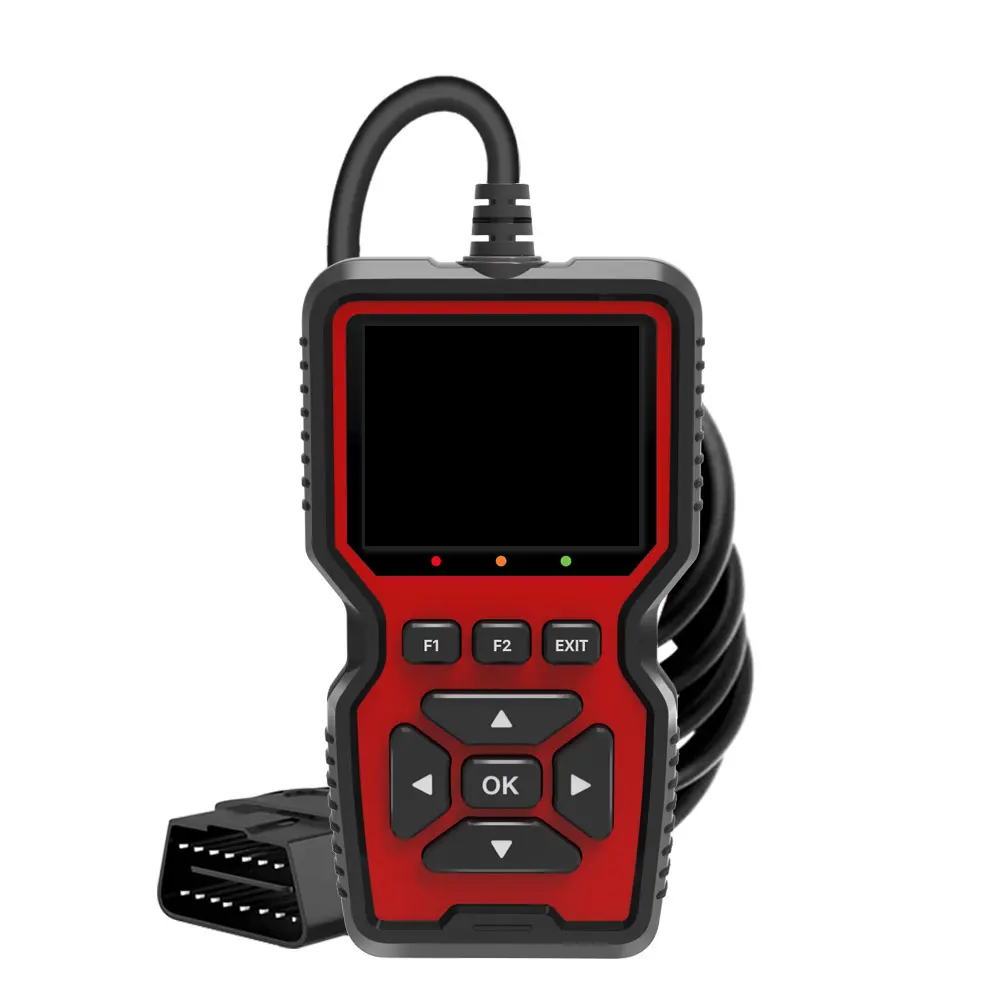
Diagnosing P0355 requires a methodical approach, utilizing an OBD-II scanner, digital multimeter (DMM), and thorough visual inspections.
- Initial Scan and Visual Inspection:
- Connect an OBD-II scanner to confirm P0355. Check for any accompanying misfire codes (e.g., P0305 for cylinder 5 misfire) or other ignition-related DTCs.
- Visually inspect the ignition coil ‘E’ and its electrical connector for any obvious signs of damage, such as cracks, burns, oil residue, or corrosion.
- Trace the wiring harness leading to coil ‘E’ for any signs of fraying, cuts, rodent damage, or loose connections.
- If accessible, remove spark plug ‘E’ and inspect its condition for fouling, electrode wear, cracks in the insulator, or incorrect gap.
- Ignition Coil Swap Test (if applicable):
- If coil ‘E’ is readily accessible, swap it with a known good coil from another cylinder (e.g., coil ‘A’ or ‘F’).
- Clear the DTCs using the OBD-II scanner.
- Start the engine and observe if the misfire or P0355 shifts to the cylinder where the suspect coil was moved (e.g., P0351 or P0301). If it does, the original coil ‘E’ is confirmed faulty. If P0355 persists for cylinder ‘E’, the issue lies elsewhere.
- Digital Multimeter (DMM) Testing of Wiring and Coil:
- Power Supply Check (Coil Primary Circuit): With the ignition in the ON position (engine OFF), disconnect the electrical connector from coil ‘E’. Using a DMM set to DC volts, back-probe or directly probe the B+ (battery voltage) terminal on the coil connector (usually a thicker wire) and measure its voltage relative to a known good chassis ground. You should read close to battery voltage (12-14V). If no voltage is present, trace the power feed back through the fuse box and relevant relays.
- Control Circuit Check (ECM Ground Signal): This is best observed with an oscilloscope to view the switching signal. However, a DMM can verify continuity. With the ignition OFF and the ECM/PCM connector disconnected (CRITICAL to prevent damage to the ECM), check for continuity between the control wire terminal at the coil ‘E’ connector and its corresponding pin at the ECM connector. Confirm there’s no short to ground or to power on this wire.
- Coil Resistance Test: While internal resistance specifications vary widely and are not always indicative of an intermittent fault, some manufacturers provide primary and secondary winding resistance values. Measure the resistance across the primary terminals and, if possible, from the primary to the secondary terminal (or spark plug boot connection) with a DMM set to ohms. Compare readings against manufacturer specifications or a known good coil. An open circuit or a significant deviation indicates a faulty coil.
- Ground Integrity Check: Verify the ground path to the coil. Some coils receive a constant ground, while others are grounded by the ECM. Use a DMM to check for continuity between the coil’s ground terminal (if applicable) and chassis ground.
Recommended Repairs and Solutions
Addressing a P0355 code typically involves the following repairs, based on diagnostic findings:
- Replace Faulty Ignition Coil ‘E’: This is the most frequent repair. Always opt for an OEM quality or reputable aftermarket coil to ensure reliability and proper function. Ensure the new coil is correctly seated and secured.
- Repair or Replace Wiring Harness Components: If diagnostics confirm an open, short, or corroded connection in the wiring to coil ‘E’, perform precise repairs. Utilize high-quality solder, heat-shrink tubing, or OEM-style crimp connectors for durable, weather-resistant repairs. Replace damaged connectors if pins are bent or severely corroded.
- Replace Spark Plug ‘E’: If the spark plug is found to be fouled, damaged, or at the end of its service life, replace it. Always use the vehicle manufacturer’s specified spark plug type and ensure it is gapped correctly. It’s often prudent to consider replacing all spark plugs if they are due for maintenance, as a failing plug can prematurely stress a coil.
- ECM/PCM Replacement or Repair: If all other components (coil, wiring, spark plug) test good, and the ECM is confirmed not to be providing the correct control signal to coil ‘E’, then the ECM may require repair or replacement. This is a less common and more costly solution, often requiring reprogramming by a specialized technician.
Mechanic’s Tips:
- When replacing an ignition coil, especially on higher-mileage vehicles, consider replacing all coils as a preventative measure. Coils often have similar lifespans, and sequential failures are common.
- Always disconnect the vehicle’s battery before performing any electrical work, especially when disconnecting or reconnecting the ECM or ignition coils, to prevent electrical shorts or damage to sensitive components.
- Apply a small amount of dielectric grease to the inside of the spark plug boot and the coil electrical connector to prevent moisture intrusion and ensure a good electrical connection.
- After completing any repair, clear the DTCs with your OBD-II scanner. Perform a comprehensive test drive under varying load conditions to confirm the fix and ensure the P0355 code does not return. Monitor live data for misfire counts on cylinder ‘E’ during the test drive.
- For systems with spark plug wires, inspect wire ‘E’ carefully for resistance and external damage.