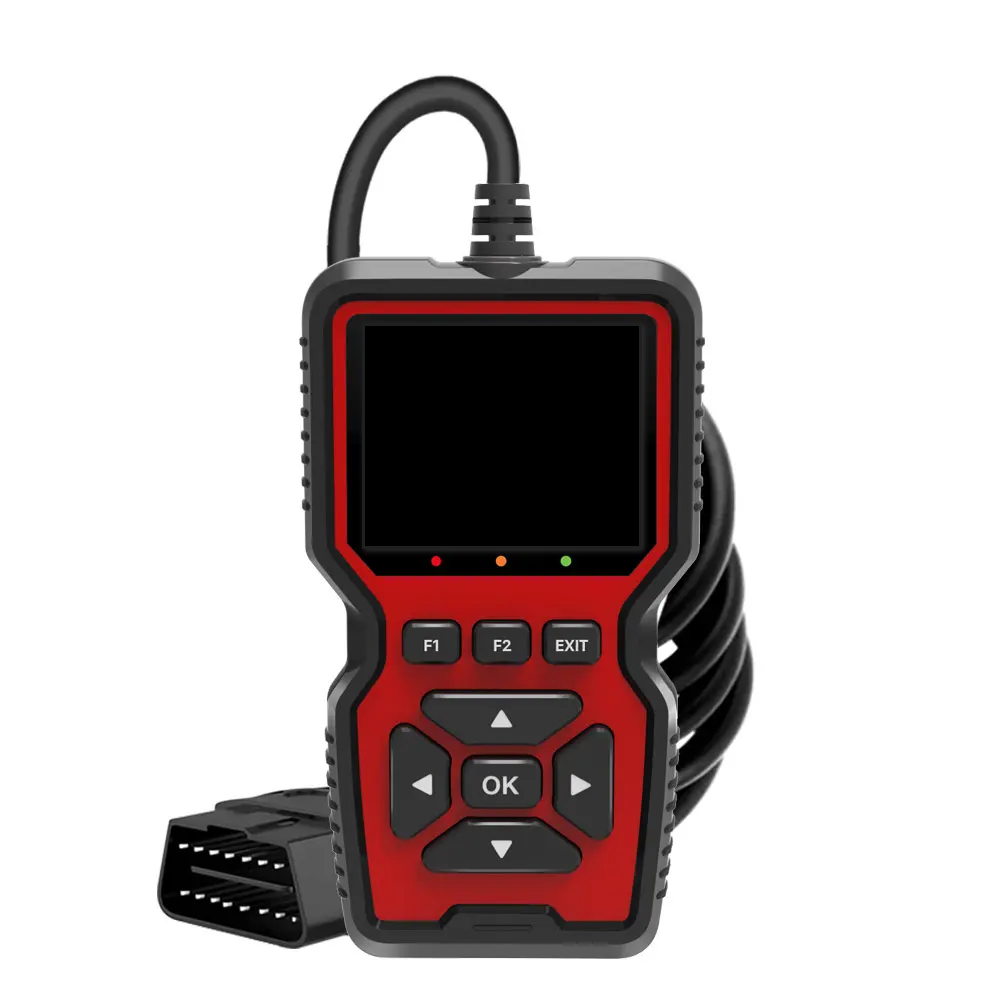
What Does Code B1455 Mean?
DTC B1455, defined as “Wiper Washer Fluid Lamp Circuit Open,” indicates that the vehicle’s Body Control Module (BCM) or an integrated control unit (such as a Smart Junction Box or Instrument Panel Distribution Module, depending on the manufacturer) has detected an open circuit within the electrical path responsible for illuminating the washer fluid low-level warning lamp. This warning lamp is typically located on the instrument cluster. The BCM monitors the electrical integrity of this circuit to ensure proper notification to the driver when washer fluid levels are critically low. An open circuit implies a break in the electrical continuity, preventing current flow to or from the lamp or the sensor circuit it monitors. This can result from a physical break in the wiring, a faulty washer fluid level sensor, or a poor connection, preventing the BCM from accurately determining the washer fluid status or activating the warning lamp.
Common Symptoms
- Washer fluid low-level warning lamp does not illuminate on the instrument cluster, even when the washer fluid reservoir is actually low.
- The washer fluid low-level warning lamp may never illuminate, regardless of the fluid level.
- In some rare instances, other non-critical interior warning lights might be affected if the circuit shares a common power or ground point that is compromised by the open circuit.
What Causes the Code B1455?
- Faulty Washer Fluid Level Sensor: An internal electrical break or malfunction within the sensor itself, preventing it from signaling the BCM.
- Open Circuit in Wiring:
- A broken or severed wire in the harness connecting the washer fluid level sensor to the BCM or instrument cluster.
- Corroded, bent, or loose pins within the electrical connectors at either the sensor or the BCM/instrument cluster.
- Damage to the wire insulation leading to a complete break in the conductor.
- Poor Ground Connection: An insufficient or open ground path for the washer fluid level sensor or the warning lamp circuit.
- Faulty Instrument Cluster or Body Control Module (BCM): While less common, an internal defect within the module responsible for monitoring the sensor input or driving the warning lamp can cause this code.
How to Diagnose and Troubleshoot
Diagnosis of B1455 requires a methodical approach, utilizing a digital multimeter (DMM) and visual inspection:
- Visual Inspection:
- Begin by visually inspecting the washer fluid reservoir to confirm the fluid level.
- Carefully examine the wiring harness leading to the washer fluid level sensor for any signs of physical damage, chafing, cuts, or disconnections. Pay close attention to areas where the harness might rub against sharp edges or be exposed to road debris.
- Inspect the electrical connectors at both the washer fluid level sensor and the relevant control module (BCM or instrument cluster, consult service information for exact location) for corrosion, bent pins, or signs of looseness.
- Washer Fluid Level Sensor Test:
- Locate and disconnect the electrical connector from the washer fluid level sensor, typically mounted on the side or bottom of the washer fluid reservoir.
- Using a DMM, measure the resistance across the sensor’s terminals. For a two-wire float-type switch, resistance should change significantly between fluid full and fluid empty states (e.g., continuity when full, open when empty, or vice-versa, consult service manual specifications). If it’s a three-wire sensor, it might output a voltage signal that changes with fluid level. Manually manipulate the float (if accessible) to observe expected changes. A sensor that shows an open circuit at all times (or no change) despite float manipulation is faulty.
- Wiring Continuity Test:
- With the vehicle’s battery disconnected for safety, disconnect both ends of the suspected circuit (at the BCM/instrument cluster and at the sensor).
- Using a DMM set to continuity or resistance mode, measure the resistance between the corresponding pins of the circuit from one end to the other. A healthy wire should show very low resistance (typically less than 5 ohms). An “OL” (open loop) or very high resistance reading indicates an open circuit.
- While still disconnected, check for a short to ground by measuring resistance between the wire (at either end) and a known good chassis ground point. There should be infinite resistance (OL) unless it’s a dedicated ground wire.
- Power and Ground Supply Checks (if applicable):
- Refer to the vehicle’s wiring diagrams to identify the power and ground supply pins for the washer fluid level sensor circuit at its connector.
- With the ignition on (and connector reconnected, if testing live voltage), use a DMM to verify that the specified voltage (e.g., 12V or 5V reference) is present at the power pin and that a proper ground exists at the ground pin.
- Scan Tool Diagnostics:
- Use an advanced OBD-II scan tool to check for any other related B-codes or C-codes that might provide additional context.
- If available, monitor live data parameters related to the washer fluid level or warning lamp status within the BCM or instrument cluster modules.
- Some advanced scan tools may offer bidirectional control to activate the warning lamp, which can help differentiate between a lamp circuit issue and a sensor input problem.
Recommended Repairs and Solutions
Once the root cause of B1455 has been pinpointed through systematic diagnosis, the following repairs are typically recommended:
- Repair or Replace Damaged Wiring: If an open circuit is identified in the wiring harness, repair the damaged section using appropriate automotive-grade wiring, solder, and heat-shrink tubing. For extensive damage, it may be more practical to replace the entire sub-harness or pigtail connector.
- Clean or Replace Corroded Connectors: If corrosion is present on connector terminals, meticulously clean them using electrical contact cleaner and a small brush. If the terminals or connector housing are severely damaged or deformed, replace the connector shell or individual terminals as necessary to ensure a secure and reliable connection.
- Replace Faulty Washer Fluid Level Sensor: If diagnostic tests confirm an internal fault with the washer fluid level sensor, replace it with a new, OEM-quality component. This is a common failure point due to constant exposure to washer fluid and environmental elements.
- Replace the Instrument Cluster or BCM (Rare): In the rare event that all wiring, connections, and the sensor test perfectly, and the diagnostic process points to an internal fault within the instrument cluster or BCM, replacement of the module may be necessary. This typically requires specialized tools for programming and calibration, and should be performed by a qualified technician.
Important Mechanic’s Tips:
- Always consult the vehicle-specific service manual and wiring diagrams for accurate component locations, pinouts, expected voltage values, and resistance specifications.
- Check for any applicable Technical Service Bulletins (TSBs) from the manufacturer that may relate to washer fluid system issues for your specific make and model.
- After performing any repairs, clear the DTC B1455 using an OBD-II scan tool. Then, perform a functional check of the system by ensuring the washer fluid reservoir is full and then, if possible, allowing it to drain to confirm the warning lamp illuminates as expected when the fluid level drops.