What Does Code B1504 Mean?
DTC B1504 signifies an “Open Circuit” condition detected within the right-hand turn signal lamp circuit. While the provided brief mentions the Engine Control Module (ECM/PCM), B-codes (Body codes) are typically set by the Body Control Module (BCM), or in some vehicle architectures, a General Electronic Module (GEM) or Smart Junction Box (SJB). These modules are responsible for monitoring and controlling various body electrical functions, including exterior lighting.
The BCM actively monitors the electrical current flow and resistance across the right turn signal lamp circuit when the turn signal stalk is activated. When the BCM detects an abnormally high resistance or a complete absence of current flow (indicating an infinite resistance path), it interprets this as an open circuit. This condition suggests that the electrical path from the module to the lamp and back to ground is interrupted. This could be due to a faulty bulb filament, a disconnected wire, a corroded terminal, or a break in the wiring harness. The primary subsystem affected is the vehicle’s exterior lighting, specifically the right-side turn signal functionality, which is critical for safe driving and legal compliance.
Common Symptoms
- Right Turn Signal Lamp(s) Not Illuminating: The most direct symptom, where the front, rear, or side-marker right turn signal lamp fails to light up when activated.
- Rapid Flashing (Hyper-Flashing): The remaining operational turn signal lamps (and the dashboard indicator) flash at an accelerated rate, due to the BCM detecting a reduced electrical load on the circuit.
- Dashboard Indicator Malfunction: The instrument cluster turn signal indicator for the right side may flash rapidly, or not at all, mirroring the exterior lamp behavior.
- Warning Message: On vehicles equipped with advanced driver information systems, a “Check Turn Signal” or similar warning message may appear on the instrument cluster display.
- Absence of Flasher Relay Click: In older vehicles utilizing a physical flasher relay, the audible clicking sound may be absent or irregular.
What Causes the Code B1504?
- Burnt-out Right Turn Signal Lamp Bulb: The most prevalent cause, where the filament inside the incandescent bulb has broken, creating an open circuit.
- Corroded or Loose Bulb Socket: Oxidation or physical damage within the bulb socket can lead to a poor electrical connection or an open circuit to the bulb.
- Open Circuit in Wiring Harness: A physical break, severe chafing, or corrosion within the wiring leading to the right turn signal lamp assembly can interrupt the electrical path.
- Faulty Connector: Corroded, bent, or broken pins within the electrical connectors between the wiring harness and the lamp assembly.
- Compromised Ground Connection: A high-resistance or open circuit in the ground path for the right turn signal lamp.
- Faulty Body Control Module (BCM): While less common, an internal fault within the BCM’s driver circuit for the right turn signal can manifest as an open circuit.
How to Diagnose and Troubleshoot
Diagnosing DTC B1504 requires a methodical approach, often beginning with visual inspection and progressing to electrical testing using a digital multimeter (DMM) and an appropriate diagnostic scanner.
- Visual Inspection:
- Begin by inspecting all right-side turn signal lamps (front, rear, mirror-mounted, fender-mounted) for obvious signs of a burnt filament, a shattered bulb, or corrosion within the bulb socket. Replace any suspect bulbs immediately, as this is the most common resolution.
- Examine the bulb sockets for signs of corrosion, melted plastic, or bent/damaged electrical contacts. Clean any corrosion with electrical contact cleaner and a small wire brush.
- Carefully inspect the visible portions of the wiring harness leading to the right turn signal assemblies for any signs of physical damage, chafing against sharp edges, or rodent activity.
- Check all associated electrical connectors for proper seating, bent pins, or signs of water intrusion and corrosion.
- OBD-II Scanner Diagnostics:
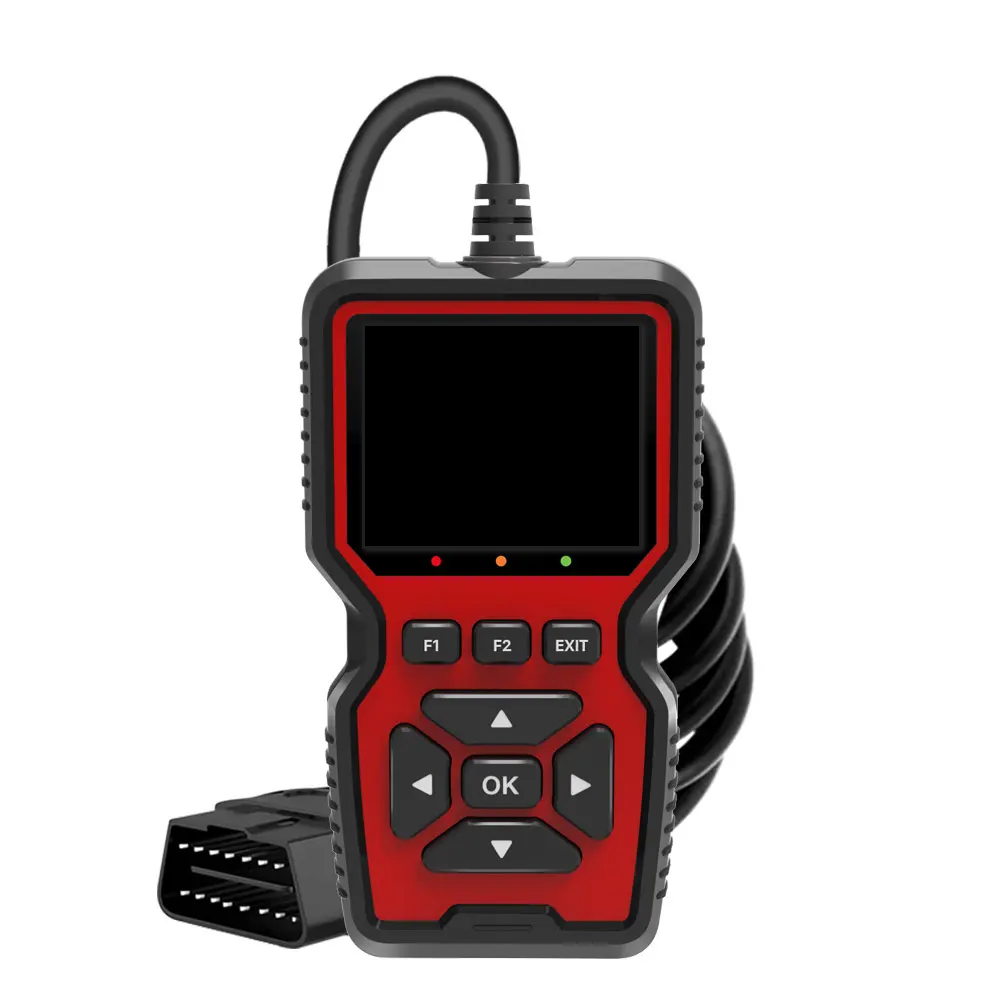
- Connect a diagnostic scanner capable of reading B-codes (Body Control Module codes). Confirm that B1504 is stored as an active or history code.
- If available, access the BCM’s live data stream. Look for parameters related to turn signal switch status and individual lamp circuit status. Some advanced scanners may display current draw or resistance values for lighting circuits, which can directly indicate an open circuit.
- Clear the DTC after each repair step to see if it immediately returns, aiding in pinpointing the issue.
- Digital Multimeter (DMM) Testing:
- Voltage Check at Lamp Socket: With the ignition ON and the right turn signal activated (hazard lights ON can also work), use the DMM set to DC Volts to back-probe the power wire at the right turn signal lamp socket. You should observe battery voltage (approximately 12-14V pulsating). If no voltage is present, the open circuit is upstream of the socket.
- Continuity Test (Power Side): Disconnect the vehicle’s negative battery terminal for safety. Disconnect the electrical connector at the BCM (refer to wiring diagrams for pin identification) and at the problematic turn signal lamp assembly. Set the DMM to Ohms. Measure the resistance between the power wire terminal at the BCM connector and the corresponding power wire terminal at the lamp socket connector. A healthy wire should show very low resistance (typically less than 0.5 Ohms). An “OL” (Open Loop) reading indicates a break in the wire.
- Continuity Test (Ground Side): With the battery disconnected, measure the resistance between the ground wire terminal at the lamp socket connector and a known good chassis ground point. Resistance should be very low. A high resistance or “OL” reading suggests a compromised ground path.
- Bulb Resistance Test: If not already done, remove the bulb and measure its resistance across its terminals. A good incandescent bulb will show a low resistance (typically 0.5-2 Ohms, varying by wattage). An open filament will show “OL”.
Recommended Repairs and Solutions
Based on the diagnostic findings, the following repairs are commonly performed to resolve DTC B1504:
- Replace Defective Turn Signal Bulb(s): This is the most frequent and straightforward solution. Always use a bulb of the correct type and wattage as specified by the manufacturer to ensure proper circuit load and prevent future issues.
- Clean or Replace Bulb Socket: If corrosion is identified, thoroughly clean the socket contacts using electrical contact cleaner and a suitable brush. Apply dielectric grease to the contacts upon reassembly to prevent future corrosion. If the socket is severely corroded, melted, or damaged, it should be replaced. Aftermarket replacement sockets are often available.
- Repair or Replace Wiring Harness: If an open circuit is confirmed in the wiring, repair the damaged section using appropriate gauge wire, solder, and heat-shrink tubing for a durable and weather-resistant repair. Ensure the repair is properly insulated and secured. For extensive damage, replacement of the relevant harness segment may be necessary.
- Clean or Replace Connectors: Address any issues with electrical connectors. Clean corroded pins with specialized contact cleaner and ensure secure connections. If pins are bent, broken, or corroded beyond repair, the connector housing or individual pins should be replaced.
- Repair Ground Connection: If the ground path is compromised, ensure the ground wire from the lamp assembly has a clean, tight, and secure connection to the chassis. Clean any rust or paint from the ground point to ensure optimal conductivity.
- Body Control Module (BCM) Replacement: This should be considered a last resort, only after meticulously verifying all external circuits, bulbs, sockets, and wiring are confirmed to be in perfect working order. BCM replacement typically requires specialized diagnostic equipment for programming or coding the new module to the vehicle, which is best performed by a dealership or a specialized independent shop.
Mechanic’s Tips: Always begin with the simplest and most common cause, which is usually the bulb itself. For vehicles using integrated LED turn signals, individual LEDs are generally not replaceable; the entire lamp assembly must be replaced if the LEDs fail. When replacing incandescent bulbs with aftermarket LED equivalents, be aware that the lower current draw of LEDs can cause the BCM to still detect an “open circuit” or “low load” condition, leading to hyper-flashing or a persistent DTC. This often necessitates the installation of load resistors or the use of CAN-bus compatible LED bulbs designed to mimic the resistance of incandescent bulbs.