What Does Code B1509 Mean?
DTC B1509 indicates a “Flash To Pass Switch Circuit Short To Battery.” This diagnostic trouble code is typically registered by the Body Control Module (BCM), Front Control Module (FCM), Smart Junction Box (SJB), or a similar integrated control module responsible for exterior lighting functions, rather than the Engine Control Module (ECM) or Powertrain Control Module (PCM) directly. These modules continuously monitor the electrical resistance and voltage characteristics of input circuits, including those from various switches. The “Flash To Pass” function allows a driver to momentarily activate the high beam headlamps without fully engaging the high beam latching mechanism, commonly used for signaling. The BCM (or equivalent module) detects code B1509 when it senses an unexpectedly high voltage, specifically battery voltage (approximately 12-14 volts), on the dedicated input circuit from the Flash To Pass switch, at a time when the switch is expected to be in an open or low-voltage state (e.g., near ground or a specific reference voltage). This condition suggests an unwanted electrical connection between the switch circuit and a constant positive voltage source, bypassing the intended switch operation. This affects the vehicle’s exterior lighting subsystem, specifically the high beam control and signaling functionality.
Common Symptoms
- High beam headlamps activate unexpectedly or remain illuminated when the Flash To Pass switch is not engaged.
- Flash To Pass function becomes inoperable or behaves erratically.
- Dashboard high beam indicator light may be stuck ON or flicker.
- Potential for accelerated battery discharge due to continuous high beam operation (if stuck on).
- Other related lighting system malfunctions, particularly if the short causes voltage fluctuations on shared circuits.
What Causes the Code B1509?
- Faulty Flash To Pass Multi-Function Switch: Internal mechanical wear, corrosion, or circuit breakdown within the steering column multi-function switch (which typically integrates the flash-to-pass function) can cause an internal short to a battery voltage supply or to another always-hot circuit.
- Wiring Harness Short To Battery Voltage: The electrical wiring connecting the Flash To Pass switch to the BCM/FCM may have chafed insulation, causing the conductor to intermittently or constantly contact a positive battery voltage wire or a metallic component that is accidentally energized to 12V.
- Corroded or Damaged Connectors: Moisture ingress or physical damage to the multi-function switch connector or the BCM/FCM connector pins can create a conductive bridge between the Flash To Pass circuit and a voltage supply pin.
- Faulty Body Control Module (BCM) / Front Control Module (FCM) / Smart Junction Box (SJB): Although less common for a circuit-specific short, an internal fault within the control module itself could erroneously provide a high voltage on the input circuit or misinterpret the input signal.
How to Diagnose and Troubleshoot
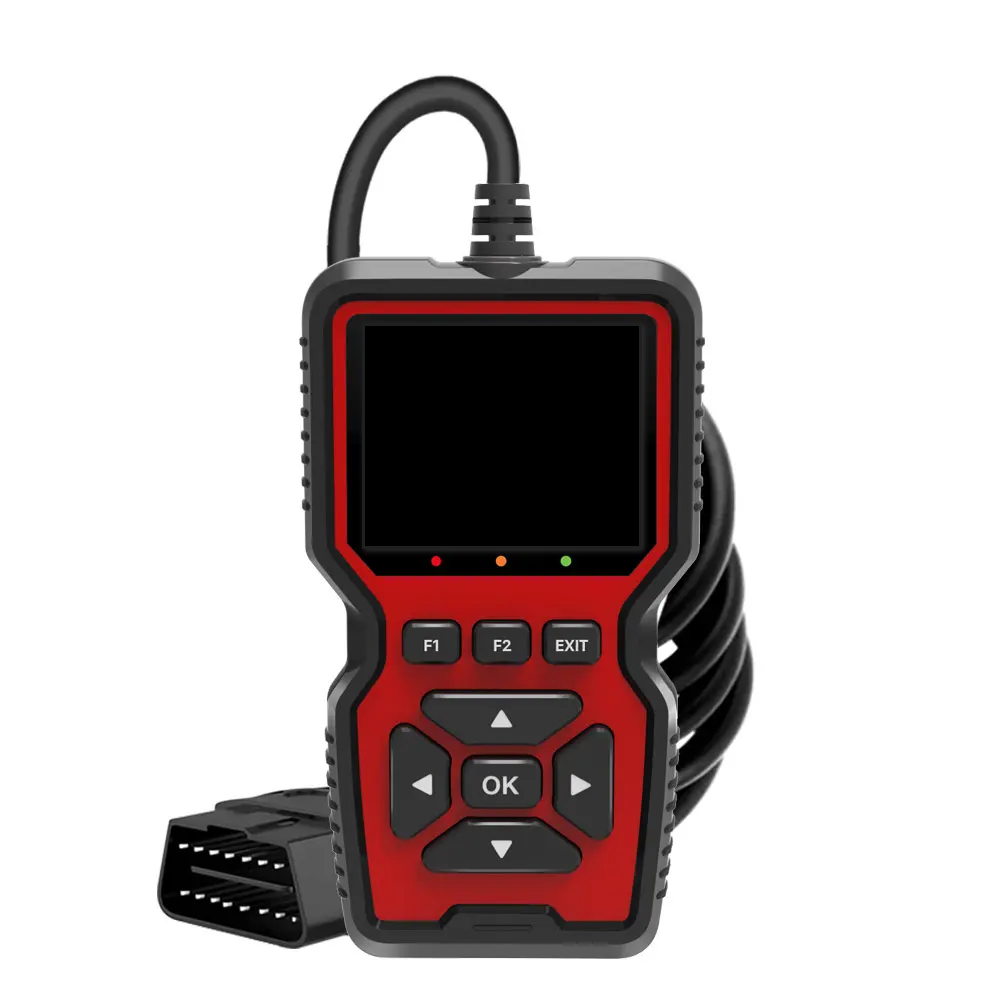
Diagnosis of B1509 requires a systematic approach, utilizing a digital multimeter (DMM), an advanced OBD-II scan tool capable of reading BCM/FCM data, and a vehicle-specific wiring diagram.
- Retrieve and Document DTCs: Use an advanced OBD-II scanner to access the BCM/FCM (or equivalent) for current and pending DTCs. Note any related lighting or switch circuit codes. Check live data PIDs related to switch status (e.g., “Flash-To-Pass Switch State,” “High Beam Request”) to observe their behavior as the switch is manipulated.
- Visual Inspection:
- Thoroughly inspect the steering column multi-function switch for any visible damage, signs of overheating, or debris that might impede its operation.
- Trace the wiring harness from the multi-function switch to the BCM/FCM. Look for signs of chafing, pinching, rubbing against sharp edges, or heat damage, particularly where the harness passes through grommets or tight areas.
- Inspect all associated electrical connectors (at the switch and the control module) for corrosion, bent pins, loose terminals, or improper seating.
- Isolate and Test the Switch Circuit:
- Disconnect the multi-function switch connector.
- With the ignition OFF, use a DMM in resistance mode to check for continuity between the Flash To Pass signal wire (refer to wiring diagram for specific pinout) at the harness connector and chassis ground. There should be no continuity to ground, or at least a very high resistance, unless the circuit is designed as a pull-down and the BCM is still connected.
- With the ignition OFF, use the DMM in resistance mode to check for continuity between the Flash To Pass signal wire at the harness connector and any known 12V supply wires in the same harness or nearby. A reading of very low resistance (near 0 ohms) indicates a direct short to battery in the wiring harness.
- With the ignition ON (engine OFF), use the DMM to measure voltage on the Flash To Pass signal wire at the disconnected harness connector. If the BCM provides a pull-up voltage, you should see battery voltage (or close to it) when the switch is open. If you see constant battery voltage, it confirms the short condition. If the BCM provides a pull-down, you should see a low voltage. An unexpected battery voltage on a pull-down circuit confirms the short.
- Test the Multi-Function Switch:
- With the switch disconnected from the vehicle harness, use a DMM in continuity or resistance mode. Identify the pins corresponding to the Flash To Pass function using the wiring diagram.
- Measure resistance or continuity between the relevant switch pins. When the Flash To Pass lever is activated, the switch should show continuity (or a specific resistance value). When deactivated, it should show an open circuit (infinite resistance). If the switch shows constant continuity to a 12V supply pin (if integrated) or to its output pin even when not pressed, the switch is internally faulty.
- Module Isolation Test: If wiring and switch tests prove inconclusive, disconnect the BCM/FCM connector. Re-test the Flash To Pass circuit wire at the harness side (now disconnected from the module) for continuity to battery voltage. If the short condition disappears, it indicates an internal fault within the BCM/FCM. If the short persists, the fault lies within the vehicle’s wiring harness between the module and the switch.
Recommended Repairs and Solutions
- Replace the Multi-Function Switch: If the internal test of the switch confirms an internal short or improper operation, replacement of the multi-function switch (which often includes the turn signal, wiper, and high beam controls) is the recommended solution. Ensure the replacement part is compatible with the vehicle’s specific make and model.
- Repair or Replace Damaged Wiring: If the diagnostic steps identify a short circuit in the wiring harness, the damaged section of the wire must be repaired or replaced. Use appropriate gauge wire, solder connections (if allowed by manufacturer specifications), and insulate thoroughly with heat shrink tubing and automotive-grade electrical tape. Ensure the repaired wiring is rerouted away from potential chafing points.
- Clean and Secure Connectors: If corrosion or poor connections are found, thoroughly clean the connector pins using electrical contact cleaner and a small brush. Address any bent or damaged pins. Apply a small amount of dielectric grease to prevent future corrosion and ensure secure connections.
- Replace the Body Control Module (BCM) / Front Control Module (FCM) / Smart Junction Box (SJB): This should be considered a last resort, only after thoroughly eliminating the switch and wiring harness as potential causes. BCM/FCM replacement often requires specialized programming or configuration using a factory-level scan tool to integrate it with the vehicle’s immobilizer and other electronic systems.
- Clear Codes and Verify Repair: After any repair, clear the DTC B1509 using a scan tool. Operate the Flash To Pass function multiple times and cycle the ignition to ensure the fault does not return. Perform a road test if necessary to confirm the system’s proper operation under various conditions.