What Does Code P0170 Mean?
The OBD-II diagnostic trouble code P0170, generically defined as “Fuel Trim Malfunction (Bank 1),” indicates that the Engine Control Module (ECM) or Powertrain Control Module (PCM) has detected an anomaly in its ability to maintain the target air-fuel ratio for Bank 1. Unlike more specific fuel trim codes like P0171 (System Too Lean, Bank 1) or P0172 (System Too Rich, Bank 1), P0170 signifies a broader malfunction in the fuel trim system, suggesting that the ECM’s adaptive fuel strategy has reached its operational limits, either adding or subtracting an excessive amount of fuel, but has still failed to bring the actual air-fuel ratio within its calibrated parameters for an extended period.
The ECM continuously monitors the upstream (pre-catalyst) oxygen sensor (O2S) on Bank 1 to determine the exhaust gas oxygen content, which is a direct indicator of the air-fuel ratio. Based on this feedback, the ECM adjusts fuel injector pulse width via short-term fuel trim (STFT) and then adapts its baseline fueling strategy via long-term fuel trim (LTFT). When the STFT and LTFT values for Bank 1 consistently exceed a predefined positive or negative threshold (typically +/- 20-25%) without achieving the desired stoichiometric ratio (lambda = 1.0 or 14.7:1 for gasoline), the ECM registers a P0170 code. This indicates a fundamental issue preventing the fuel control system from accurately compensating for an underlying rich or lean condition.
Common Symptoms
- Malfunction Indicator Light (MIL) illumination: The “Check Engine” light will be illuminated on the dashboard.
- Rough idle or erratic engine operation: The engine may idle unevenly, stumble, or vibrate excessively due to improper combustion.
- Reduced engine performance: Decreased power, hesitation during acceleration, or a general lack of responsiveness.
- Increased fuel consumption: Particularly if the engine is running consistently rich, leading to more fuel being injected than necessary.
- Abnormal exhaust emissions: Elevated levels of hydrocarbons (HC) or carbon monoxide (CO) if running rich, or nitrogen oxides (NOx) if running lean.
- Engine stalling: In severe cases of fuel trim imbalance, the engine may stall, especially at idle.
- Difficulty starting: May experience extended cranking times or difficulty starting the engine.
What Causes the Code P0170?
- Mass Air Flow (MAF) Sensor Malfunction: A dirty, failing, or incorrectly calibrated MAF sensor providing erroneous air mass readings to the ECM, leading to miscalculation of fuel delivery.
- Upstream Oxygen Sensor (O2S Bank 1 Sensor 1) Malfunction: A slow-responding, biased, or faulty primary O2 sensor that inaccurately reports the exhaust oxygen content, misleading the ECM’s fuel trim corrections.
- Vacuum Leaks: Unmetered air entering the intake manifold after the MAF sensor on Bank 1, causing a lean condition that the ECM tries to correct excessively (e.g., intake manifold gasket leaks, cracked vacuum hoses, PCV valve issues, brake booster diaphragm leaks).
- Exhaust Leaks (Pre-O2 Sensor, Bank 1): Leaks in the exhaust system before the primary O2 sensor on Bank 1 can draw in ambient air, causing the sensor to falsely report a lean condition.
- Fuel Pressure Irregularities: Low fuel pressure (due to a failing fuel pump, clogged fuel filter, or faulty fuel pressure regulator) resulting in a lean condition, or excessively high fuel pressure (due to a faulty regulator) resulting in a rich condition.
- Leaking or Clogged Fuel Injectors (Bank 1): Injectors that are stuck open (rich condition) or partially clogged (lean condition) on Bank 1, directly affecting fuel delivery.
- Engine Coolant Temperature (ECT) Sensor Malfunction: An inaccurate ECT sensor sending incorrect temperature data to the ECM, causing it to apply inappropriate fuel enrichment strategies (ee.g., excessive enrichment if it believes the engine is colder than it is).
- EVAP System Malfunction: A faulty EVAP purge valve stuck open can allow unmetered fuel vapors into the intake manifold, leading to a rich condition.
- Internal Engine Mechanical Issues: Less common but possible, including low compression on cylinders in Bank 1, valve timing issues, or restricted exhaust flow affecting engine efficiency and air-fuel balance.
- ECM/PCM Failure: In rare instances, an internal fault within the ECM/PCM itself can cause erroneous fuel trim calculations or control.
How to Diagnose and Troubleshoot
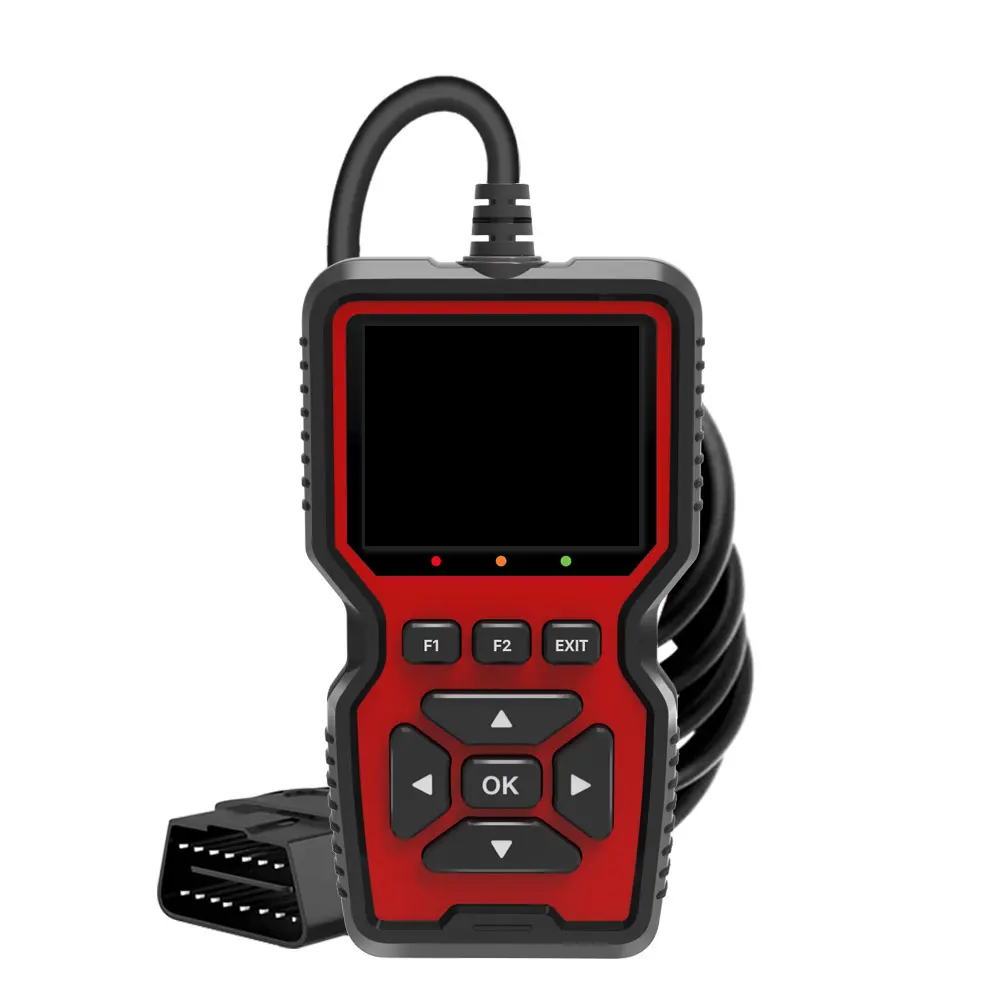
Diagnosis of P0170 requires a systematic approach, often involving an advanced OBD-II scanner with live data capabilities and a digital multimeter (DMM).
- Connect OBD-II Scanner and Retrieve Data:
- Retrieve all stored DTCs and any pending codes. Note down all freeze frame data associated with P0170, as this provides crucial engine operating conditions (engine speed, load, coolant temperature, fuel trims) at the moment the code was set.
- Monitor Live Data, specifically Short Term Fuel Trim (STFT) Bank 1 and Long Term Fuel Trim (LTFT) Bank 1. Observe these values at idle, 2500 RPM, and during a road test under various loads.
- If LTFT B1 is consistently high positive (+15% to +25% or more), the ECM is adding fuel, indicating a persistent lean condition.
- If LTFT B1 is consistently high negative (-15% to -25% or more), the ECM is subtracting fuel, indicating a persistent rich condition. P0170 is set when these trims reach or exceed maximum correction limits.
- Perform Visual Inspection:
- Thoroughly inspect all vacuum hoses, intake manifold gaskets, PCV valve and hoses, and the brake booster for any signs of cracks, disconnections, or leaks.
- Examine the exhaust system upstream of the Bank 1 Sensor 1 O2 sensor for any cracks, loose flanges, or gasket leaks.
- Inspect the Mass Air Flow (MAF) sensor and its wiring for contamination, damage, or loose connections.
- Test for Vacuum Leaks (if lean condition suspected):
- Use a smoke machine to introduce smoke into the intake system. Observe for any smoke escaping from unintended areas, indicating a leak.
- Alternatively, carefully spray unlit propane gas or carb cleaner around suspected vacuum leak areas (e.g., intake manifold runners, vacuum lines). A change in engine RPM or fuel trims (temporarily moving towards negative if propane is introduced to a lean leak) indicates a leak.
- Evaluate MAF Sensor Operation:
- Monitor MAF sensor (g/s or lbs/min) readings in live data at idle and at 2500 RPM. Compare actual readings to manufacturer specifications or known good values for your specific vehicle. Low MAF readings at higher RPMs can indicate a faulty sensor.
- As a diagnostic test, carefully clean the MAF sensor element with a specialized MAF sensor cleaner (do NOT use carb cleaner). Re-evaluate fuel trims. If the problem improves, the sensor was likely contaminated.
- If MAF readings are consistently erratic or out of specification, disconnection of the MAF sensor (engine running) might temporarily improve engine operation if it is faulty (the ECM will revert to a default fuel map).
- Inspect Oxygen Sensor (O2S Bank 1 Sensor 1):
- Monitor O2S B1S1 voltage in live data. Once the engine is at operating temperature, it should cycle rapidly and smoothly between approximately 0.1V (lean) and 0.9V (rich). A sluggish sensor (slow response time), a sensor stuck high (rich indication) or low (lean indication), or a flat-lining sensor indicates a fault.
- Check the O2 sensor heater circuit resistance with a DMM if accessible and verify wiring integrity.
- Perform Fuel System Diagnostics:
- Connect a fuel pressure gauge to the fuel rail. Verify fuel pressure at idle and under load against manufacturer specifications. Low pressure indicates a weak pump, clogged filter, or faulty regulator. High pressure indicates a faulty regulator.
- Perform a fuel injector balance test (if scanner supports bi-directional control) or listen to each injector on Bank 1 with a stethoscope to confirm proper clicking (firing). Look for signs of leaking injectors (wetness around the injector body, strong fuel smell).
- Check ECT Sensor:
- Monitor ECT sensor reading in live data. Compare the cold reading to ambient temperature. Verify it reaches and maintains thermostat opening temperature when warm. Erratic or incorrect readings can affect fuel trims.
- Evaluate EVAP System:
- Use the scanner’s bi-directional controls to command the EVAP purge valve open and closed. Monitor fuel trims. If a stuck-open purge valve is present, commanding it closed will likely cause fuel trims to normalize (become less negative) if the engine was running rich.
- Perform an EVAP system leak test using a smoke machine if available.
Recommended Repairs and Solutions
- Repair Vacuum Leaks: Replace any cracked, brittle, or disconnected vacuum hoses. Replace intake manifold gaskets, PCV valve, or brake booster if they are found to be leaking.
- Clean or Replace MAF Sensor: If the MAF sensor is contaminated, carefully clean it with a dedicated MAF sensor cleaner. If cleaning does not resolve the issue, or if the sensor is otherwise faulty, replace it with an OEM-quality component.
- Replace Upstream Oxygen Sensor (O2S B1S1): If diagnostic tests confirm a faulty, slow, or biased primary oxygen sensor on Bank 1, replace it. It is highly recommended to use OEM or equivalent quality sensors for accurate readings and optimal engine performance.
- Address Fuel System Issues:
- If fuel pressure is out of specification, replace the failing component (e.g., fuel pump, fuel filter, or fuel pressure regulator).
- If a fuel injector on Bank 1 is found to be leaking, clogged, or otherwise faulty, replace the affected injector(s). Consider replacing them in sets or as a bank for balanced performance.
- Repair Exhaust Leaks: Locate and seal any exhaust leaks upstream of the primary O2 sensor on Bank 1. This may involve replacing exhaust manifold gaskets, patching cracks in the manifold, or replacing sections of the exhaust pipe.
- Replace ECT Sensor: If the Engine Coolant Temperature sensor is providing inaccurate or erratic readings, replace it.
- Repair EVAP System Faults: If the EVAP purge valve is stuck open or otherwise faulty, replace it. Ensure other EVAP system components are functioning correctly.
- Engine Mechanical Repair: In rare cases, if internal engine issues (e.g., low compression) are diagnosed, appropriate engine repairs will be necessary.
- ECM/PCM Reprogramming or Replacement: As a last resort, if all other diagnostic steps confirm components are functional, and the issue persists, consult a dealer for potential PCM software updates or replacement.
Mechanic’s Tips:
- Always prioritize diagnosis based on the freeze frame data; it provides a snapshot of conditions when the fault occurred, helping to narrow down potential causes.
- After any repair, always clear the DTCs and perform a complete drive cycle, monitoring live data, especially fuel trims, to confirm the repair and allow the ECM to re-learn its adaptive values. Ideal LTFT values are typically within +/- 5% to 10%.
- Be aware that sometimes a very subtle vacuum leak or a slightly contaminated MAF sensor can cause P0170 before more specific lean/rich codes are set, as it represents the ECM’s inability to adapt rather than just hitting an absolute rich/lean threshold.