What Does Code P0423 Mean?
DTC P0423 signifies “Heated Catalyst Efficiency Below Threshold (Bank 1).” This code indicates that the Engine Control Module (ECM) or Powertrain Control Module (PCM) has detected that the catalytic converter on Bank 1 (the side of the engine containing cylinder #1) is not operating at its optimal efficiency, specifically regarding its ability to store and release oxygen and convert harmful emissions once it has reached its operating temperature. The “Heated” aspect typically refers to the operational state where the catalyst has achieved its thermal light-off temperature and is actively converting pollutants, or in some specific applications, it may refer to a catalytic converter that incorporates an active heating element to reach operating temperature more rapidly. The ECM/PCM monitors catalyst efficiency by comparing the signals from the upstream (pre-catalyst, Sensor 1) and downstream (post-catalyst, Sensor 2) oxygen sensors for Bank 1. A properly functioning catalytic converter will cause the downstream O2 sensor’s voltage signal to be relatively stable and slow-switching compared to the rapidly fluctuating signal of the upstream O2 sensor. If the downstream O2 sensor’s signal begins to mirror the upstream sensor’s signal too closely, indicating insufficient oxygen storage capacity and conversion efficiency, the ECM/PCM interprets this as a “below threshold” condition, illuminates the Malfunction Indicator Lamp (MIL), and sets code P0423.
Common Symptoms
- Malfunction Indicator Lamp (MIL) Illumination: The “Check Engine” light will be illuminated on the dashboard.
- Failure of Emissions Test: The vehicle will likely fail required exhaust emissions inspections due to elevated pollutant levels.
- Reduced Engine Performance (Less Common): While primarily an emissions issue, a severely degraded or partially restricted catalyst could cause minor reductions in power or fuel economy, though P0423 usually points to efficiency loss rather than flow restriction.
- Sulfur or “Rotten Egg” Smell from Exhaust: An inefficient catalyst may fail to properly convert sulfur compounds in the exhaust, leading to a noticeable odor.
What Causes the Code P0423?
- Degraded or Failed Catalytic Converter: This is the most common cause. Over time, catalysts can become contaminated, overloaded, or physically degraded due to age, mileage, or exposure to excessive heat.
- Upstream Engine Problems Causing Catalyst Damage:
- Persistent Engine Misfires: Unburnt fuel entering the exhaust can overheat and damage the catalyst substrate.
- Excessive Oil Consumption: Oil entering the combustion chamber and exhaust can foul and contaminate the catalyst.
- Coolant Leaks into Combustion Chamber: Antifreeze can contaminate the catalyst.
- Running Rich/Lean Conditions: Prolonged operation with an excessively rich or lean air-fuel mixture can damage the catalyst.
- Faulty Downstream Oxygen Sensor (Bank 1, Sensor 2): While less common for a P0423 (which typically indicates catalyst, not sensor failure), a malfunctioning downstream O2 sensor could provide inaccurate readings, falsely indicating low efficiency.
- Exhaust Leaks: Leaks in the exhaust system, particularly between the engine and the upstream O2 sensor, or between the O2 sensors, can allow ambient air into the exhaust stream, skewing O2 sensor readings and falsely indicating catalyst inefficiency.
How to Diagnose and Troubleshoot
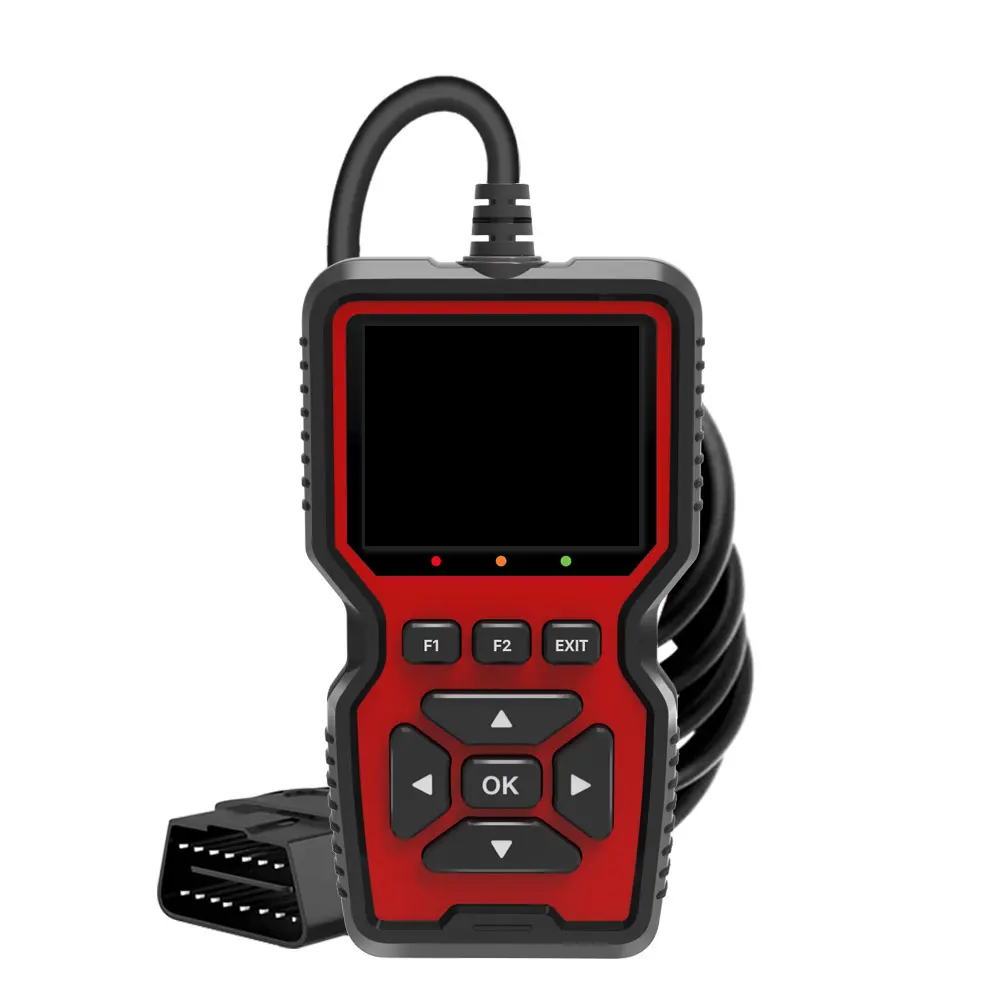
Diagnosis of P0423 requires a systematic approach, often involving a high-quality OBD-II scan tool and potentially a digital multimeter (DMM) and exhaust backpressure gauge.
- Verify the Code and Freeze Frame Data: Connect an OBD-II scan tool and confirm P0423. Review freeze frame data to understand engine conditions (RPM, engine load, temperature, etc.) when the code was set. This can provide clues about contributing factors.
- Check for Other Diagnostic Trouble Codes (DTCs): Prioritize and diagnose any other related codes first, especially those pertaining to engine misfires, fuel trim issues (P0171, P0172), O2 sensor circuit malfunctions (P013x, P014x), or exhaust leaks. Addressing these underlying issues is critical before condemning the catalyst.
- Perform a Visual Inspection:
- Inspect the exhaust system for any leaks, cracks, or damage, particularly around the catalytic converter and O2 sensor bungs. Listen for hissing sounds while the engine is running.
- Check O2 sensor wiring and connectors for damage, corrosion, or looseness.
- Examine the catalytic converter itself for signs of physical damage (dents, cracks, severe discoloration).
- Analyze Live O2 Sensor Data (Bank 1, Sensors 1 and 2):
- With the engine at operating temperature and running at a steady RPM (e.g., 2000-2500 RPM), observe the live data stream for the upstream (Sensor 1) and downstream (Sensor 2) O2 sensors on Bank 1.
- The upstream O2 sensor should show rapid, consistent voltage fluctuations (typically 0.1V to 0.9V).
- The downstream O2 sensor, if the catalyst is healthy, should show a relatively stable and higher voltage (typically 0.6V to 0.8V) with slow, minimal fluctuations.
- If the downstream O2 sensor’s voltage signal begins to mirror the upstream sensor’s rapid fluctuations, or if it fluctuates significantly over a wide range, it indicates a lack of catalyst efficiency.
- Check for Engine Performance Issues: Use the scan tool to monitor misfire counters, fuel trims, and other engine parameters. Address any detected engine performance problems that could be contributing to catalyst degradation.
- Exhaust Backpressure Test (Optional but Recommended): If there are any performance complaints or suspicion of a restricted catalyst, an exhaust backpressure test can confirm if the catalyst substrate is physically clogged. Connect a pressure gauge before the catalytic converter and observe pressure readings at idle and 2500 RPM. High backpressure indicates a restriction.
- Verify Downstream O2 Sensor Operation: While rare for a P0423 code specifically, if you suspect the downstream O2 sensor itself, carefully use a DMM to check its voltage output and heater circuit resistance (if applicable), or compare its readings to a known good sensor if the vehicle has dual banks.
Recommended Repairs and Solutions
The primary solution for a confirmed P0423 code, after ruling out all other contributing factors, is the replacement of the catalytic converter on Bank 1.
- Replace the Catalytic Converter: Once diagnostic steps confirm the catalytic converter’s inefficiency, replace it with a new, high-quality unit. It is crucial to use an OEM or reputable aftermarket converter that meets emissions standards for your vehicle’s specific application.
- Address Underlying Engine Problems: Before or immediately after replacing the catalytic converter, resolve any underlying engine issues that may have contributed to its failure. This includes:
- Repairing engine misfires (e.g., spark plugs, ignition coils, fuel injectors).
- Fixing excessive oil consumption (e.g., valve stem seals, piston rings).
- Repairing coolant leaks.
- Diagnosing and correcting persistent rich or lean fuel conditions (e.g., faulty O2 sensors, MAF sensor, fuel pressure regulator, vacuum leaks).
- Repair Exhaust Leaks: If exhaust leaks were identified, ensure they are properly sealed to prevent false readings from the O2 sensors.
- Consider O2 Sensor Replacement (If Suspected): While the P0423 code points to the catalyst, if diagnostic tests indicate a questionable downstream O2 sensor (Bank 1, Sensor 2) in conjunction with the inefficient catalyst, replacing it concurrently can be a prudent step, especially if the sensor is original and has high mileage.
- Clear Codes and Perform Drive Cycle: After repairs, clear the DTCs and perform a comprehensive drive cycle to allow the ECM/PCM to re-run all readiness monitors and confirm the repair. Monitor the O2 sensor live data during this process to ensure proper catalyst function.
Mechanic’s Tip: Never replace a catalytic converter without thoroughly investigating and rectifying the root cause of its failure. Failing to do so will almost certainly lead to a recurrence of the P0423 code and premature failure of the new catalyst, resulting in costly repeat repairs for the customer.