What Does Code P0451 Mean?
DTC P0451 stands for “Evaporative Emission Control System Pressure Sensor Range/Performance.” This code indicates that the Engine Control Module (ECM), often referred to as the Powertrain Control Module (PCM), has detected an irrational or out-of-range signal from the Fuel Tank Pressure (FTP) sensor, also known as the EVAP pressure sensor. The FTP sensor is a critical component of the Evaporative Emission Control (EVAP) system, responsible for monitoring pressure and vacuum within the sealed fuel tank and the EVAP vapor recovery system.
The ECM monitors the FTP sensor’s voltage signal to infer the pressure changes within the EVAP system. During various self-tests, which often occur during specific drive cycles, engine-off conditions, or after refueling, the ECM commands the EVAP purge and vent valves to open and close, creating controlled vacuum and pressure events within the system. The FTP sensor is expected to report a corresponding, logical change in pressure or voltage signal. If the sensor’s signal remains static, shows erratic fluctuations, exceeds predefined upper or lower voltage/pressure limits, or does not correlate rationally with the commanded states of the purge and vent valves and ambient barometric pressure, the ECM will set a P0451 code. This code specifically points to a performance issue or an out-of-range condition of the sensor itself, rather than a definitive EVAP system leak (which typically trigger codes like P0440, P0442, or P0455).
Common Symptoms
- Malfunction Indicator Lamp (MIL) Illumination: The “Check Engine” light will be illuminated on the dashboard. This is the most common and often the only noticeable symptom.
- Subtle Fuel Odor: In some cases, if the issue is related to the sensor falsely reporting pressure during an EVAP system integrity test that allows slight vapor escape, a faint fuel smell might be present.
- Difficulty Fueling the Vehicle: While less common for P0451 itself, severe EVAP system issues related to pressure regulation can sometimes cause the fuel nozzle to click off prematurely, mimicking a clogged charcoal canister, although this is usually associated with other EVAP codes.
- Slight Decrease in Fuel Economy: Extremely rare and often imperceptible, but if the ECM cannot accurately manage EVAP purge cycles due to bad pressure readings, it could slightly affect fuel trims.
What Causes the Code P0451?
- Faulty Fuel Tank Pressure (FTP) Sensor: This is the most common cause. The sensor itself may have an internal electronic failure, corrosion on its internal components, or become physically damaged, leading to incorrect, erratic, or no output signal.
- Wiring or Connector Issues: Damaged, corroded, or loose wiring and electrical connectors leading to the FTP sensor can interrupt the signal, reference voltage, or ground, causing the ECM to receive an illogical reading. This includes open circuits, shorts to ground, or shorts to voltage.
- Obstructed Sensor Port or Hose: The small hose or port that connects the FTP sensor to the fuel tank’s vapor space can become clogged with debris, fuel residue, or spiderwebs, preventing accurate pressure transmission to the sensor diaphragm.
- ECM/PCM Failure: Although rare, a faulty ECM/PCM that is unable to correctly interpret the FTP sensor’s signal or supply the proper reference voltage and ground can set this code. This should only be considered after all other possibilities have been thoroughly exhausted.
- Aftermarket Fuel Cap: A non-OEM or ill-fitting fuel cap, while more commonly associated with gross leak codes, could potentially influence pressure readings enough to cause a range/performance issue if it causes unusual pressure dynamics that the sensor reports as out-of-range.
How to Diagnose and Troubleshoot
Diagnosing P0451 requires a methodical approach, utilizing an OBD-II scanner, a digital multimeter (DMM), and visual inspection:
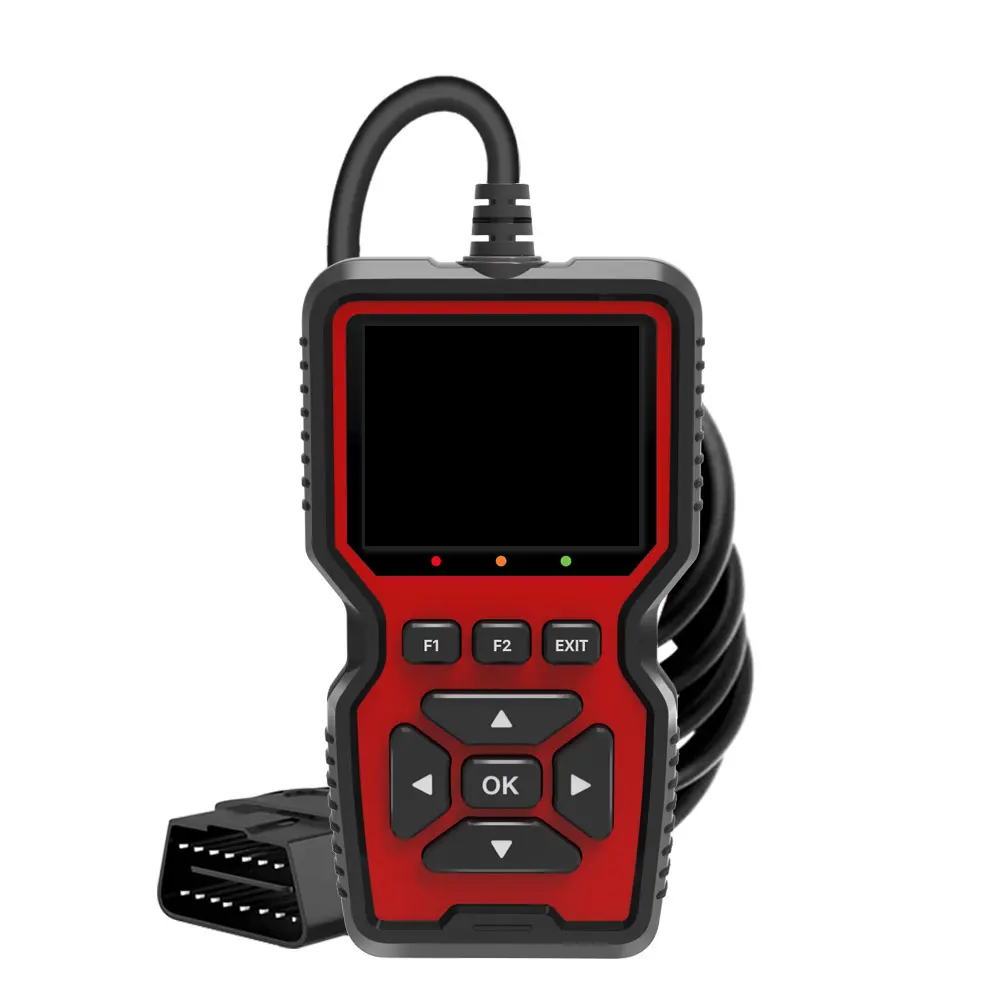
- Verify the DTC and Clear Codes: Connect an OBD-II scanner to confirm P0451 is present. Note any other related EVAP codes. Clear the code and perform an EVAP system self-test (if available via scan tool) or a drive cycle to see if the code returns. This helps differentiate between a hard fault and an intermittent issue.
- Visual Inspection:
- Locate the FTP sensor (typically mounted on top of the fuel tank or integrated into the fuel pump module).
- Inspect the wiring harness and electrical connector for the FTP sensor. Look for signs of damage, fraying, rodent chew, corrosion, or loose connections.
- Examine the small rubber hose or tube connecting the FTP sensor to the fuel tank vapor system for kinks, cracks, obstructions, or disconnections.
- Ensure the fuel cap is present, tight, and in good condition.
- OBD-II Scanner Live Data Analysis:
- With the engine off and ignition on, monitor the FTP sensor’s live data reading (usually displayed in Pascals (Pa), kPa, inches of H2O, or voltage).
- Compare the FTP sensor reading to the BARO (barometric pressure) sensor reading (if available) under these conditions. They should be very close to each other (indicating atmospheric pressure). If the FTP sensor reads significantly different, it points to a faulty sensor or an issue with its wiring.
- Remove the fuel cap and observe the FTP sensor reading. It should quickly equalize to atmospheric pressure (near 0 Pa or 0 in H2O relative to atmosphere, or match BARO reading). If it doesn’t change or changes erratically, the sensor is suspect.
- Use the bi-directional control function of the scan tool (if available) to command the EVAP purge solenoid and vent valve to cycle. Observe the FTP sensor’s response. It should show a logical change in pressure/vacuum as the valves open and close. A lack of response or an illogical response points to a sensor or circuit issue.
- Digital Multimeter (DMM) Testing:
- Reference Voltage: With the ignition on and the FTP sensor connector disconnected, backprobe the connector to test for a 5-volt reference signal from the ECM. If 5V is not present, check for continuity of the reference wire to the ECM and for proper ECM output.
- Ground: Test for a good ground connection at the sensor connector (less than 0.1 ohms resistance to chassis ground).
- Signal Wire Test: Reconnect the sensor. Backprobe the signal wire at the sensor connector. While creating a slight vacuum or pressure in the fuel tank (e.g., using a hand vacuum pump on a service port, or by commanding EVAP components with a scan tool), observe the voltage output from the sensor. The voltage should change smoothly and logically in response to pressure changes, typically inversely proportional (higher vacuum = lower voltage, or vice versa, depending on sensor type). A flatline, erratic voltage, or a voltage outside the manufacturer’s specified range indicates a faulty FTP sensor. Consult the vehicle’s service manual for specific voltage ranges for your make and model.
- Smoke Test (Optional but Recommended for Verification): While P0451 is sensor performance, a persistent “out-of-range” reading could sometimes be influenced by a severe leak preventing the system from building or holding pressure/vacuum. Performing an EVAP smoke test can definitively rule out or confirm any significant leaks in the system. However, focus on the sensor first for P0451.
Recommended Repairs and Solutions
Once the diagnosis has pinpointed the root cause, the following repairs are typically recommended:
- Replace the Fuel Tank Pressure (FTP) Sensor: If diagnostic testing confirms the FTP sensor is faulty (e.g., no response, erratic signal, or consistently out-of-range readings despite correct power and ground), replace it with a new, high-quality OEM or equivalent aftermarket part. Accessing the FTP sensor often requires dropping the fuel tank or accessing it through an access panel under the rear seat or in the trunk area.
- Repair or Replace Wiring and Connectors: If visual inspection or DMM testing identifies damaged, corroded, or loose wiring or electrical connectors, perform the necessary repairs. Use appropriate automotive-grade wiring, connectors, and heat-shrink tubing to ensure a durable, weather-resistant repair. For severely corroded terminals, replacement of the entire connector pigtail may be necessary.
- Clear Obstructions: If the hose or port connecting the FTP sensor to the fuel tank vapor system is clogged, carefully clear the obstruction. This may involve blowing compressed air through the hose (disconnected from the sensor and tank first) or replacing the hose if it’s damaged.
Important Mechanics’ Tips:
- Always Disconnect the Battery: Before performing any electrical repairs or replacing sensors, always disconnect the negative terminal of the vehicle’s battery to prevent electrical shorts or damage to the ECM.
- Consult Service Manuals: Always refer to the specific vehicle manufacturer’s service manual for precise wiring diagrams, component locations, pinout information, and expected voltage values. These can vary significantly between models and manufacturers.
- Use Quality Parts: When replacing the FTP sensor, opt for an original equipment manufacturer (OEM) part or a reputable aftermarket equivalent. Cheap sensors can often lead to recurring issues or inaccurate readings.
- Clear Codes and Re-test: After any repair, clear the DTCs using your OBD-II scanner. Then, perform an EVAP system self-test (if your scanner supports it) or complete a full drive cycle according to manufacturer specifications to allow the ECM to re-run its diagnostic tests and confirm the repair was successful. Monitor the FTP sensor live data during this process to ensure it’s operating within expected parameters.
- Check for TSBs: Before diving deep into diagnosis, always check for any Technical Service Bulletins (TSBs) or recalls related to P0451 for the specific make, model, and year of the vehicle. Manufacturers sometimes release known issues and specific diagnostic/repair procedures.