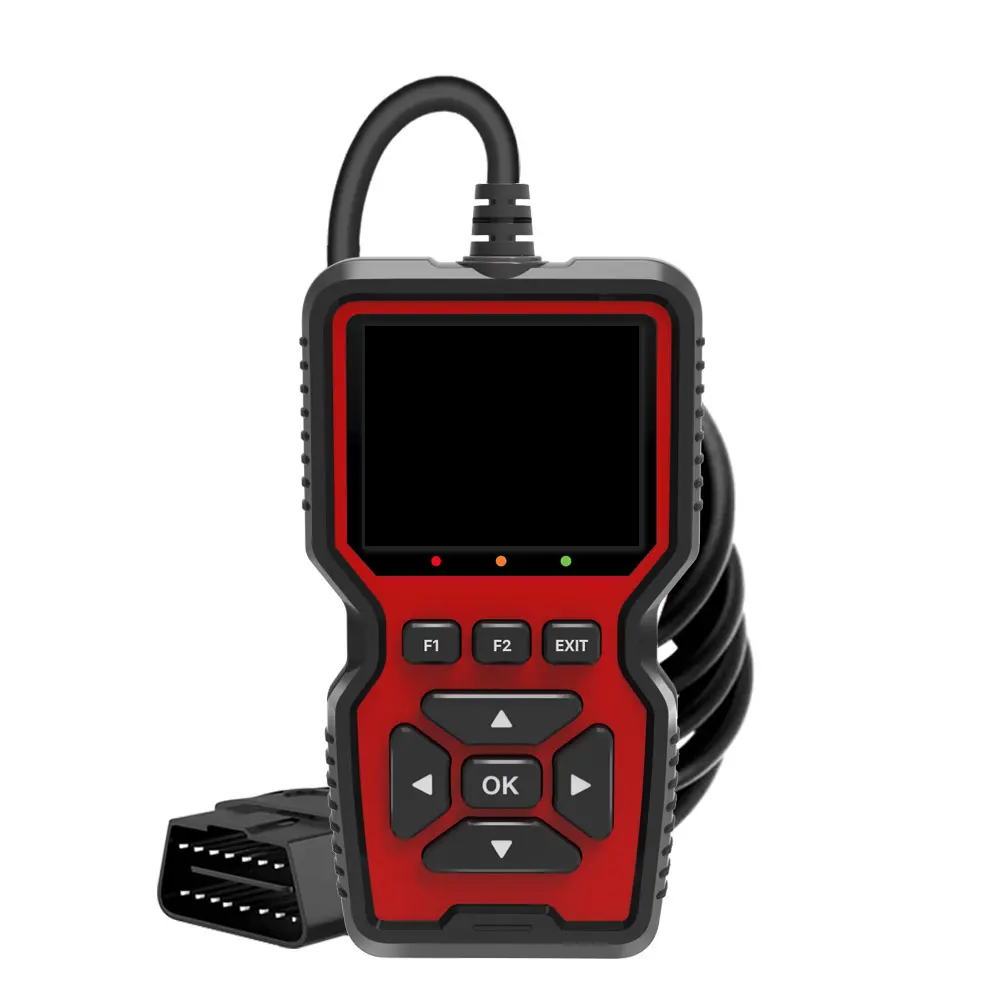
What Does Code P0454 Mean?
DTC P0454 indicates an intermittent electrical fault within the Evaporative Emission (EVAP) System Pressure Sensor circuit. This sensor, often referred to as the Fuel Tank Pressure (FTP) sensor, is responsible for measuring the pressure or vacuum level within the fuel tank and, by extension, the EVAP system. The Engine Control Module (ECM), or Powertrain Control Module (PCM), constantly monitors the voltage signal output from this sensor to determine the state of the EVAP system. For instance, during a diagnostic leak test, the ECM expects to see a specific pressure change within the sealed system as it applies vacuum or pressure via the purge and vent solenoids.
An “intermittent” condition means that the sensor’s signal is not consistently out of range (which would typically trigger a P0450-P0453 series code), nor is it permanently stuck. Instead, the signal temporarily fluctuates erratically, momentarily drops out, or provides inconsistent readings that the ECM/PCM deems unreliable for accurate EVAP system monitoring. This could manifest as brief voltage spikes, drops, or periods of no signal, making accurate pressure assessment impossible for the control module. While the primary function of the EVAP system is to prevent fuel vapors from escaping into the atmosphere, an intermittent FTP sensor signal directly impacts the ECM’s ability to perform mandated self-tests and accurately monitor system integrity, thereby illuminating the Malfunction Indicator Lamp (MIL).
Common Symptoms
- Malfunction Indicator Lamp (MIL) illumination: This is almost always the first and often only symptom.
- No noticeable drivability issues or performance degradation.
- Rare instances of slight fuel odor, though this is more indicative of a substantial EVAP leak rather than an intermittent sensor signal issue.
What Causes the Code P0454?
- Faulty EVAP Pressure Sensor (FTP sensor): The sensor itself may have an internal intermittent electrical fault, leading to sporadic signal disruptions.
- Damaged wiring harness: Frayed, chafed, corroded, or intermittently open/shorted wiring between the FTP sensor and the ECM/PCM. This includes areas where the harness may rub against chassis components or be exposed to moisture.
- Corroded or loose electrical connectors: Poor contact at the FTP sensor connector, main EVAP harness connectors, or even the ECM/PCM connector can cause intermittent signal loss or erratic resistance changes.
- Intermittent short to voltage or ground: Compromised wire insulation could allow the signal wire to momentarily short to a power source or ground, causing unreliable voltage readings.
- Contamination or obstruction: While less common for an intermittent signal code, extreme cases of moisture or debris in the sensor’s pressure port could cause erratic readings.
How to Diagnose and Troubleshoot
Diagnosing P0454 requires a systematic approach focusing on electrical integrity and sensor functionality:
- Visual Inspection: Begin by thoroughly inspecting the EVAP Pressure Sensor, its wiring harness, and all associated connectors. Look for signs of physical damage, chafing, corrosion, moisture intrusion, or loose connections. Pay close attention to areas where the harness routes near hot components, sharp edges, or areas prone to road debris.
- OBD-II Scanner Live Data Monitoring:
- Connect an advanced OBD-II scanner capable of displaying live data. Monitor the “EVAP System Pressure Sensor” or “Fuel Tank Pressure Sensor” PID (Parameter ID).
- With the key on, engine off, the sensor should typically read near ambient pressure, often translating to a specific voltage (e.g., around 2.5V on a 5V reference system).
- Gently wiggle, flex, and manipulate the wiring harness and connectors around the FTP sensor, main EVAP harness, and even the ECM/PCM. Observe the live data stream for any erratic voltage spikes, drops, freezes, or instantaneous changes in pressure readings. Any such fluctuation strongly indicates an intermittent electrical fault in the wiring or connector.
- Perform an EVAP system functional test (if available on your scanner) and observe the sensor’s response. An intermittent sensor might show erratic readings during the test.
- Digital Multimeter (DMM) Testing:
- Verify Reference Voltage and Ground: With the key on, engine off, back-probe the FTP sensor connector to verify a stable 5-volt reference voltage and a solid ground connection. An intermittent power or ground supply can mimic a sensor fault. Monitor these voltages while wiggling the harness.
- Signal Wire Voltage: Back-probe the signal wire at the sensor connector. Monitor the voltage output on the DMM. While observing, attempt to simulate different pressure states if possible (e.g., carefully opening the fuel cap and observing a drop, then tightening). More importantly, continuously monitor for any intermittent voltage drops or spikes while manipulating the wiring harness.
- Continuity and Resistance: Disconnect the battery. Disconnect the FTP sensor and the ECM/PCM connectors. Use the DMM to check the continuity of the signal, power, and ground wires from the sensor connector to the ECM/PCM connector. Also, check for intermittent open circuits or high resistance by gently flexing the harness along its entire length. Check for any short to ground or short to voltage on the signal wire.
- Fuel Tank Pressure Test (Advanced): In some cases, if electrical integrity is confirmed, a manual pressure/vacuum test on the fuel tank using a specialized tool can help verify the sensor’s mechanical response, though P0454 is primarily an electrical code.
Recommended Repairs and Solutions
Addressing Code P0454 primarily involves repairing or replacing faulty electrical components:
- Repair or Replace Damaged Wiring/Connectors: This is a highly common fix for intermittent DTCs. If visual inspection or DMM/scanner tests reveal chafed wires, corroded pins, or loose connections, repair them using appropriate soldering techniques for wires and replace compromised connectors. Ensure all connections are clean, tight, and free of corrosion. Use dielectric grease on connectors to prevent future moisture intrusion.
- Replace the EVAP Pressure Sensor (FTP sensor): If all wiring and connector integrity tests confirm no external electrical faults, the FTP sensor itself is the most probable cause of an intermittent signal. Replace the sensor with an OEM-quality equivalent to ensure proper system functionality and signal accuracy.
- Inspect and Clean Ground Points: Ensure that any ground points related to the EVAP system or general engine sensors are clean, corrosion-free, and securely fastened. Poor grounds can lead to intermittent electrical issues.
- Clear the Code and Test Drive: After performing any repair, clear the DTC P0454 using an OBD-II scanner. Perform a thorough drive cycle, including various driving conditions, to allow the EVAP monitor to complete its self-test. Continuously monitor the EVAP System Pressure PID during the drive cycle to ensure stable and expected readings.
- PCM/ECM Replacement (Rare): An internal fault within the ECM/PCM causing an intermittent input circuit issue is extremely rare for a P0454 code. This repair should only be considered after all other potential causes, especially wiring and sensor, have been exhaustively diagnosed and ruled out by a qualified technician, and specific manufacturer diagnostic procedures point to an ECM/PCM failure.
- Professional Tip: When diagnosing intermittent issues, patience and meticulous attention to detail are crucial. Always start with the simplest checks and systematically eliminate possibilities. Pay particular attention to connectors that are exposed to environmental elements (moisture, road salt) as they are prime candidates for intermittent corrosion issues.