What Does Code P0473 Mean?
The diagnostic trouble code P0473 signifies that the Engine Control Module (ECM) or Powertrain Control Module (PCM) has detected an abnormally high voltage signal from the Exhaust Gas Pressure Sensor (EGEP), often referred to as the Exhaust Back Pressure (EBP) sensor. This sensor is critical for monitoring the pressure of exhaust gases within the exhaust manifold, typically upstream of the turbocharger or Diesel Particulate Filter (DPF) in modern diesel engines. The ECM utilizes this pressure data to precisely control turbocharger boost, manage exhaust gas recirculation (EGR) flow, and initiate/monitor DPF regeneration cycles. A “high” signal output from the sensor means the voltage registered by the ECM exceeds the manufacturer’s specified maximum operational threshold or indicates a signal that is implausibly high under current engine conditions. This typically points to an electrical fault within the sensor itself or its associated wiring circuit, rather than an actual excessive exhaust backpressure condition, although extreme backpressure can sometimes cause a sensor to fail electrically.
Common Symptoms
- Check Engine Light (CEL) Illumination: The primary and most common symptom, indicating the ECM has registered a fault.
- Reduced Engine Performance or Limp Mode: The ECM may de-rate engine power output to prevent potential damage, especially in turbo-diesel applications where accurate exhaust pressure is vital for proper engine operation and boost control.
- Poor Fuel Economy: Inaccurate exhaust pressure readings can lead to suboptimal fuel-air mixture calculations and inefficient DPF regeneration strategies.
- Excessive Black Smoke (Diesel Engines): Incorrect exhaust pressure data can disrupt EGR and turbocharger operation, resulting in incomplete combustion.
- Failed or Incomplete DPF Regeneration: The ECM relies on accurate exhaust pressure readings to manage DPF regeneration. A faulty sensor can prevent or improperly execute regeneration, potentially leading to DPF clogging.
- Rough Idling or Stalling: While less common, severe discrepancies in exhaust pressure readings can impact engine combustion stability, leading to an unstable idle or even stalling in some cases.
What Causes the Code P0473?
- Faulty Exhaust Gas Pressure Sensor: The most frequent cause, often due to internal sensor failure resulting from exposure to extreme heat, carbon buildup, moisture ingress, or age-related electrical degradation.
- Wiring Harness Issues:
- Short to Voltage: The signal wire from the sensor may be chafed and making contact with a 12V power source or another higher-voltage circuit, leading to an erroneous high signal.
- Open Circuit: A break in the signal wire, or in the power supply or ground wire to the sensor, can cause the ECM to interpret a high or out-of-range signal.
- High Resistance: Corrosion or loose connections within the sensor’s wiring or connector can introduce abnormal resistance, which the ECM might interpret as an elevated voltage signal.
- Corroded or Damaged Sensor Connector: Poor electrical contact due to oxidation, bent pins, or physical damage to the connector can disrupt signal integrity.
- Clogged Sensor Port or Reference Tube: The small tube or port connecting the sensor to the exhaust stream can become blocked with carbon deposits, preventing the sensor from accurately measuring pressure. While this typically causes incorrect readings, a complete blockage can sometimes lead to an erratic or high electrical signal.
- ECM/PCM Failure: Although rare, an internal malfunction within the ECM/PCM could cause it to misinterpret sensor input or fail to provide the correct reference voltage or ground, triggering the P0473 code.
How to Diagnose and Troubleshoot
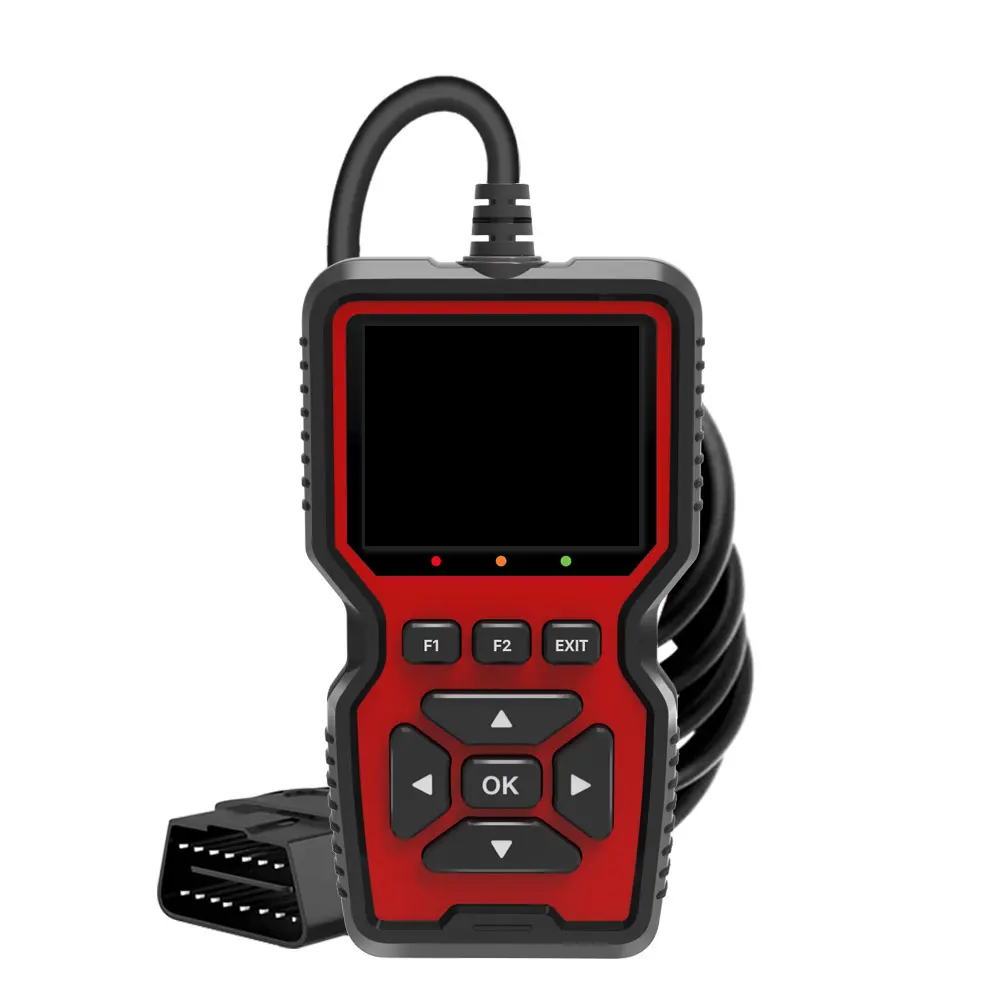
Diagnosing P0473 requires a methodical approach, utilizing an OBD-II scanner and a Digital Multimeter (DMM).
- Verify the Code and Perform Visual Inspection:
- Connect an OBD-II scanner and confirm the presence of P0473. Note any other co-existing diagnostic trouble codes, as they might provide additional context.
- Locate the exhaust gas pressure sensor, typically found mounted on or near the exhaust manifold, turbocharger, or DPF.
- Visually inspect the sensor, its electrical connector, and the entire wiring harness leading to the sensor for any signs of damage, chafing, corrosion, or loose connections.
- Carefully inspect the rubber or steel tube that connects the sensor to the exhaust manifold or pipe. Check for cracks, kinks, disconnections, or evidence of heavy carbon buildup that could clog the tube.
- Live Data Analysis (OBD-II Scanner):
- With the OBD-II scanner, access the live data stream for the Exhaust Gas Pressure (EGEP) parameter.
- With the key on, engine off (KOEO), observe the EGEP reading. It should typically read very close to atmospheric pressure (comparable to the Barometric Pressure (BARO) sensor reading), often presenting as 0.0V or a very low pressure value (e.g., 0 kPa or psi gauge). A P0473 condition usually means this reading will be at its maximum possible voltage (e.g., 5.0V) or an implausibly high pressure value, even when the engine is off.
- Start the engine and monitor the EGEP reading at idle and during a brief, controlled acceleration. Compare its behavior with the Manifold Absolute Pressure (MAP) and BARO sensor readings for plausibility. A sensor stuck at maximum voltage or extremely high pressure throughout operation strongly indicates a sensor or circuit fault.
- Electrical Circuit Testing (Digital Multimeter – DMM):
- Disconnect the EGEP sensor’s electrical connector.
- Check for Reference Voltage: With the key on, engine off (KOEO), use your DMM to measure voltage between the 5V reference voltage pin and the ground pin at the harness side of the connector. You should typically find approximately 5.0V. If not, inspect the wiring back to the ECM for an open or short.
- Check for Ground: Verify good ground continuity at the ground pin of the harness connector to a known good chassis ground. Resistance should ideally be less than 5 ohms.
- Check Signal Wire for Short to Voltage: Reconnect your DMM between the signal wire pin at the harness connector and a good chassis ground (KOEO). There should ideally be near 0V or a very low voltage. If you measure approximately 12V, there is a short to voltage in the signal wire.
- Check Signal Wire for Open Circuit (Optional, Requires ECM Pin-out): If pin-out diagrams are available, perform a continuity test from the sensor signal pin at the harness connector back to the corresponding pin at the ECM connector.
- Sensor Test (If Applicable): Some sensors can be tested for internal resistance or output voltage characteristics using manufacturer-specific procedures. However, if the power and ground to the sensor are good, and the signal output remains consistently high (as observed via live data or DMM), the sensor itself is highly suspect.
- Exhaust Backpressure Check (if electrical tests pass): If all electrical tests confirm the sensor circuit is sound, and the sensor is reporting plausible but very high pressures, consider testing actual exhaust backpressure using a dedicated pressure gauge. This would verify if an actual exhaust restriction (e.g., severely clogged DPF or catalytic converter) is present, although P0473 typically indicates an electrical anomaly.
Recommended Repairs and Solutions
Once the diagnosis is complete, implement the following repairs:
- Replace the Exhaust Gas Pressure Sensor: This is the most common repair for a P0473 code, especially if electrical testing points to an internal sensor failure or if live data shows a consistently high or stuck-max voltage. Ensure you use an OEM-quality replacement part to ensure proper function and longevity.
- Repair or Replace Wiring Harness/Connector:
- If a short to voltage is identified, carefully trace the wiring to locate the chafed section and repair it using appropriate heat-shrink butt connectors and electrical tape, or by replacing the damaged section of the harness.
- If an open circuit or high resistance is found, repair or replace the affected wire or corroded/bent connector pins. Always clean corroded connectors thoroughly with electrical contact cleaner.
- Clear Clogged Sensor Port or Tube: If inspection reveals a clogged tube connecting the sensor to the exhaust stream, carefully remove and clean it. This can often be done with a thin wire, compressed air, or specialized cleaning tools. Ensure the tube is reconnected securely without kinks.
- Address Actual Exhaust Restriction (if confirmed): If extensive diagnostics verify that the P0473 was triggered by a genuine, but electrically plausible, reading of excessively high exhaust backpressure (e.g., due to a severely clogged DPF), then the DPF or catalytic converter must be serviced or replaced. However, this scenario is less common for a “high voltage” electrical fault code like P0473, which typically points to the sensor or its circuit.
- ECM/PCM Replacement: This is a last resort and should only be considered after all other potential causes have been thoroughly investigated and definitively ruled out, as it is a complex and expensive repair.
Important Mechanic’s Tips: After completing any repairs, always clear the fault codes from the ECM/PCM using an OBD-II scanner. Perform a comprehensive test drive, including various driving conditions, to ensure the code does not return and that all engine systems are functioning correctly. For diesel applications, monitor DPF regeneration cycles to confirm they are initiating and completing as expected after sensor replacement, as a faulty sensor can severely impede DPF health.