What Does Code P0523 Mean?
The diagnostic trouble code P0523 signifies an electrical fault indicating that the Engine Control Module (ECM), often referred to as the Powertrain Control Module (PCM), has detected a high voltage condition within the Engine Oil Pressure (EOP) sensor or switch circuit. This sensor is crucial for monitoring the engine’s lubrication system. The PCM typically supplies a 5-volt reference signal to the EOP sensor and monitors the return voltage, which varies proportionally with oil pressure or acts as an on/off switch. When the PCM observes a voltage signal on this circuit that consistently exceeds its calibrated upper threshold (e.g., above 4.9V, often pegging at the 5V reference or even battery voltage in case of a direct short), it interprets this as an anomalous “high voltage” state, thus setting code P0523. This condition usually implies an open circuit on the signal wire, a short to the 5V reference voltage, or a fault within the sensor itself that causes it to report an artificially high voltage.
Common Symptoms
- Malfunction Indicator Lamp (MIL) Illumination: The “Check Engine” light will be illuminated on the dashboard.
- Oil Pressure Warning Light: The dedicated oil pressure warning light may illuminate, remain off when it should be on (if the sensor is faulty and always reads high), or behave erratically.
- Erratic or Maxed-Out Oil Pressure Gauge: The vehicle’s oil pressure gauge (if equipped) may consistently read at its maximum limit, show inconsistent fluctuations, or fail to register any reading.
- Engine in Limp Mode: Some vehicles, particularly those with Variable Valve Timing (VVT) systems that rely on accurate oil pressure readings, may enter a reduced power or “limp home” mode as a protective measure, although this is less common for P0523 unless other related codes are present.
- No apparent driveability issues: In many cases, P0523 is purely an electrical circuit fault and may not immediately impact engine operation, though the engine protection systems are compromised.
What Causes the Code P0523?
- Faulty Engine Oil Pressure (EOP) Sensor/Switch: The most common cause is an internal failure within the sensor itself, such as an internal short to the 5V reference or power, or an open circuit that causes the signal to be pulled high by the PCM’s internal resistance.
- Wiring Harness Issues:
- Short to Voltage: The EOP sensor’s signal wire may be shorted to a constant battery positive (B+) voltage or the 5-volt reference wire, sending an erroneously high signal to the PCM.
- Open Circuit: An open circuit or a high resistance connection in the signal wire between the EOP sensor and the PCM can cause the PCM to interpret the lack of a proper signal as a high voltage, due to internal pull-up resistors within the PCM.
- Corroded or Damaged Connectors: Frayed, bent, or corroded pins within the EOP sensor connector or the PCM connector can disrupt the circuit integrity, leading to an open or intermittent connection that mimics a high voltage condition.
- Faulty Powertrain Control Module (PCM/ECM): While less common, an internal malfunction within the PCM itself, such as a faulty input driver circuit for the EOP sensor, can lead to incorrect voltage readings and trigger P0523. This should only be considered after thoroughly ruling out the sensor and wiring.
How to Diagnose and Troubleshoot
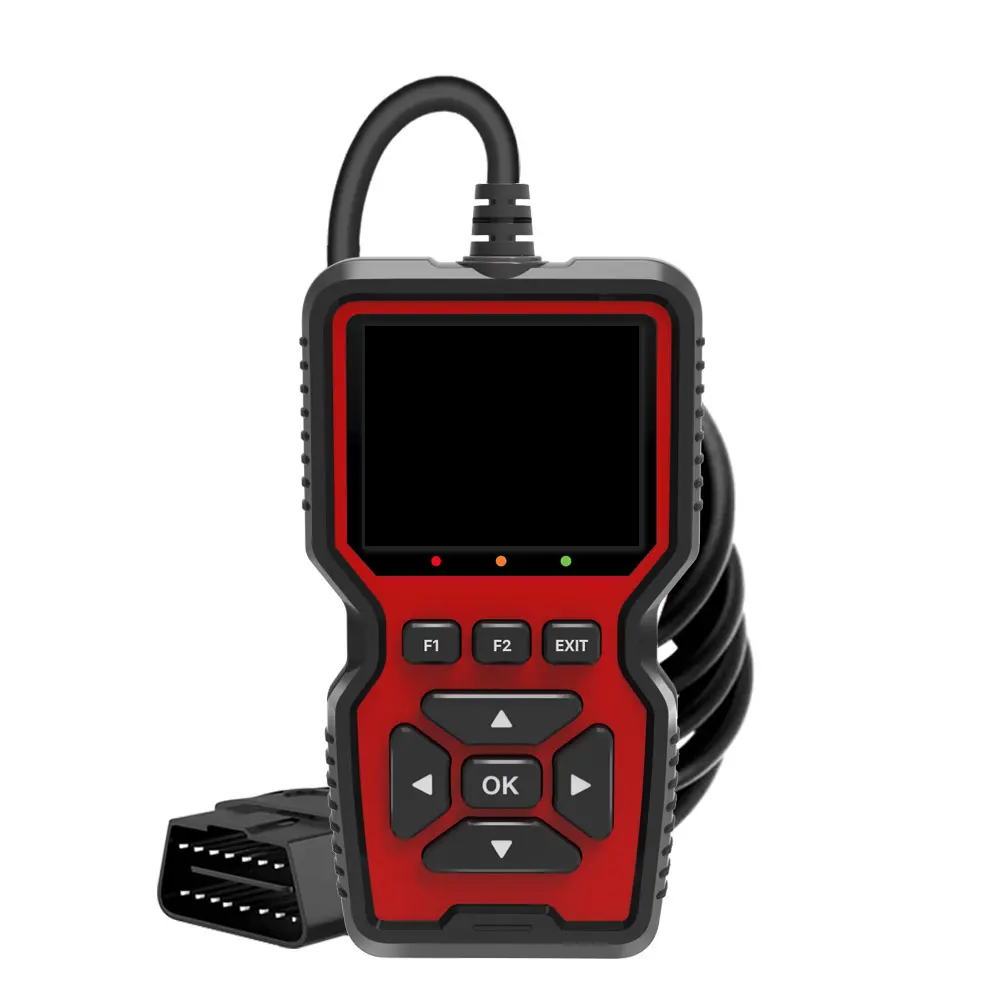
Diagnosing P0523 requires a systematic approach, often utilizing a digital multimeter (DMM) and an OBD-II scanner with live data capabilities.
- Visual Inspection:
- Begin by visually inspecting the EOP sensor and its electrical connector. Look for any signs of damage, corrosion, oil contamination, or loose/frayed wires. Pay close attention to the wiring harness routing, checking for chafing, pinching, or burns, especially near hot exhaust components or moving parts.
- Verify the engine oil level and condition, although low oil pressure typically doesn’t directly cause a “high voltage” electrical fault, it’s good practice to ensure the lubrication system is otherwise sound.
- OBD-II Scanner Diagnostics:
- Connect an OBD-II scanner and retrieve any pending or stored codes, along with freeze frame data. The freeze frame data can provide valuable information about engine operating conditions (RPM, engine load, temperature) when the code was set.
- Monitor the Engine Oil Pressure (EOP) sensor live data PID. With the engine off and key on (KOEO), the voltage should typically be low (e.g., 0.5V to 1.0V or lower, depending on sensor type). If the live data consistently shows a voltage near 5V (e.g., 4.9V – 5.1V) with the engine off, it strongly suggests a short to voltage or an open circuit being pulled high, or a faulty sensor.
- Clear the code after preliminary inspection and retest to see if it immediately returns.
- Digital Multimeter (DMM) Testing (Key-On, Engine-Off – KOEO):
- Test at the EOP Sensor Connector:
- Disconnect the EOP sensor electrical connector.
- Using your DMM, identify the 5V reference wire and confirm it provides approximately 5 volts to ground.
- Identify the ground wire and check for continuity to a known good chassis ground (resistance should be less than 5 ohms).
- Identify the signal wire. With the sensor disconnected, the PCM should ideally read a low voltage or an open circuit. If you still read a high voltage (near 5V) on the signal wire with the sensor disconnected, it indicates a short to voltage in the wiring harness between the connector and the PCM.
- Wiring Harness Integrity Test (Sensor and PCM Disconnected):
- With both the EOP sensor and the PCM connectors disconnected, perform continuity checks.
- Check for continuity on the signal wire between the EOP sensor connector and the corresponding pin at the PCM connector. Resistance should be less than 5 ohms.
- Check the signal wire for shorts to ground: Place one DMM lead on the signal wire terminal and the other on a good chassis ground. Resistance should be infinite (OL).
- Check the signal wire for shorts to voltage: With KOEO, place one DMM lead on the signal wire terminal and the other on ground. It should read 0V. If it reads B+ or 5V, there’s a short to power in the harness.
- EOP Sensor Resistance/Continuity Test (if applicable): Some EOP sensors are simple on/off switches, while others are variable resistors. Consult the vehicle’s service manual for specific testing procedures and expected resistance values. A common failure for variable sensors leading to high voltage is an internal open circuit or short that pulls the signal high.
- Test at the EOP Sensor Connector:
- PCM Diagnosis: Only after meticulously ruling out the EOP sensor and the entire wiring harness for faults should a PCM issue be considered. PCM failures are rare but can manifest as incorrect sensor input readings.
Recommended Repairs and Solutions
Once the root cause of P0523 has been identified through thorough diagnosis, the following repairs are typically recommended:
- Replace the Engine Oil Pressure Sensor/Switch: This is the most frequent solution if testing confirms the sensor itself is faulty, especially if it’s sending a consistently high voltage signal regardless of actual oil pressure or when disconnected. Always opt for an OEM or high-quality aftermarket replacement part to ensure accurate readings and longevity.
- Repair or Replace Wiring Harness: If visual inspection and DMM tests indicate a short to voltage, an open circuit, or excessive resistance in the EOP sensor wiring, the damaged section of the harness should be repaired. Use proper soldering techniques and heat-shrink tubing for durable repairs, or replace the entire affected harness segment if damage is extensive.
- Clean and Secure Connectors: If corrosion or poor terminal tension is identified at either the EOP sensor or PCM connector, clean the terminals thoroughly using specialized electrical contact cleaner and a small brush. Apply dielectric grease to prevent future corrosion upon reassembly and ensure the connector is securely latched.
- Verify Oil Level and Quality: Although not a direct fix for the P0523 electrical fault, ensuring the engine oil is at the correct level and is of the specified type and quality is paramount for overall engine health and longevity. It prevents actual low oil pressure conditions that a faulty sensor might otherwise mask.
- PCM Replacement/Reprogramming: If all other components (sensor, wiring, connectors) have been thoroughly tested and confirmed to be in good working order, and the P0523 code persists, PCM replacement may be necessary. This is a complex and often expensive repair, typically requiring the new PCM to be programmed to the specific vehicle’s VIN and immobilizer system. Always exhaust all other diagnostic avenues before condemning the PCM.