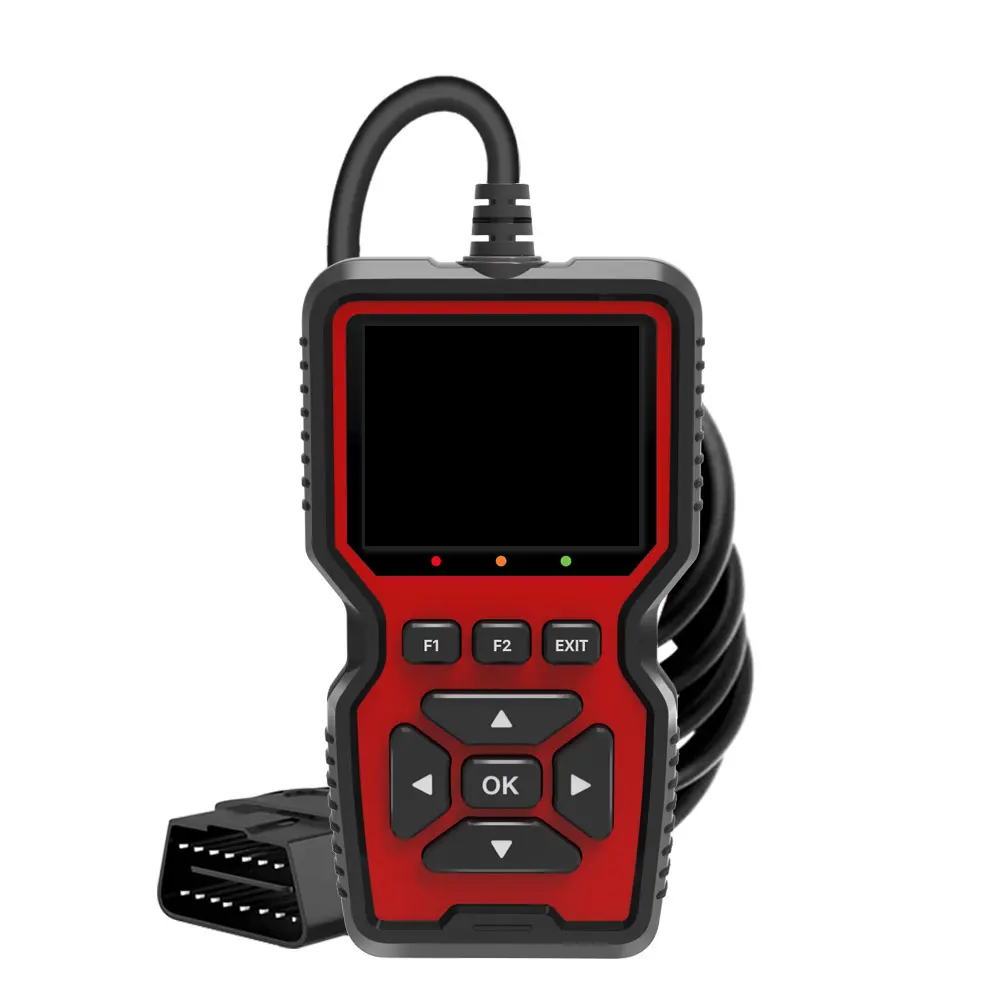
What Does Code P1130 Mean?
DTC P1130 signifies “Lack Of HO2S Switch – Adaptive Fuel At Limit,” specifically referring to the upstream Heated Oxygen Sensor (HO2S) for Bank 1, Sensor 1. This code is triggered when the Powertrain Control Module (PCM) detects that the Bank 1, Sensor 1 HO2S is not oscillating sufficiently or at all between its rich (high voltage, ~0.9V) and lean (low voltage, ~0.1V) states, which is critical for closed-loop fuel control. Concurrently, the PCM has reached the adaptive fuel trim (Long Term Fuel Trim – LTFT) limit in an attempt to compensate for the perceived rich or lean condition, but is unable to bring the air/fuel ratio back into a desirable range or induce proper HO2S switching activity. This indicates a significant deviation in the air/fuel mixture that the PCM cannot correct, or a failure of the sensor to accurately report that deviation, despite its efforts to adjust fuel delivery.
Common Symptoms
- Illuminated Malfunction Indicator Lamp (MIL) – Check Engine Light.
- Reduced engine performance, including hesitation, lack of power, or poor acceleration.
- Increased fuel consumption due to improper air/fuel mixture (running rich or PCM over-compensating).
- Rough idle or engine stalling in severe cases.
- Possible sulfur or “rotten egg” smell from the exhaust if the engine is running excessively rich.
- Failure to pass emissions inspections due to elevated exhaust emissions.
What Causes the Code P1130?
- Vacuum Leaks: Unmetered air entering the engine after the Mass Air Flow (MAF) sensor, leading to a lean condition that the PCM attempts to correct by adding fuel, pushing adaptive fuel trims to their positive limit.
- Exhaust Leaks: Leaks in the exhaust system upstream of the Bank 1, Sensor 1 HO2S can draw in ambient air, causing the sensor to falsely report a lean condition.
- Faulty Heated Oxygen Sensor (HO2S) Bank 1 Sensor 1: The sensor itself may be contaminated, degraded, or electrically faulty, leading to slow response times or a complete lack of switching, even if the air/fuel mixture is correct.
- Fuel System Malfunctions: Issues such as low fuel pressure (due to a weak fuel pump or clogged fuel filter), a faulty fuel pressure regulator, or clogged/malfunctioning fuel injectors can cause a lean condition.
- Mass Air Flow (MAF) Sensor Malfunction: An inaccurate MAF sensor reading (e.g., under-reporting airflow) can cause the PCM to calculate incorrect fuel delivery, leading to an incorrect air/fuel ratio and subsequent HO2S switching issues.
- Engine Mechanical Issues: Problems such as low engine compression, incorrect valve timing, or significant valvetrain wear can result in inefficient combustion and an abnormal exhaust gas composition.
- Contaminated HO2S: Exposure to contaminants like silicone sealants, oil, or coolant can coat the sensor element, impeding its ability to detect oxygen levels accurately.
- Wiring and Connector Issues: Damaged, corroded, or loose wiring and connectors in the HO2S signal or heater circuit can disrupt sensor operation.
- Clogged Positive Crankcase Ventilation (PCV) System: A restricted PCV valve or hoses can contribute to vacuum issues or internal engine pressure problems affecting combustion.
How to Diagnose and Troubleshoot
Diagnosis of P1130 requires a methodical approach, utilizing an OBD-II scan tool with live data capabilities and a Digital Multimeter (DMM).
- Initial Scan and Data Analysis: Connect an OBD-II scan tool. Record any other existing Diagnostic Trouble Codes (DTCs), especially those related to MAF, fuel pressure, or misfires, as they can directly influence fuel trims and HO2S readings. Note the freeze frame data associated with P1130 to understand engine conditions when the fault occurred.
- Live Data Monitoring:
- Monitor Short Term Fuel Trim (STFT) and Long Term Fuel Trim (LTFT) for Bank 1. A P1130 indicates that LTFT is likely at its positive or negative limit (e.g., +20% or -20%) and not able to bring STFT to near zero.
- Observe Bank 1 Sensor 1 HO2S voltage. This sensor should rapidly switch between approximately 0.1V (lean) and 0.9V (rich) once the engine is in closed-loop operation. If the voltage is flatlined, sluggish, or stuck high/low, investigate further.
- Verify Mass Air Flow (MAF) sensor readings at idle and at a steady 2500 RPM. Compare these values to manufacturer specifications or known good readings for your vehicle.
- Ensure the engine is operating in closed-loop fuel control by monitoring engine coolant temperature and other parameters.
- Visual Inspection:
- Carefully inspect all vacuum lines, intake manifold gaskets, and the PCV system for cracks, disconnections, or leaks.
- Examine the exhaust system for any visible leaks or cracks upstream of the Bank 1, Sensor 1 HO2S. Use a stethoscope or a smoke machine for thorough inspection.
- Inspect the wiring harness and connector for the Bank 1, Sensor 1 HO2S for any signs of damage, fraying, corrosion, or improper connection.
- Visually check the HO2S itself for excessive carbon buildup, oil residue, or discolored deposits (e.g., from coolant or silicone).
- Vacuum Leak Detection: If fuel trims are excessively positive (indicating a lean condition), perform a comprehensive vacuum leak test using a smoke machine. Introducing smoke into the intake manifold will reveal any leaks.
- Fuel System Integrity Check: If fuel trims are excessively negative (indicating a rich condition) or positive but fuel pressure is suspected:
- Connect a mechanical fuel pressure gauge to the fuel rail and compare actual pressure to manufacturer specifications at idle and under load.
- If suspected, perform a fuel injector balance test to identify any leaking or clogged injectors.
- HO2S Circuit Testing (using DMM):
- Disconnect the HO2S connector. Using a DMM, check the resistance of the sensor’s heater circuit (typically two wires of the same color). Refer to service manual specifications; typically 2-10 ohms. An open circuit indicates a faulty heater.
- With the ignition ON (engine off or running, depending on design), check for 12V supply to the heater circuit terminals on the vehicle’s harness side of the connector.
- Check for continuity of the HO2S signal wire from the sensor connector back to the PCM connector. Verify no shorts to ground or power.
- MAF Sensor Verification: Clean the MAF sensor with a specialized MAF sensor cleaner. Re-evaluate live data. If readings remain inaccurate, consider testing its voltage output linearity or replacing it.
- Exhaust Backpressure Check: An overly restrictive exhaust system can create abnormal pressure readings and affect O2 sensor performance. Test exhaust backpressure if other common causes are ruled out.
Recommended Repairs and Solutions
Once the root cause of P1130 has been identified through proper diagnosis, the following repairs are typically performed:
- Repair Vacuum Leaks: Replace any cracked, brittle, or disconnected vacuum hoses, intake manifold gaskets, throttle body gaskets, or a faulty PCV valve. Ensure all intake components are sealed correctly.
- Repair Exhaust Leaks: Weld any cracks in the exhaust manifold or pipes upstream of the HO2S, or replace faulty exhaust gaskets and tighten connections to eliminate leaks.
- Replace Faulty HO2S (Bank 1 Sensor 1): If diagnostic testing confirms the HO2S is sluggish, contaminated, or electrically failed, replace it with an OEM-quality sensor. Ensure proper torque specifications are followed during installation to prevent damage.
- Address Fuel System Issues: Replace a clogged fuel filter, a weak fuel pump, or a malfunctioning fuel pressure regulator to restore correct fuel pressure. Clean or replace clogged fuel injectors if necessary.
- Clean or Replace MAF Sensor: If the MAF sensor is contaminated or providing inaccurate readings, thoroughly clean it with an approved MAF sensor cleaner. If cleaning does not resolve the issue, replacement may be necessary.
- Repair Wiring or Connectors: If damaged, corroded, or loose wiring/connectors are found in the HO2S circuit, repair them using proper soldering and heat-shrink techniques, or replace the connector housing.
- PCM Re-learn Procedure: After performing any significant repairs (e.g., O2 sensor replacement, MAF replacement, major vacuum leak repair), it is crucial to clear the DTCs and perform a PCM re-learn procedure. This typically involves a specific drive cycle or, in some cases, a scan tool-initiated reset, allowing the PCM to re-calibrate its fuel trims.
- Mechanic’s Tip: Avoid the common mistake of simply replacing the O2 sensor without proper diagnosis. The P1130 code often indicates that the O2 sensor is accurately reporting an underlying air/fuel mixture problem rather than being the source of the problem itself. Always confirm the true root cause before parts replacement.