What Does Code P1138 Mean?
DTC P1138 signifies that the Engine Control Module (ECM) or Powertrain Control Module (PCM) has detected a lack of switching activity from the Heated Oxygen Sensor 1, Bank 2 (HO2S12) and that the sensor consistently indicates a rich exhaust condition. Specifically, “Bank 1 Sensor 2” refers to the oxygen sensor located after the catalytic converter on the bank of cylinders that contains cylinder #1 (or the single bank on an inline engine). The downstream oxygen sensor’s primary role is to monitor the efficiency of the catalytic converter by measuring the oxygen content in the exhaust gas post-catalyst. Unlike upstream (pre-catalyst) sensors, which cycle rapidly between rich (high voltage, ~0.8-0.9V) and lean (low voltage, ~0.1-0.2V) states to enable fuel trim adjustments, the downstream sensor on a healthy system should exhibit a relatively stable voltage, typically oscillating slowly around a midpoint (e.g., 0.45V to 0.7V), indicating efficient oxygen storage by the catalyst. A sustained high voltage (above approximately 0.8V) from HO2S12 without adequate lean switching indicates to the ECM that the exhaust gases are consistently rich, implying either the catalytic converter is not functioning optimally to store oxygen, there is an underlying severe rich-running condition, or the sensor itself is faulty and providing an erroneous reading. The ECM sets P1138 when the HO2S12 voltage remains above its programmed rich threshold for a predetermined period without registering any lean excursions, thus failing its internal diagnostic monitor for catalyst efficiency or sensor functionality.
Common Symptoms
- Malfunction Indicator Lamp (MIL) illumination: The “Check Engine” light will be illuminated on the dashboard.
- Decreased fuel economy: If the rich condition is genuine and impacting overall engine operation or fuel trims.
- Sulfur or “rotten egg” smell from exhaust: A strong odor of unburnt fuel or sulfur can indicate an excessively rich condition or a struggling catalytic converter.
- Failed emissions test: Due to elevated hydrocarbon (HC) and carbon monoxide (CO) emissions if the catalyst is inefficient or the engine is truly running rich.
- Reduced engine performance: Although less common for a downstream sensor, a severe underlying rich condition could lead to noticeable symptoms like rough idle or poor acceleration.
What Causes the Code P1138?
- Faulty Heated Oxygen Sensor (HO2S12): The sensor itself may be defective, causing it to incorrectly report a consistently rich condition or become unresponsive.
- Internal short or contamination of HO2S12: Damage to the sensor element or internal wiring can cause a stuck rich signal.
- Excessive engine rich condition: An underlying engine problem causing an overly rich air/fuel mixture that overwhelms the catalytic converter. Examples include leaking fuel injectors, high fuel pressure, faulty fuel pressure regulator, a miscalibrated Mass Air Flow (MAF) sensor, or a malfunctioning Engine Coolant Temperature (ECT) sensor.
- Failed or inefficient catalytic converter: If the catalytic converter is no longer capable of storing and releasing oxygen effectively, the downstream HO2S12 will indeed register a persistently rich exhaust, mimicking the upstream sensor’s rapid switching or staying rich.
- Wiring harness or connector issues: Damage, corrosion, or an open circuit in the HO2S12 signal or heater wires, or a short to voltage, can lead to incorrect signal interpretation by the ECM.
- Exhaust system leaks: While usually causing lean conditions, an exhaust leak very close to or upstream of the HO2S12 might, in certain rare circumstances or specific engine conditions, influence its reading negatively to appear rich, or a leak much further upstream could contribute to the catalyst being overwhelmed.
- ECM/PCM malfunction: Although rare, a faulty Engine Control Module could misinterpret the sensor’s signal or incorrectly set the code.
How to Diagnose and Troubleshoot
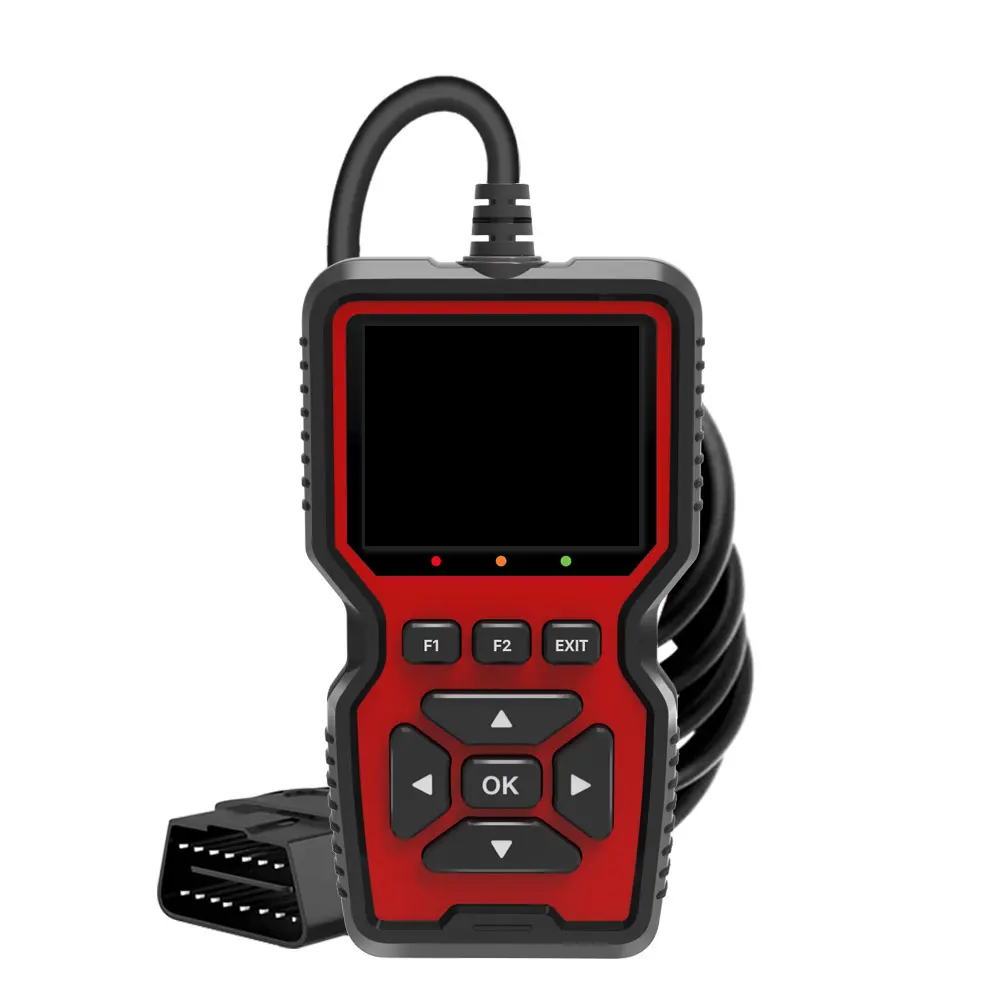
Diagnosis of P1138 requires a systematic approach, utilizing an OBD-II scanner, digital multimeter (DMM), and visual inspection:
- Verify DTCs and Freeze Frame Data: Connect an OBD-II scanner and confirm P1138 is present. Note any other related codes (e.g., fuel trim, misfire, or upstream O2 sensor codes) and examine freeze frame data to understand engine conditions when the code was set. Address any upstream O2 sensor or severe rich-condition codes first.
- Visual Inspection:
- Inspect the HO2S12 wiring harness and connector for signs of chafing, melting, corrosion, or loose connections. Ensure the connector is fully seated.
- Check for obvious exhaust leaks, particularly near the HO2S12 and upstream components (manifolds, flex pipes, catalytic converter). Listen for abnormal exhaust sounds.
- Examine the sensor itself for physical damage or heavy carbon deposits.
- Live Data Analysis (OBD-II Scanner):
- Monitor HO2S12 (Bank 1 Sensor 2) voltage. On a healthy system, this sensor should show a relatively stable voltage, typically between 0.45V and 0.7V, with slow, infrequent oscillations. If it is consistently stuck high (e.g., 0.8V to 0.9V or higher) and shows no significant switching, it confirms the rich reading.
- Compare HO2S12 voltage with HO2S11 (Bank 1 Sensor 1 – upstream sensor) voltage. The upstream sensor should fluctuate rapidly between low (lean) and high (rich) voltages. If HO2S12 mirrors HO2S11’s rapid switching, this is a strong indicator of an inefficient or failed catalytic converter, as it’s not effectively storing oxygen.
- Observe Short Term Fuel Trim (STFT) and Long Term Fuel Trim (LTFT) for Bank 1. Highly negative fuel trim values (e.g., -15% or more) indicate the ECM is pulling fuel to compensate for an excessively rich condition, suggesting a genuine rich running issue.
- Monitor other relevant sensors: Mass Air Flow (MAF), Engine Coolant Temperature (ECT), and Manifold Absolute Pressure (MAP) sensors for plausible readings, as their inaccuracies can lead to an actual rich condition.
- Digital Multimeter (DMM) Testing (Key-On, Engine-Off and Engine Running):
- Heater Circuit Check: Disconnect the HO2S12 connector. Identify the heater circuit wires (usually two wires of the same color or a power and ground pair). With the key ON, measure voltage between these wires or between one wire and chassis ground. Expect battery voltage (approx. 12V) on one wire and ground on the other. If power or ground is missing, trace the circuit back to the fuse box, relay, or ECM.
- Signal Wire Voltage (back-probe): With the sensor connected and the engine running, carefully back-probe the signal wire (typically one unique color) at the connector. Compare this reading to the live data on the scanner. A consistent high voltage (0.8V+) without fluctuation confirms a stuck rich signal.
- Continuity/Resistance Checks: With the sensor disconnected from the harness, check for continuity between the sensor signal wire terminal and ground/power in the harness side to rule out short circuits. Check the internal resistance of the sensor’s heater element (refer to service manual specifications).
- Fuel System Integrity Check: If live data suggests an actual rich condition (negative fuel trims), perform a fuel pressure test at the rail to check for high fuel pressure. Consider an injector balance test to identify leaking fuel injectors.
Recommended Repairs and Solutions
The repair strategy for P1138 depends on the root cause identified during diagnosis:
- Replace the HO2S12 Sensor: If diagnostic steps, particularly live data monitoring and DMM tests, indicate the sensor is faulty, unresponsive, or consistently reading rich without external influence, replacing the HO2S12 is often the most direct solution. Always use a high-quality OEM or equivalent aftermarket sensor to ensure proper functionality and longevity.
- Repair Exhaust System Leaks: If an exhaust leak is detected near the sensor or catalytic converter, repair it by replacing faulty gaskets, clamps, or sections of exhaust pipe. Welding may be required for more severe damage.
- Repair Wiring and Connectors: If the wiring harness or connector for the HO2S12 is damaged, corroded, or has an open/short circuit, repair or replace the affected section using proper automotive wiring repair techniques (e.g., soldering and heat-shrink tubing for splices). Ensure all connections are clean and secure.
- Address Underlying Rich Running Conditions: If the engine is truly running rich, the root cause must be identified and rectified. This may involve:
- Replacing a faulty Mass Air Flow (MAF) sensor.
- Replacing a leaking fuel injector or a faulty fuel pressure regulator.
- Repairing components of the EVAP system (e.g., purge valve stuck open).
- Replacing a faulty Engine Coolant Temperature (ECT) sensor that incorrectly signals a cold engine.
- Replace Catalytic Converter: If diagnostics confirm the catalytic converter is inefficient (e.g., HO2S12 mirroring HO2S11 switching), it will need to be replaced. This is often an expensive repair, so thorough verification is critical before recommending replacement. Ensure any underlying rich condition is resolved first, as it can quickly damage a new converter.
- Clear DTCs and Perform Drive Cycle: After completing any repairs, clear the P1138 code using an OBD-II scanner. Perform a comprehensive drive cycle, including varying engine speeds and loads, to allow the ECM to run its diagnostic monitors and confirm the repair has successfully resolved the issue. Monitor live data during the drive to ensure HO2S12 functionality is restored.