What Does Code P1228 Mean?
The OBD-II diagnostic trouble code P1228 indicates a malfunction within the wastegate control system, specifically signifying that the wastegate has “failed open” or is not closing adequately under boost pressure conditions. The Engine Control Module (ECM), often referred to as the Powertrain Control Module (PCM), detects this condition by monitoring the differential between the commanded boost pressure and the actual boost pressure reported by the Manifold Absolute Pressure (MAP) sensor or Boost Pressure Sensor. When the ECM commands a specific level of turbocharger boost to meet engine load demands, but the actual boost pressure observed is significantly lower than expected, and this discrepancy is consistent with a wastegate that is not holding pressure, the P1228 code is triggered. This implies that exhaust gases are being prematurely diverted around the turbine, preventing the turbocharger from spooling up effectively to generate the required boost. The affected subsystem is primarily the forced induction system, compromising engine performance and efficiency.
Common Symptoms
- Reduced Engine Power: A significant and noticeable loss of acceleration and overall engine output, often described as the vehicle feeling “sluggish.”
- Check Engine Light (CEL) Illumination: The Malfunction Indicator Lamp (MIL) will be illuminated on the dashboard.
- Poor Acceleration: The vehicle struggles to gain speed, especially under load or when accelerating from a standstill.
- Limp Mode Activation: The ECM may place the engine into a protective “limp home” mode, severely restricting engine power and RPMs to prevent further damage.
- Elevated Fuel Consumption: The engine may attempt to compensate for the lack of boost by altering fuel delivery, leading to decreased fuel economy.
What Causes the Code P1228?
- Faulty Wastegate Actuator: The diaphragm within the vacuum or pressure-actuated wastegate canister may be ruptured, the internal spring broken, or the actuator rod may be seized or binding.
- Defective Boost Pressure Control Solenoid/Valve: This electronic valve, which regulates the vacuum or pressure applied to the wastegate actuator, may be stuck open, stuck closed, or electrically faulty (e.g., open circuit, short circuit).
- Vacuum Leaks or Pressure Line Issues: Cracked, collapsed, disconnected, or blocked vacuum or pressure lines leading to and from the boost control solenoid and the wastegate actuator.
- Stuck Open Wastegate Flapper Valve: The physical wastegate valve within the turbocharger turbine housing may be seized open due to carbon buildup, corrosion, mechanical damage, or a detached actuator rod, preventing it from sealing properly.
- Wiring Harness Issues: Damaged, corroded, or disconnected wiring to the boost pressure control solenoid or, less commonly, to the MAP/Boost Pressure Sensor.
- Turbocharger Internal Damage: In rare cases, severe damage to the turbocharger’s turbine or compressor wheels can prevent boost generation, although P1228 specifically points to the wastegate control.
How to Diagnose and Troubleshoot
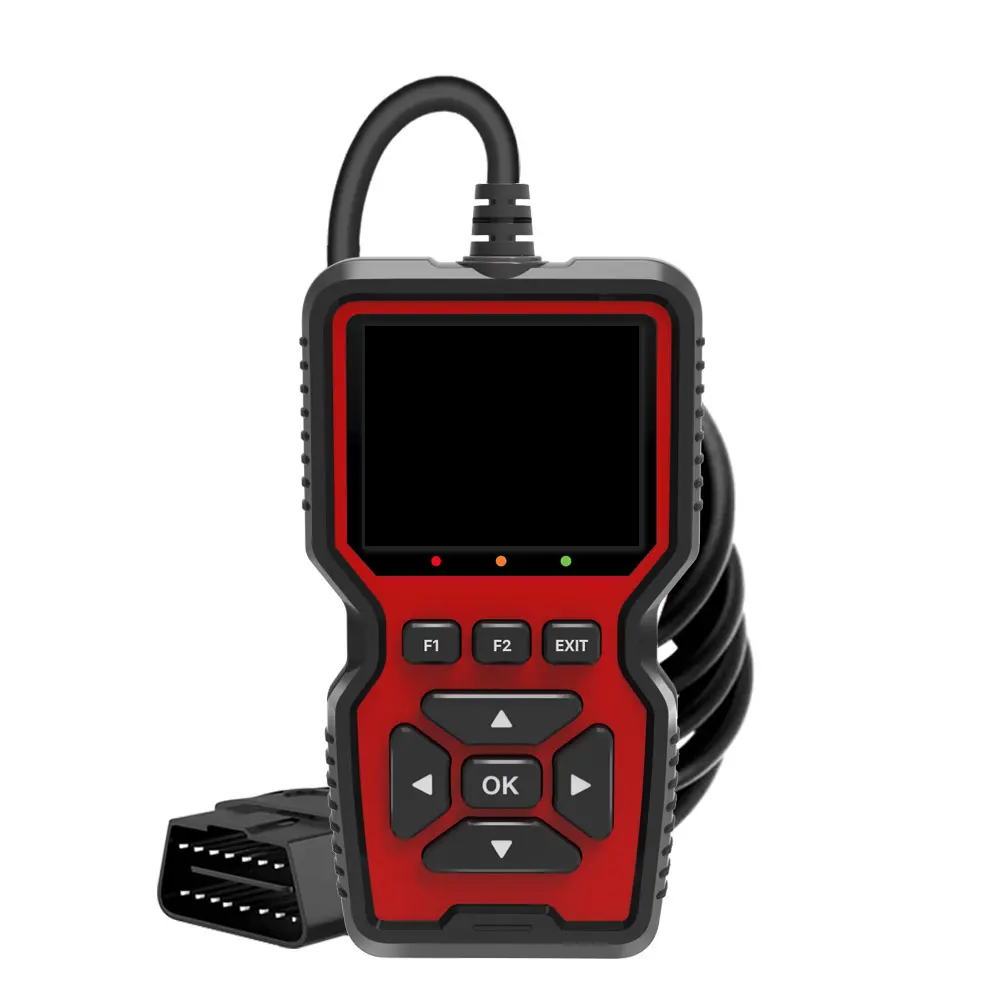
Diagnosis of P1228 requires a systematic approach using a combination of visual inspection, an OBD-II scanner with live data capabilities, and a digital multimeter (DMM) or vacuum/pressure gauge.
- Initial Visual Inspection: Begin by visually inspecting all vacuum and pressure lines connected to the turbocharger system, the boost control solenoid, and the wastegate actuator for any signs of cracks, kinks, disconnections, or deterioration. Inspect the wastegate actuator rod for free movement and ensure it is securely attached to the wastegate flapper mechanism. Look for any obvious signs of physical damage or exhaust leaks around the turbocharger.
- OBD-II Scanner Data Analysis: Connect an OBD-II scanner capable of displaying live data. Monitor the following parameters while the engine is running and under various load conditions (if safe to do so):
- Actual Boost Pressure / MAP Sensor Reading: Compare this value to the vehicle’s specification and observe if it aligns with the commanded boost pressure.
- Commanded Boost Pressure / Desired Boost: Note what the ECM is requesting.
- Wastegate Duty Cycle / Position Sensor (if applicable): Observe how the ECM is commanding the wastegate.
- Check for other related codes, such as P0234 (Overboost) or P0299 (Underboost), which might provide additional context.
- Perform bidirectional control tests on the boost control solenoid or wastegate actuator, if available on your scanner, to observe mechanical response.
- Wastegate Actuator and Control Solenoid Testing:
- Vacuum/Pressure Test: Disconnect the vacuum/pressure line from the wastegate actuator. Using a hand-held vacuum pump (Mityvac) or a regulated pressure source, apply the specified vacuum/pressure directly to the wastegate actuator. Observe if the actuator rod moves smoothly through its full range of motion. Crucially, check if the actuator holds vacuum/pressure without leaking; a leaking diaphragm indicates internal failure.
- Solenoid Electrical Test (DMM): Disconnect the electrical connector from the boost pressure control solenoid. Using a DMM, check the resistance across the solenoid terminals; compare this reading to the manufacturer’s specifications. A reading outside the specified range indicates an internal solenoid fault. With the engine running (and boost commanded), check for proper voltage supply and ground signal from the ECM at the solenoid’s wiring harness connector.
- Wiring Continuity: If the solenoid tests faulty or the ECM is not sending appropriate signals, use the DMM to check for continuity and shorts in the wiring harness between the ECM and the boost pressure control solenoid.
- Manual Wastegate Check: With the engine off and cool, carefully attempt to manually move the wastegate actuator rod or the wastegate flapper valve directly (if accessible). It should move freely without excessive binding or play. If it’s stiff or stuck, the internal flapper valve or its pivot mechanism is likely seized.
Recommended Repairs and Solutions
Based on the diagnostic findings, the following repairs are typically recommended:
- Replace Wastegate Actuator: If the actuator diaphragm is confirmed to be ruptured, the spring broken, or if the mechanism is seized and not holding vacuum/pressure, replacement is necessary. Ensure correct calibration or adjustment of the new actuator rod length per manufacturer specifications, if required, to ensure proper wastegate operation.
- Replace Boost Pressure Control Solenoid/Valve: If electrical tests confirm the solenoid is faulty (incorrect resistance, no power, or no ground signal from ECM), or if it is mechanically stuck, replace the component.
- Repair or Replace Vacuum/Pressure Lines: Any compromised vacuum or pressure lines must be repaired or replaced to restore proper signal transmission to the wastegate actuator.
- Service or Replace Turbocharger Assembly: If the internal wastegate flapper valve is physically stuck open due to carbon buildup, corrosion, or mechanical damage that cannot be repaired separately, the entire turbocharger assembly may need to be serviced or replaced. Some turbos have integrated wastegates that are not individually serviceable.
- ECM/PCM Reflash or Replacement: Only consider an ECM reflash or replacement as a last resort, after ruling out all other potential causes and confirming that the ECM itself is not commanding the wastegate correctly or has an internal fault.
Mechanic’s Tips: Always use OEM or high-quality aftermarket parts for turbocharger system components. After any repair, clear the DTCs and perform a comprehensive drive cycle under varying load conditions to confirm the repair and ensure the code does not return. Pay close attention to systems that use a dedicated vacuum pump for wastegate control, as a faulty pump can also lead to P1228.