What Does Code P1177 Mean?
The OBD-II diagnostic trouble code P1177, commonly defined as a “Synchronization Fault,” is a manufacturer-specific code indicating that the Engine Control Module (ECM) or Powertrain Control Module (PCM) has detected a persistent inability to achieve or maintain proper synchronization within the engine’s air-fuel ratio control system. This typically refers to a significant and often divergent discrepancy in how the ECM is attempting to control fuel delivery and combustion across multiple engine banks (e.g., Bank 1 and Bank 2) in V-type or horizontally opposed engines, or a critical failure in the feedback loop for a single-bank engine preventing harmonious operation. The ECM monitors various sensor inputs, such as those from the Mass Air Flow (MAF) sensor, Manifold Absolute Pressure (MAP) sensor, and Oxygen (O2) sensors (both upstream and downstream), along with crankshaft and camshaft position data, to precisely calculate and deliver the correct amount of fuel. A P1177 code suggests that these critical parameters, particularly fuel trim adaptations, are failing to synchronize or correlate within programmed parameters, indicating a systemic breakdown in the ECM’s ability to achieve and maintain stoichiometric combustion uniformly. This can manifest as one bank running consistently lean while the other runs rich, or both struggling to maintain balance, triggering the code when adaptive fuel trim limits are exceeded or communication between control strategies is compromised.
Common Symptoms
- Illuminated Malfunction Indicator Lamp (MIL): The Check Engine Light will be active.
- Rough Idle or Engine Hesitation: Inconsistent air-fuel mixtures can lead to unstable engine operation.
- Reduced Engine Performance or Power Output: Suboptimal combustion directly impacts power delivery.
- Decreased Fuel Economy: Inefficient combustion and increased fuel corrections can lead to higher fuel consumption.
- Possible Exhaust Odor: A rich or lean running condition can often be detected by a distinct smell of unburnt fuel or sulfur from the exhaust.
- Difficulty Starting: While less common, extreme synchronization faults can affect initial engine startup.
What Causes the Code P1177?
- Contaminated or Failing Mass Air Flow (MAF) Sensor: Inaccurate air mass readings directly impact the ECM’s ability to calculate correct fuel delivery for all banks, leading to a synchronization issue.
- Faulty Oxygen (O2) Sensor(s): A slow-responding, contaminated, or outright failing upstream or downstream O2 sensor (especially if affecting one bank more than the other) can provide incorrect feedback, causing the ECM to desynchronize fuel trims.
- Exhaust Leaks: Leaks in the exhaust system, particularly upstream of an O2 sensor, can introduce unmetered ambient air, causing false lean readings and skewing fuel trim calculations, leading to a synchronization fault.
- Vacuum Leaks: Unmetered air entering the intake manifold post-MAF sensor can affect one or both banks, causing a lean condition that the ECM struggles to correct uniformly, leading to divergent fuel trims.
- Faulty Fuel Injectors: Clogged, leaking, or inconsistently operating fuel injectors can cause an imbalance in fuel delivery, especially if affecting one bank more severely, preventing the ECM from synchronizing fuel trims.
- Fuel Pressure Irregularities: Issues with the fuel pump or fuel pressure regulator can lead to inconsistent fuel pressure, affecting fuel delivery unevenly across banks and thus desynchronizing the air-fuel ratio.
- ECM/PCM Internal Software Glitch or Fault: Although rare, an internal defect or corrupt software within the ECM/PCM could cause it to misinterpret sensor data or fail to properly execute its fuel control synchronization strategy.
How to Diagnose and Troubleshoot
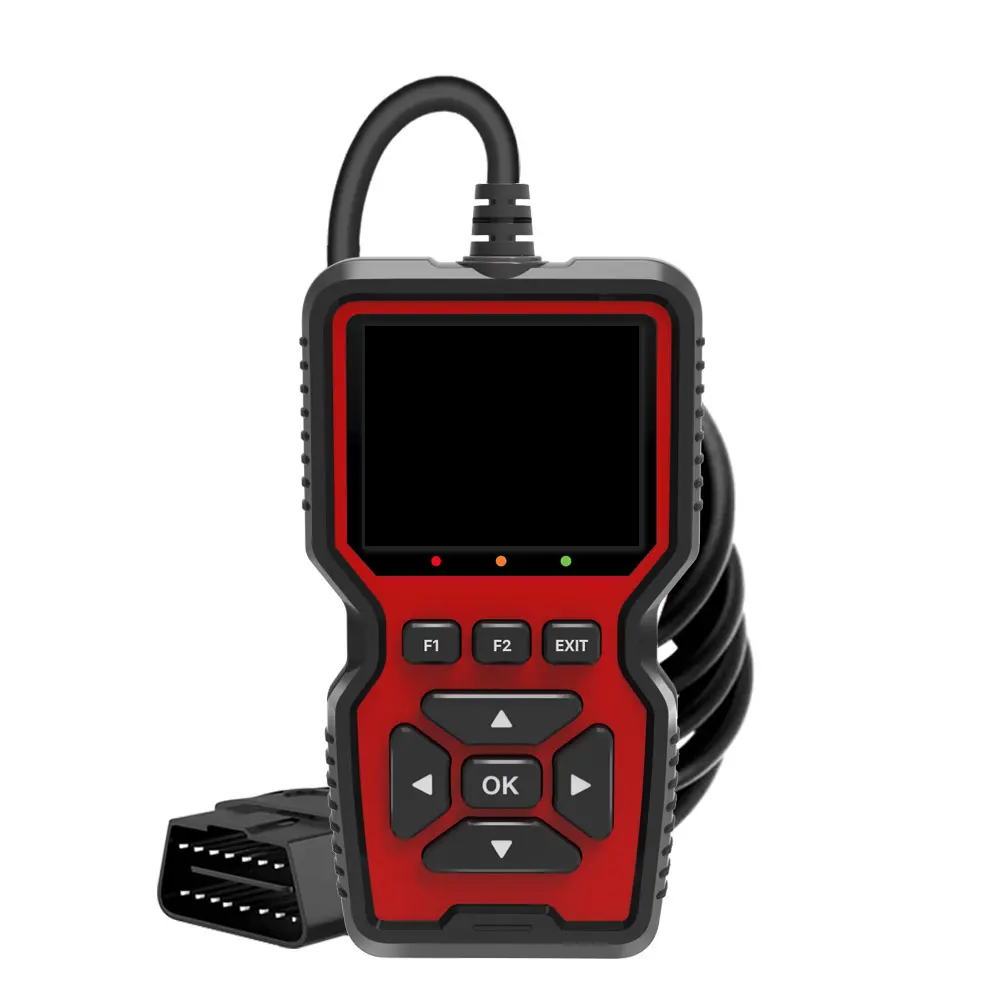
Diagnosing P1177 requires a methodical approach, utilizing an advanced OBD-II scanner and a digital multimeter (DMM).
- Initial Scan and Data Analysis:
- Connect an OBD-II scanner and retrieve freeze frame data. This provides crucial information about engine conditions (RPM, engine load, temperature, fuel trims) at the moment the code was set.
- Monitor live data streams for Short-Term Fuel Trim (STFT) and Long-Term Fuel Trim (LTFT) values for both Bank 1 and Bank 2. Look for significant, persistent divergences (e.g., one bank showing high positive trims while the other shows low or negative trims, or both banks reaching extreme positive or negative limits).
- Observe Oxygen Sensor (O2S) voltage readings for all upstream (sensor 1) and downstream (sensor 2) sensors. Upstream sensors should cycle rapidly and consistently between approximately 0.1V and 0.9V. Downstream sensors should ideally remain relatively stable around 0.45V, indicating efficient catalytic converter operation. Inconsistent cycling or flatlining can indicate a sensor or exhaust leak issue.
- Monitor Mass Air Flow (MAF) sensor readings (grams per second, g/s) at idle and various RPMs. Compare these readings to manufacturer specifications or known good values for your vehicle.
- Monitor Manifold Absolute Pressure (MAP) sensor readings (kPa or inHg) at idle and during acceleration. Look for values consistent with engine load and atmospheric pressure.
- Visual Inspection:
- Carefully inspect all vacuum hoses, intake manifold gaskets, and PCV (Positive Crankcase Ventilation) system components for signs of cracks, deterioration, or loose connections that could cause vacuum leaks. Listen for distinct hissing sounds.
- Examine the exhaust system for any leaks, especially around exhaust manifolds, gaskets, and pipes upstream of the catalytic converter and O2 sensors. Look for soot marks.
- Check the wiring harnesses and electrical connectors for the MAF sensor, O2 sensors, and fuel injectors for any damage, fraying, corrosion, or loose connections.
- Vacuum Leak Testing:
- Perform a detailed vacuum leak test using a professional smoke machine. Introduce smoke into the intake manifold system while the engine is off and observe where smoke escapes. This is highly effective for identifying subtle leaks.
- Fuel System Integrity Tests:
- Perform a fuel pressure test at the fuel rail using a pressure gauge. Compare readings to manufacturer specifications at idle, under load, and with the vacuum line removed from the fuel pressure regulator (if applicable).
- If available with your scanner, conduct a fuel injector balance test to identify any injectors that are not flowing correctly. Alternatively, remove and visually inspect injectors for clogs or inconsistent spray patterns. Resistance test injectors with a DMM.
- MAF Sensor Verification:
- If MAF readings are suspicious, try cleaning the MAF sensor element carefully with a specialized MAF sensor cleaner. Re-evaluate live data after cleaning. If readings remain erratic or out of specification, replacement may be necessary.
- Oxygen Sensor Verification:
- Using a DMM, check the heater circuit resistance of the O2 sensors, as a faulty heater can slow down sensor response. Also, verify proper voltage supply to the heater circuit.
- Monitor O2 sensor response times using an oscilloscope or a fast-refreshing scanner to ensure they switch quickly and accurately.
Recommended Repairs and Solutions
Once the root cause of the P1177 “Synchronization Fault” has been accurately identified through thorough diagnostics, the following repairs are typically recommended:
- Repair Vacuum Leaks: Replace any cracked or deteriorated vacuum hoses, intake manifold gaskets, throttle body gaskets, or faulty PCV valves and associated hoses. Ensure all intake components are sealed correctly.
- Repair Exhaust Leaks: Patch small holes in the exhaust system or replace damaged sections, particularly those upstream of the O2 sensors. Ensure all exhaust connections are tight and sealed to prevent ambient air intrusion.
- Replace Faulty Oxygen Sensor(s): If an O2 sensor is determined to be slow, unresponsive, or has a faulty heater circuit, replace it with a new, high-quality OEM or equivalent part. It’s crucial to select the correct sensor for its specific bank and location (upstream or downstream).
- Clean or Replace MAF Sensor: Initially, attempt to clean a contaminated MAF sensor with a specialized MAF cleaner. If the sensor readings remain inaccurate or erratic after cleaning, or if the sensor is electrically faulty, replacement is necessary.
- Service or Replace Fuel Injectors: If tests indicate clogged, leaking, or poorly performing fuel injectors, they should be professionally cleaned, tested, or replaced. Addressing individual injector issues is vital for balanced fuel delivery across cylinders and banks.
- Address Fuel Pressure Issues: If fuel pressure is found to be outside specifications, diagnose and replace the faulty component, which could be the fuel pump, fuel pressure regulator, or a clogged fuel filter.
- ECM/PCM Reprogramming or Replacement: This is generally a last resort. If all other components have been thoroughly tested and verified as functional, and especially if there are known Technical Service Bulletins (TSBs) for your vehicle related to this code, the ECM/PCM may require a software update (reprogramming) or, in rare cases, replacement.
Mechanics’ Tips: Always begin by checking for related diagnostic trouble codes, as they can provide further context (e.g., P0171/P0174 for lean conditions, P0172/P0175 for rich conditions, P0101 for MAF sensor performance). The key to diagnosing P1177 in the context of fuel trim synchronization is to meticulously compare and contrast live data parameters, especially STFT and LTFT, between Bank 1 and Bank 2. After any repair, clear the DTCs and perform an extended drive cycle to allow the ECM to re-learn its adaptive fuel strategies and confirm the repair’s effectiveness. Pay close attention to electrical connector integrity; corrosion or poor pin tension can cause intermittent issues that mimic sensor failures.