What Does Code P1187 Mean?
The diagnostic trouble code P1187, often classified as an OEM-specific code rather than a universally defined SAE code, typically indicates an issue with “Variant Selection.” In most applications, particularly prevalent in Ford vehicles, this code signifies that the Powertrain Control Module (PCM) has detected an inconsistency or mismatch in the configuration or identification of a specific component or system within the vehicle. This means the PCM is reading data or expecting a signal from a component that does not align with its programmed software configuration or the specific variant it expects to be installed. The PCM identifies this problem when a sensor’s output, an actuator’s response, or the identification data reported by a module contradicts the stored “as-built” data or the calibrated variant selection parameters within its own memory. This discrepancy can occur across various subsystems but is commonly associated with fuel system components (e.g., fuel pressure sensors, fuel pumps, injectors) where different variants might have distinct operational characteristics or identification signals. The PCM activates the Malfunction Indicator Lamp (MIL) when this variant mismatch is detected, signifying a potential misconfiguration or incorrect part installation that could affect engine performance, emissions, or fuel delivery.
Common Symptoms
- Illumination of the Malfunction Indicator Lamp (MIL) on the dashboard.
- Reduced engine power or “limp mode” activation.
- Poor engine performance, including hesitation or rough running.
- Stalling or difficulty starting the engine.
- Decreased fuel efficiency.
- Erratic or inaccurate readings from relevant gauges, such as fuel pressure.
- In some cases, no immediate noticeable symptoms other than the MIL.
What Causes the Code P1187?
- Incorrect Component Installation: The most common cause is the installation of a component (e.g., fuel pressure sensor, fuel pump, fuel injectors) that is physically compatible but electronically or functionally a different “variant” than what the PCM is programmed to recognize or expect for the specific vehicle’s configuration.
- PCM/ECM Software Mismatch or Corruption: An incorrect software calibration, variant programming, or “as-built” data stored in the PCM, potentially resulting from an improper reflash, module replacement without correct programming, or internal PCM memory corruption. The PCM’s internal configuration parameters do not correctly match the installed hardware variants.
- Wiring Harness or Connector Damage: Damage, corrosion, or incorrect pin-out within the wiring harness or connectors leading to the affected component. This can cause incorrect signal interpretation by the PCM, leading it to misidentify the component’s variant.
- Faulty Sensor or Actuator: While less common for a “variant selection” code, a severely faulty or out-of-specification sensor or actuator might produce signals so erratic or out of expected range that the PCM interprets it as an incorrect variant.
- Module Communication Errors: In certain architectures, if an associated module (e.g., Fuel Pump Driver Module, powertrain control module) fails to correctly report its own variant ID or the ID of a connected component to the primary PCM, P1187 may be set.
How to Diagnose and Troubleshoot
Diagnosing P1187 requires a methodical approach, often utilizing OEM-specific diagnostic tools due to its nature as an OEM-specific code related to configuration:
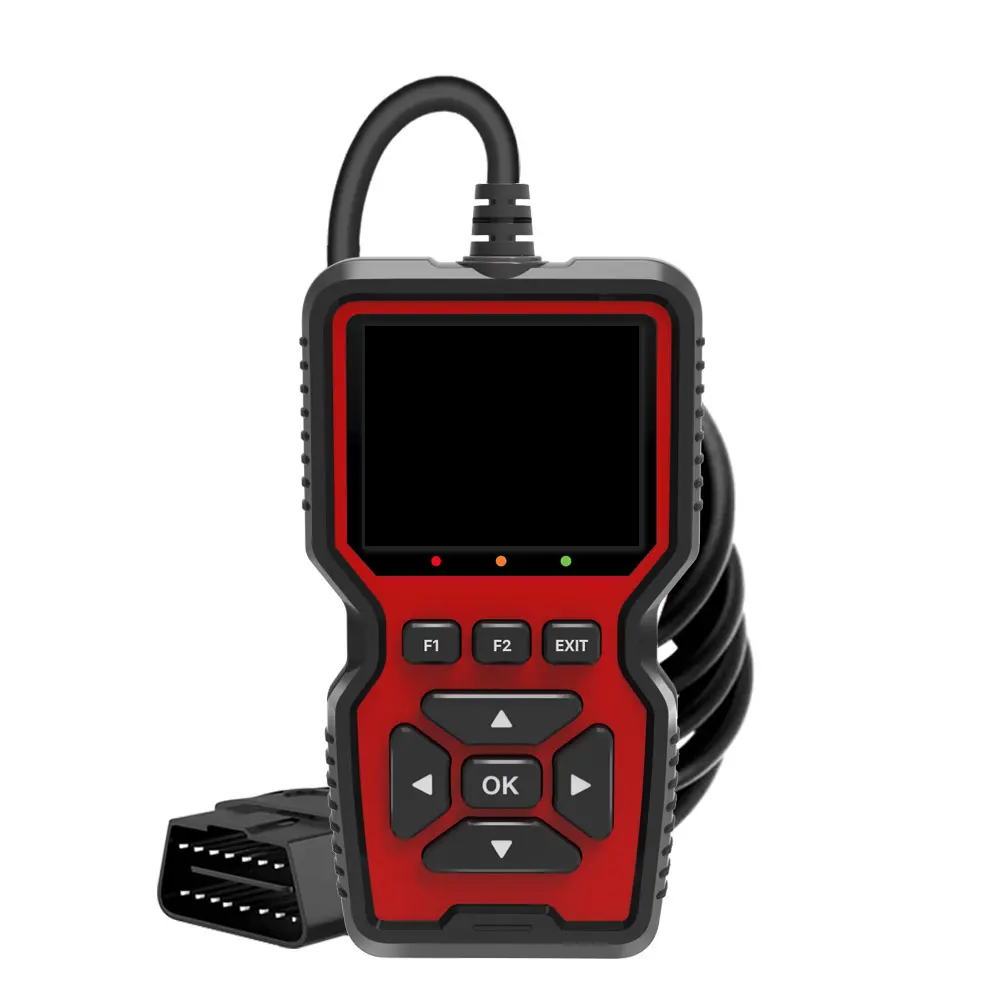
- Perform an Initial Scan and Review Freeze Frame Data: Connect an OBD-II scanner to extract the P1187 code and any associated DTCs. Crucially, review the freeze frame data, which provides a snapshot of engine operating conditions (engine RPM, load, fuel trim, temperatures) at the moment the fault was set. This context can offer initial clues about the system involved.
- Utilize OEM-Specific Diagnostic Software: For “Variant Selection” codes, generic OBD-II scanners may not provide sufficient detail. Employing OEM-specific diagnostic software (e.g., Ford IDS/FDRS, Stellantis wiTECH, GM GDS2) is often essential. These tools allow access to specific module configuration parameters, “as-built” data, variant identification numbers, and facilitate module initialization or learning functions.
- Verify Component Correctness and Part Numbers: Based on the vehicle’s VIN and OEM service information, physically inspect the component(s) suspected of causing the variant mismatch. This often involves fuel system components. Compare the installed part numbers directly against the OEM-specified part numbers for the vehicle’s exact year, make, model, and engine configuration. Ensure that any recently replaced components are indeed the correct variants.
- Check PCM/ECM Calibration and Configuration: Using the OEM diagnostic tool, access the PCM’s software calibration and configuration data. Verify that the “as-built” data and variant selection parameters stored in the PCM match the vehicle’s actual specifications and the installed components. Look for any discrepancies in software versions or specific variant configuration flags. If discrepancies are found, perform a module configuration or “as-built” data upload as per OEM procedures.
- Inspect Wiring Harness and Connectors: Conduct a thorough visual inspection of the wiring harness and connectors for the suspect component. Look for signs of chafing, fraying, corrosion, or damage to terminals. Use a Digital Multimeter (DMM) to check for proper continuity, shorts to ground or power, and correct signal voltages at the sensor/actuator and at the PCM connector, referencing OEM wiring diagrams. Pay particular attention to data lines that might transmit component identification.
- Test Suspect Component: If a specific sensor or actuator is suspected, test its electrical characteristics (resistance, voltage output, frequency) according to OEM service manual specifications using a DMM or oscilloscope. Compare readings to known good values.
- Check for Technical Service Bulletins (TSBs) and Software Updates: Consult OEM resources for any relevant TSBs or software updates related to P1187 or variant selection issues for the specific vehicle. Sometimes, a PCM software update is required to correctly recognize a component variant or to correct an internal calibration error.
- Perform Module Re-initialization/Programming: After any component replacement or if a configuration issue is identified, execute all necessary module re-initialization, relearn, or configuration procedures using the OEM diagnostic tool. This may include fuel injector characterization learning, fuel pump driver module configuration, or other system-specific adaptations.
Recommended Repairs and Solutions
- Replace Incorrect Component: If diagnostics confirm that an incorrect component variant (e.g., an incompatible fuel pressure sensor, fuel pump, or set of injectors) is installed, replace it with the precise OEM-specified part number for the vehicle’s VIN.
- PCM/ECM Reprogramming or Replacement: If the PCM’s software calibration or “as-built” data is incorrect or corrupted, reprogram the PCM with the correct, latest OEM software using an approved J2534 passthrough device and OEM programming software. In rare cases where the PCM itself is internally faulty and cannot hold the correct calibration, replacement of the PCM and subsequent programming will be necessary.
- Repair Wiring Harness or Connectors: If damaged wiring or corroded connectors are identified, perform precise repairs or replace the affected sections of the harness. Ensure all electrical connections are clean, tight, and secure.
- Perform Component Initialization and Learning Procedures: Following the replacement of certain components or any PCM reprogramming, it is critical to perform all required initialization, relearn, or configuration procedures using an OEM diagnostic tool. Failure to do so can prevent the new component or calibration from being correctly recognized and can lead to recurring codes or driveability issues.
- Address Associated Module Faults: If the P1187 code is triggered due to an associated module (e.g., Fuel Pump Driver Module) reporting an incorrect variant, diagnose and repair or replace that specific module, ensuring it is correctly configured for the vehicle.