What Does Code P1186 Mean?
DTC P1186 signifies “Fuel Pump Temperature Sensor Low,” indicating that the Engine Control Module (ECM), also commonly referred to as the Powertrain Control Module (PCM), is receiving an abnormally low voltage signal from the Fuel Pump Temperature Sensor (FTS). This low voltage typically translates to an implausibly high resistance reading from the sensor, or an open circuit, which the ECM interprets as an extremely low fuel temperature, or an electrical fault within the sensor circuit. The FTS is usually an NTC (Negative Temperature Coefficient) thermistor, meaning its electrical resistance decreases as temperature increases, and increases as temperature decreases. Therefore, a “low” signal (low voltage, indicating high resistance) would typically suggest a very cold temperature or an open circuit condition. The ECM utilizes fuel temperature data to calculate fuel density, which is critical for precise fuel delivery, accurate fuel trim adjustments, and, in some systems, for managing fuel pump operation and cooling strategies. When the signal is out of range, the ECM detects a discrepancy with expected operating parameters and illuminates the Malfunction Indicator Lamp (MIL).
Common Symptoms
- Malfunction Indicator Lamp (MIL) Illumination: The “Check Engine” light on the dashboard will be activated.
- Reduced Fuel Economy: Inaccurate fuel density calculations can lead to incorrect fuel trim adjustments and inefficient fuel consumption.
- Engine Performance Issues: May include rough idle, hesitation during acceleration, or a general lack of power due to incorrect fuel mixture.
- Difficulty Starting: Especially in specific ambient temperature conditions, if fuel metering is significantly compromised.
- Fuel Gauge Inaccuracies: In some integrated fuel pump modules, a faulty FTS could potentially impact the function or accuracy of other sensors, such as the fuel level sender.
What Causes the Code P1186?
- Faulty Fuel Pump Temperature Sensor (FTS): The sensor itself may have an internal electrical fault, such as an open circuit or incorrect resistance, causing it to send an errant low voltage signal to the ECM.
- Wiring Harness Issues:
- Open Circuit: A broken wire in the signal circuit or the ground circuit leading to the FTS.
- Short to Ground: The signal wire for the FTS shorting to the vehicle’s chassis ground, which would result in a very low or zero voltage reading at the ECM.
- Corrosion or Loose Connections: Damaged or corroded terminals at the FTS connector, the fuel pump module connector, or the ECM connector can lead to increased resistance and an intermittent or open circuit.
- Faulty Engine Control Module (ECM/PCM): Although less common, a defective ECM could be misinterpreting the FTS signal or failing to provide the correct reference voltage to the sensor.
How to Diagnose and Troubleshoot
A systematic diagnostic approach is essential for accurately resolving P1186:
- Visual Inspection: Begin by visually inspecting the wiring harness and connectors associated with the fuel pump module and FTS. Look for any signs of physical damage, chafing, corrosion, or loose connections. Pay close attention to the harness routing near moving parts or sharp edges that could cause wire damage.
- OBD-II Scanner Data Analysis:
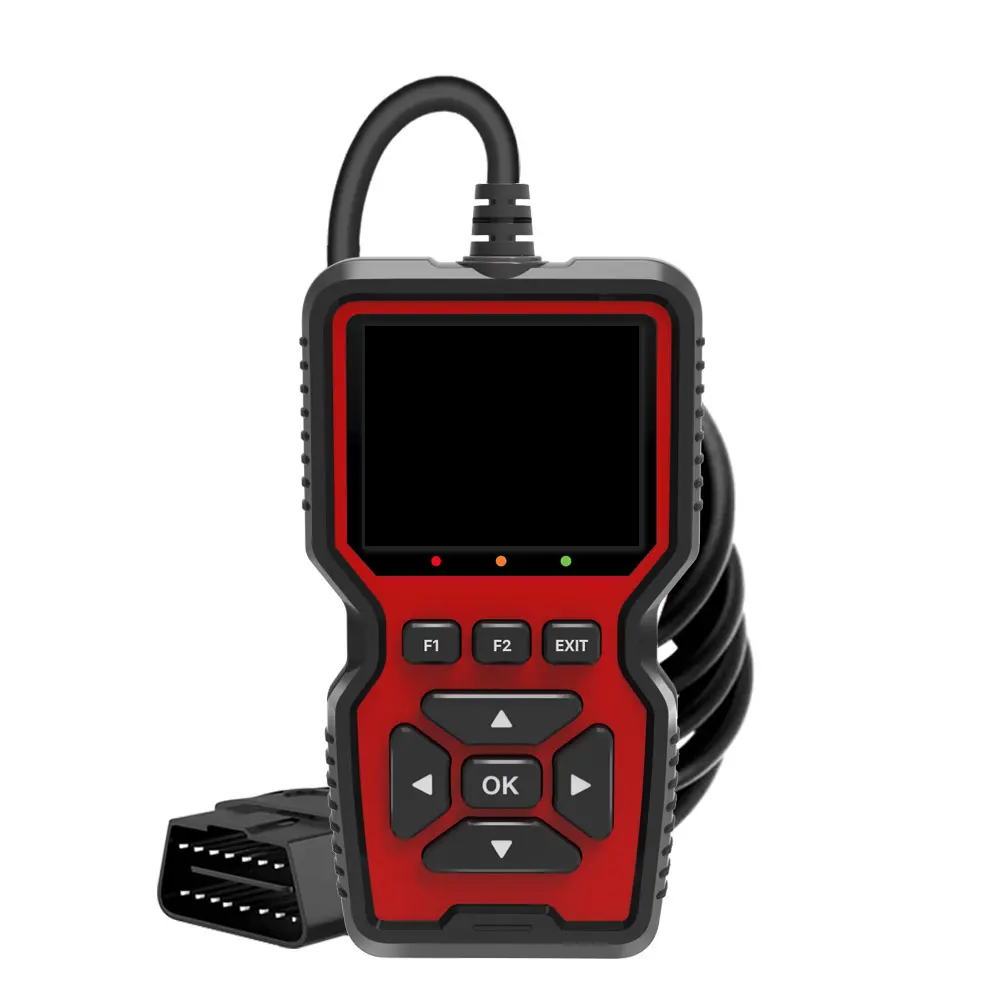
- Connect an OBD-II scanner and check for any additional DTCs that might be present, as they could point to a broader electrical system issue.
- Monitor the live data stream, specifically the Fuel Tank Temperature (FTT) or Fuel Pump Temperature (FPT) Parameter ID (PID). A P1186 “low” condition will typically display an extremely low temperature value (e.g., -40°C/-40°F), a fixed illogical value, or show “sensor invalid.”
- Digital Multimeter (DMM) Testing at the FTS Connector:
- Verify Reference Voltage: With the ignition ON and the FTS disconnected, use a DMM to measure the voltage between the FTS reference voltage wire (typically 5V) and a known good chassis ground. Verify the presence of the specified reference voltage from the ECM.
- Check Ground Circuit Continuity: Measure the resistance between the FTS ground wire terminal and a known good chassis ground. The reading should be very low (close to 0 ohms), indicating good continuity.
- Test for Short to Ground: With the FTS disconnected and the ignition OFF, check for continuity between the FTS signal wire terminal and chassis ground. There should be no continuity (open circuit). If continuity exists, trace the wiring to locate the short.
- FTS Resistance Test:
- Disconnect the FTS from the wiring harness.
- Measure the resistance across the two terminals of the FTS using a DMM.
- Compare this reading to the manufacturer’s specifications for the sensor at the current ambient temperature. An open circuit (infinite resistance) or a resistance value significantly higher than specified at the current temperature would indicate a faulty sensor.
- Wiring Harness Continuity and Short Test (ECM Disconnected):
- Disconnect both the FTS and the ECM connectors.
- Test for continuity on the FTS signal wire between the FTS connector terminal and the corresponding ECM connector terminal. There should be very low resistance (close to 0 ohms).
- Test for continuity between the FTS signal wire and all other wires in the harness, as well as chassis ground. There should be no continuity.
Recommended Repairs and Solutions
Once the root cause of P1186 has been identified through comprehensive diagnostics, the appropriate repairs can be performed:
- Repair or Replace Wiring Harness: If an open circuit, short to ground, or corroded connector is found, perform precise wiring repairs using proper soldering and heat-shrink tubing, or replace the damaged section of the harness. Ensure all connections are secure and weatherproofed to prevent future issues.
- Replace Fuel Pump Temperature Sensor: If the FTS itself tests faulty (e.g., open circuit, incorrect resistance), it should be replaced. Be aware that on many modern vehicles, the FTS is an integral component of the entire fuel pump module assembly and may not be replaceable individually, necessitating replacement of the complete fuel pump module.
- ECM/PCM Replacement: This should only be considered as a last resort after thoroughly verifying that the FTS and all associated wiring are unequivocally functional and within manufacturer specifications. ECM failures leading to sensor codes are rare.
Important Mechanics’ Tips:
- Always disconnect the vehicle’s battery before performing any electrical work, especially when dealing with fuel system components.
- Relieve fuel system pressure according to manufacturer specifications before accessing or disassembling any part of the fuel system.
- Exercise extreme caution when working around fuel; ensure adequate ventilation and eliminate all potential ignition sources to prevent fire hazards.
- After completing repairs, clear the DTCs using an OBD-II scanner and perform a drive cycle to confirm that the code does not return and that the fuel temperature readings are accurate within the live data stream.