What Does Code P1221 Mean?
DTC P1221 indicates a general malfunction within the vehicle’s Traction Control System (TCS). This is a manufacturer-specific code, which means its precise definition can vary slightly between vehicle makes, but it consistently points to an issue preventing the TCS from operating correctly. The Engine Control Module (ECM) or Powertrain Control Module (PCM), often in conjunction with the Antilock Brake System (ABS) module and/or a dedicated Traction Control Module (TCM), monitors various sensors and actuators to ensure the TCS functions as intended. These inputs typically include wheel speed sensors, throttle position sensor (TPS), steering angle sensor, and sometimes yaw rate/lateral acceleration sensors.
When the ECM/PCM detects a condition where the TCS cannot perform its primary function—which is to prevent loss of traction by selectively applying brakes or reducing engine power—it will set code P1221. This could be due to an electrical circuit fault, an implausible signal from a sensor critical to TCS operation, an internal fault within the ABS/TCS control module, or a communication error that renders the system inoperative or significantly degraded. The code signifies a critical integrity issue within the traction control subsystem, often resulting in the system being disabled for safety reasons.
Common Symptoms
- Traction Control Light illuminated on the instrument cluster.
- The ABS warning light may also be illuminated, as TCS is often integrated with the ABS system.
- Noticeable loss of traction control functionality on slippery surfaces.
- The vehicle may enter a “limp mode” with reduced engine power if the fault significantly impacts engine management aspects of traction control.
- The cruise control system may be inoperative.
- Intermittent or consistent issues with vehicle stability control (if applicable and integrated).
What Causes the Code P1221?
- Faulty ABS/TCS Control Module: An internal defect within the primary control unit responsible for traction control operations.
- Damaged or Corroded Wiring/Connectors: Opens, shorts, or high resistance in the wiring harness or connectors leading to the ABS/TCS module, wheel speed sensors, or other related components.
- Faulty Wheel Speed Sensor(s): Inconsistent, erratic, or no signal from one or more wheel speed sensors, crucial for detecting wheel slip.
- Faulty Steering Angle Sensor: An incorrect or implausible signal from the steering angle sensor, which provides input for directional control.
- Faulty Throttle Position Sensor (TPS) or Accelerator Pedal Position (APP) Sensor: For some manufacturers, P1221 can relate to an issue within the electronic throttle control system, which is integral to engine power reduction for traction control.
- Internal Mechanical Failure of ABS Hydraulic Unit: Issues within the hydraulic components of the ABS system that are shared or critical for TCS operation (e.g., pump motor, solenoid valves).
- Low System Voltage or Faulty Charging System: Insufficient or unstable power supply can lead to control module malfunctions or communication errors.
- Incorrect Wheel/Tire Size: Discrepancies in wheel speed signals due to mismatched tire sizes can sometimes trigger the code by providing implausible data to the control module.
How to Diagnose and Troubleshoot
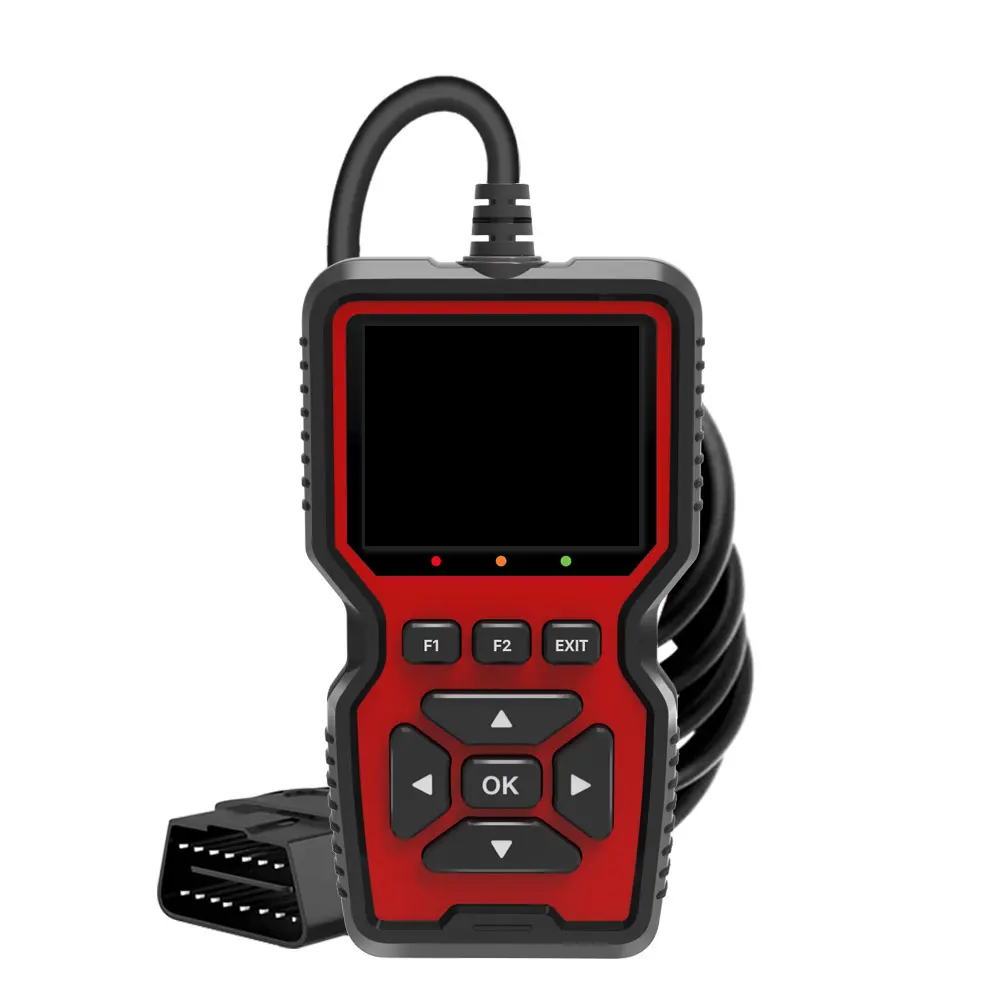
Diagnosis of P1221 requires a methodical approach, often involving an advanced OBD-II scan tool and a digital multimeter (DMM).
- Perform a Comprehensive Scan: Utilize an advanced OBD-II scanner to check for any other related diagnostic trouble codes (DTCs), especially C-codes (Chassis codes related to ABS/TCS) or U-codes (Network Communication codes). These accompanying codes are often more specific and can pinpoint the exact circuit or component fault.
- Visual Inspection:
- Inspect the wiring harnesses and electrical connectors for the ABS/TCS module, wheel speed sensors, steering angle sensor, and throttle body for any signs of physical damage, corrosion, fraying, or loose connections. Pay close attention to areas prone to road debris or moisture ingress.
- Check the wheel speed sensors and reluctor rings (tone wheels) for damage, contamination, or excessive air gap.
- Battery and Charging System Verification: Confirm that the vehicle’s battery is fully charged and maintaining adequate voltage. Test the alternator’s output to ensure it’s providing stable system voltage, as low voltage can cause module communication issues or erroneous sensor readings.
- Live Data Analysis (with Advanced Scanner):
- Monitor wheel speed sensor readings during a test drive. All four wheel speeds should read consistently and smoothly. A sensor that reads zero, erratic, or significantly different from the others indicates a fault with that sensor or its circuit.
- Monitor steering angle sensor data (if available). Verify that the readings are plausible and change smoothly with steering wheel input.
- If P1221 is suspected to be related to the throttle system (depending on vehicle make), monitor Throttle Position Sensor (TPS) and Accelerator Pedal Position (APP) sensor voltages/percentages for smooth, consistent operation without dropouts or spikes.
- ABS/TCS Module Communication Check: Attempt to establish direct communication with the ABS/TCS control module using the scan tool. If communication cannot be established, suspect a power/ground supply issue to the module or an internal module failure.
- Circuit Integrity Checks (with DMM):
- Using wiring diagrams, verify power and ground supply to the ABS/TCS control module. Check for correct voltage and continuity to ground. Look for excessive voltage drops across power and ground circuits.
- Test wheel speed sensor circuits. For passive sensors, check resistance (usually 800-2000 ohms) and AC voltage output when rotating the wheel. For active sensors, verify proper voltage supply and signal integrity, often requiring an oscilloscope for precise signal pattern analysis or a specialized scan tool function.
- Test the TPS/APP sensor circuits (if relevant for the specific vehicle’s P1221 definition) for correct voltage reference, ground, and signal output.
Recommended Repairs and Solutions
Once the root cause of P1221 has been accurately diagnosed, the following repairs are commonly indicated:
- Repair or Replace Damaged Wiring/Connectors: This is often the most cost-effective and common solution. Ensure all repairs are made using proper automotive wiring techniques, including soldering and heat-shrinking, to prevent future issues.
- Replace Faulty Wheel Speed Sensor(s): If live data or resistance tests identify a defective sensor, replace it. Ensure the mounting surface is clean and the sensor is correctly installed with the appropriate air gap (if applicable).
- Replace ABS/TCS Control Module: If diagnosis definitively points to an internal fault within the module or a complete loss of communication (after verifying power/grounds), the module will require replacement. Be aware that module replacement often necessitates specialized programming or calibration using a factory-level scan tool.
- Replace Faulty Steering Angle Sensor: If determined to be the cause, replace the sensor. Calibration or initialization using a scan tool is typically required after replacement.
- Address Throttle System Issues: If the P1221 code is specifically linked to the TPS or APP sensor for your vehicle’s make, replace the faulty sensor. Verification of operation via live data after replacement is crucial.
- Repair Charging System or Replace Battery: If low system voltage was the underlying cause, rectify the charging system fault or replace a weak battery.
- Clean Wheel Speed Sensor Tone Rings: In some cases, rust, debris, or metal shavings on the tone ring can interfere with sensor readings. Cleaning the tone ring can resolve the issue.
- Bleed ABS System: After replacing certain hydraulic components or the entire ABS module, a proper ABS system bleed procedure (often requiring a scan tool to cycle the solenoids) is necessary.
After any repair, clear the DTCs from the ECM/PCM and perform a thorough test drive under various conditions to confirm that the P1221 code does not return and that the Traction Control System is functioning correctly.