What Does Code P1380 Mean?
The diagnostic trouble code P1380, “Misfire Detected – Rough Road Data Not Available,” indicates a critical issue within the Engine Control Module’s (ECM) or Powertrain Control Module’s (PCM) misfire detection strategy. Modern engine management systems meticulously monitor engine speed fluctuations via the crankshaft position sensor (CKP) to identify combustion inconsistencies, which are indicative of a misfire. However, rapid, non-combustion-related changes in crankshaft speed can occur when the vehicle travels over rough terrain. To differentiate genuine misfires from road-induced vibrations, vehicles are equipped with a rough road detection system.
Code P1380 is set when the ECM/PCM detects a potential misfire condition but simultaneously finds that the data from the rough road detection system is either implausible, corrupted, or entirely absent. This lack of valid rough road data prevents the ECM from accurately determining if the detected engine speed irregularity is a true misfire event or merely a perturbation caused by road conditions. Consequently, the ECM cannot confidently complete its misfire monitor or, in some cases, set specific cylinder misfire codes (P0301-P0308), leading to an incomplete or compromised emissions monitoring system. The subsystem primarily affected is the misfire detection and monitoring strategy, which is crucial for both engine performance and emissions compliance.
Common Symptoms
- Malfunction Indicator Lamp (MIL) Illumination: The “Check Engine” light will illuminate on the dashboard.
- Reduced Engine Performance: If an actual misfire is occurring in conjunction with the rough road data issue, the vehicle may exhibit symptoms such as rough idling, hesitation, lack of power, or poor acceleration.
- Intermittent Rough Idling or Stalling: While P1380 primarily relates to the monitoring system, an underlying genuine misfire could lead to an unstable idle or cause the engine to stall.
- Increased Fuel Consumption: Inefficient combustion resulting from actual misfires will reduce fuel economy.
- Inability to Pass Emissions Inspection: Due to the compromised misfire monitor, the vehicle may fail an emissions test.
- Other Misfire Codes (P030X): These codes may be stored concurrently if the ECM is able to partially identify cylinder-specific misfires despite the rough road data issue.
What Causes the Code P1380?
- Faulty Rough Road Sensor (Accelerometer/G-sensor): Many vehicles use a dedicated accelerometer to measure vehicle body accelerations/decelerations to infer road roughness. A faulty sensor, either internally or due to external damage, can transmit incorrect or no data.
- Wiring and Connector Issues: Open circuits, short circuits, or corroded terminals in the wiring harness connecting the rough road sensor, or relevant wheel speed sensors, to the ECM/PCM can disrupt data transmission.
- Faulty Wheel Speed Sensors (WSS): Some systems infer rough road conditions by analyzing discrepancies in wheel speeds or rapid fluctuations from individual WSS. A malfunctioning WSS or its circuit could lead to invalid rough road data.
- Engine Control Module (ECM/PCM) Internal Fault: Less common, but an internal hardware failure or corrupted software calibration within the ECM/PCM could prevent it from correctly processing or interpreting rough road data.
- Communication Bus (CAN/LIN) Issues: If rough road data is transmitted to the ECM/PCM via a vehicle’s Controller Area Network (CAN) or Local Interconnect Network (LIN) bus, a fault in the communication network (e.g., bus wiring, termination resistors, or another module interfering) could interrupt data flow.
- Physical Mounting Issues of Rough Road Sensor: If a dedicated sensor is loose or improperly mounted, it may not accurately detect road conditions, leading to implausible data.
How to Diagnose and Troubleshoot
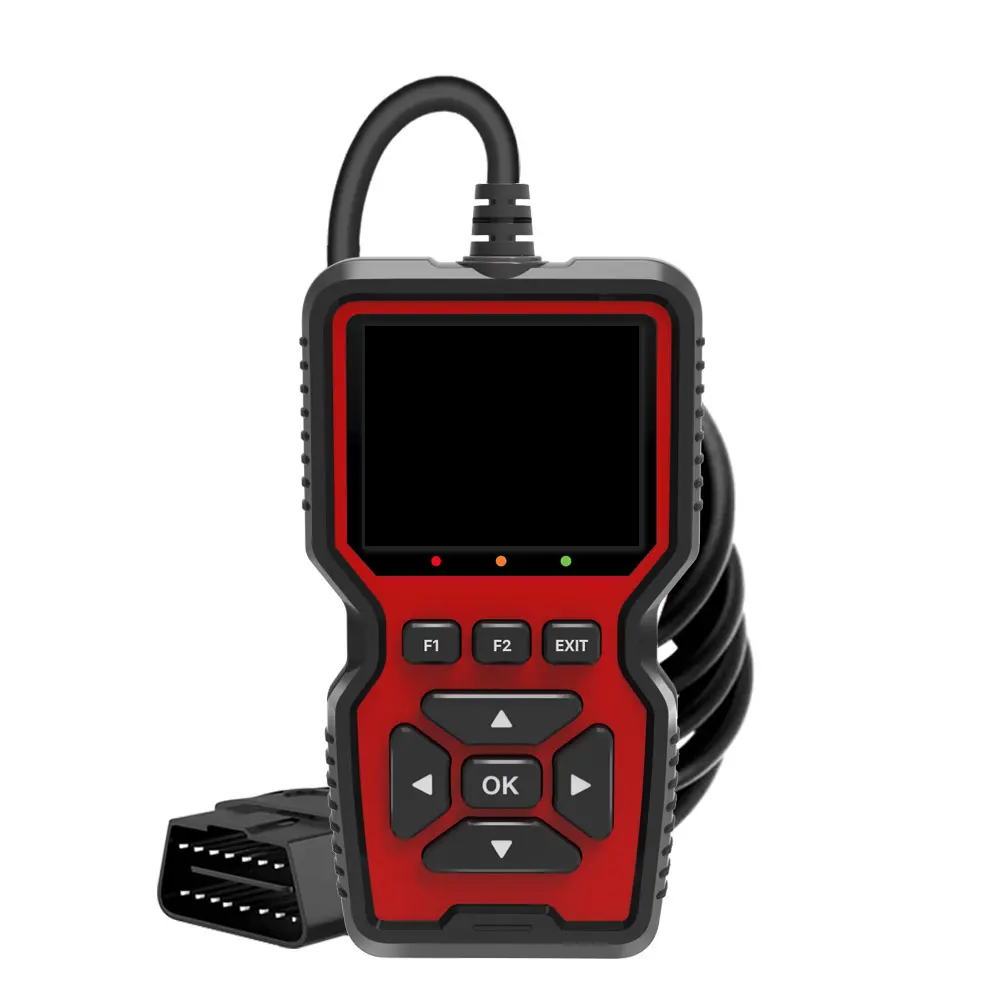
Diagnosing P1380 requires a methodical approach, often involving an advanced OBD-II scanner and a digital multimeter (DMM).
- Initial Scan and Data Review:
- Connect an OBD-II scanner and retrieve all stored DTCs, pending codes, and freeze frame data. Note any other related codes, especially those for misfires (P030X series), wheel speed sensors (C003X series), or communication bus faults (U-codes).
- Analyze freeze frame data to understand the engine operating conditions when the code was set (engine RPM, vehicle speed, load, etc.).
- Visual Inspection:
- Locate any dedicated rough road sensor (often an accelerometer) if applicable to the vehicle model. Inspect its wiring harness and connector for signs of chafing, cuts, corrosion, or loose connections. Ensure the sensor is securely mounted.
- Inspect the wiring and connectors for all four-wheel speed sensors. Look for physical damage, melted insulation, or signs of rodent damage.
- Check for general underhood wiring integrity, especially around the ECM/PCM and main chassis harness.
- Technical Service Bulletins (TSBs) Check:
- Consult manufacturer-specific TSBs and recalls for known issues related to P1380, rough road detection systems, or misfire monitoring for the specific make, model, and year of the vehicle.
- Live Data Analysis with OBD-II Scanner:
- Monitor wheel speed sensor data for all four wheels while driving the vehicle at various speeds on both smooth and slightly rough roads. Look for any erratic readings, sudden dropouts, or significant discrepancies between sensor readings.
- If the vehicle uses a dedicated accelerometer, monitor the rough road sensor (G-sensor/accelerometer) PID in the live data stream. Verify that it displays plausible values (e.g., changes with vehicle movement and road surface) and does not show static, zero, or maximum values consistently.
- Monitor misfire counters for individual cylinders. While P1380 indicates a problem with the monitor, observing actual misfires can provide context about any underlying combustion issues.
- Digital Multimeter (DMM) Testing:
- Rough Road Sensor Circuit Test (if applicable): With the ignition on, back-probe the rough road sensor connector. Check for proper reference voltage (typically 5V), a solid ground, and a fluctuating signal voltage that corresponds to vehicle motion. Compare readings to manufacturer specifications.
- Wheel Speed Sensor Circuit Test: Test WSS circuits for proper reference voltage (for active sensors), signal integrity, and continuity. For passive WSS, measure AC voltage output while rotating the wheel. Check for open circuits, shorts to ground, or shorts to power in the wiring between the WSS and the ECM/PCM.
- Continuity and Resistance Checks: With the battery disconnected and relevant connectors unplugged, perform continuity checks on the rough road sensor or WSS wiring between the sensor and the ECM/PCM connector. Check for excessive resistance or short circuits within the harness.
- ECM/PCM Diagnosis:
- If all sensor, wiring, and communication checks confirm their integrity, and a TSB does not indicate a known software issue, an ECM/PCM internal fault or software corruption becomes a possibility. This should be a last resort after exhaustive component and circuit testing.
Recommended Repairs and Solutions
Once the diagnostic process has pinpointed the root cause, the following repairs are typically performed:
- Repair or Replace Faulty Rough Road Sensor/Accelerometer: If testing confirms the dedicated rough road sensor is faulty, replace it with a new, OEM-quality part. Ensure the new sensor is mounted securely and oriented correctly according to manufacturer specifications.
- Repair Wiring Harness and Connectors: Address any identified open circuits, short circuits, or corroded terminals in the wiring harnesses for the rough road sensor, wheel speed sensors, or associated communication lines. Use appropriate automotive-grade repair techniques suchs as soldering with heat shrink, specialized crimps, or connector replacement to ensure long-term durability.
- Replace Faulty Wheel Speed Sensor(s): If a specific wheel speed sensor is found to be providing erroneous or intermittent data, replace the affected sensor. After replacement, ensure the sensor is properly installed and the air gap (if applicable) is within specification.
- ECM/PCM Software Update or Replacement: In cases where a TSB indicates a known software issue, performing an ECM/PCM software update or reflash by a dealership or qualified technician may resolve the code. If an internal ECM/PCM hardware fault is suspected after all other possibilities have been exhausted, the module may require replacement and programming, a costly repair to be confirmed with certainty.
- Address Underlying Misfire Conditions: While P1380 primarily points to the rough road data system, it’s crucial to also investigate and repair any concurrent actual engine misfires (e.g., faulty spark plugs, ignition coils, fuel injectors, vacuum leaks, low compression) which might complicate the ECM’s monitoring capabilities or be contributing to the issue indirectly.
- Clear DTCs and Perform Drive Cycle: After any repair, clear all stored DTCs using an OBD-II scanner. Then, perform a comprehensive drive cycle that includes varying speeds, loads, and road conditions to allow the ECM/PCM to re-run all diagnostic monitors, including the misfire monitor, and confirm the repair’s effectiveness.