What Does Code P1404 Mean?
DTC P1404 is commonly defined as “Exhaust Gas Recirculation (EGR) Closed Position Performance” or “EGR Valve Stuck Open,” though some interpretations might also include an “Intake Air Temperature (IAT) – B Circuit Malfunction” depending on the vehicle manufacturer. For the majority of applications, particularly Ford vehicles where this code is prevalent, P1404 specifically indicates that the Powertrain Control Module (PCM) or Engine Control Module (ECM) has detected that the EGR valve is not fully closing or has an incorrect signal for its closed position. The PCM/ECM monitors the EGR valve position sensor (often integrated into the EGR valve itself, or via a Differential Pressure Feedback EGR (DPFE) sensor) to determine its state. When the engine is at idle, deceleration, or under other specific conditions where EGR flow is not commanded, the PCM expects to see a signal voltage or duty cycle from the EGR position sensor corresponding to a fully closed valve (typically a low voltage, e.g., 0.4-0.8V). If the sensor reports a voltage or duty cycle indicating that the EGR pintle is open when it should be closed, or if the closed-position signal is outside the expected calibrated range, the PCM registers a P1404 code. This implies that exhaust gases are being recirculated into the intake manifold at inappropriate times, disrupting the air-fuel mixture and combustion efficiency. The IAT-B circuit malfunction aspect is a less common application for P1404 and is typically addressed by other DTCs like P0110-P0114. For the purposes of this article, the focus will be on the predominant EGR closed position issue.
Common Symptoms
- Rough Idle: Exhaust gases being introduced at idle can severely disrupt combustion, leading to noticeable engine roughness.
- Engine Stall: In severe cases of a stuck-open EGR valve, the engine may stall, especially after starting or when coming to a stop.
- Hesitation or Lack of Power: While less common, improper EGR flow can affect engine performance under certain load conditions.
- Reduced Fuel Economy: The engine’s efficiency is compromised when EGR flow is not properly regulated.
- Increased Emissions: Uncontrolled EGR flow can lead to higher NOx emissions due to incorrect combustion temperatures, though this is often not directly perceivable by the driver.
- Check Engine Light Illumination: The primary and most common symptom is the activation of the Malfunction Indicator Lamp (MIL).
What Causes the Code P1404?
- Carbon Buildup on EGR Valve Pintle: This is the most common cause. Carbon deposits can prevent the EGR valve pintle from fully seating and closing, leaving it slightly open.
- Faulty EGR Valve Position Sensor: The sensor, whether integrated or external (e.g., DPFE sensor on older Ford systems), may provide an inaccurate signal indicating an open position even if the valve is mechanically closed.
- Stuck Open EGR Valve: Internal mechanical failure of the valve itself, preventing it from closing fully, often due to corrosion or wear.
- Vacuum Leak (for vacuum-actuated EGR systems): A vacuum leak in the control lines or diaphragm can cause the valve to remain partially open or not close properly, although this is less common for a “stuck open” scenario at idle.
- Faulty EGR Solenoid or Transducer (for vacuum-actuated EGR systems): A solenoid that fails to de-energize or a transducer that fails to close the vacuum port can keep the valve open.
- Wiring Harness Issues: An open circuit, short to ground, or short to voltage in the EGR valve position sensor signal, reference, or ground circuit can lead to incorrect feedback to the PCM.
- PCM/ECM Malfunction: While rare, an internal failure of the PCM/ECM preventing it from correctly interpreting the EGR position sensor signal or commanding the valve can occur.
How to Diagnose and Troubleshoot
Diagnosing P1404 requires a methodical approach, often involving a combination of visual inspection, scan tool data analysis, and DMM testing.
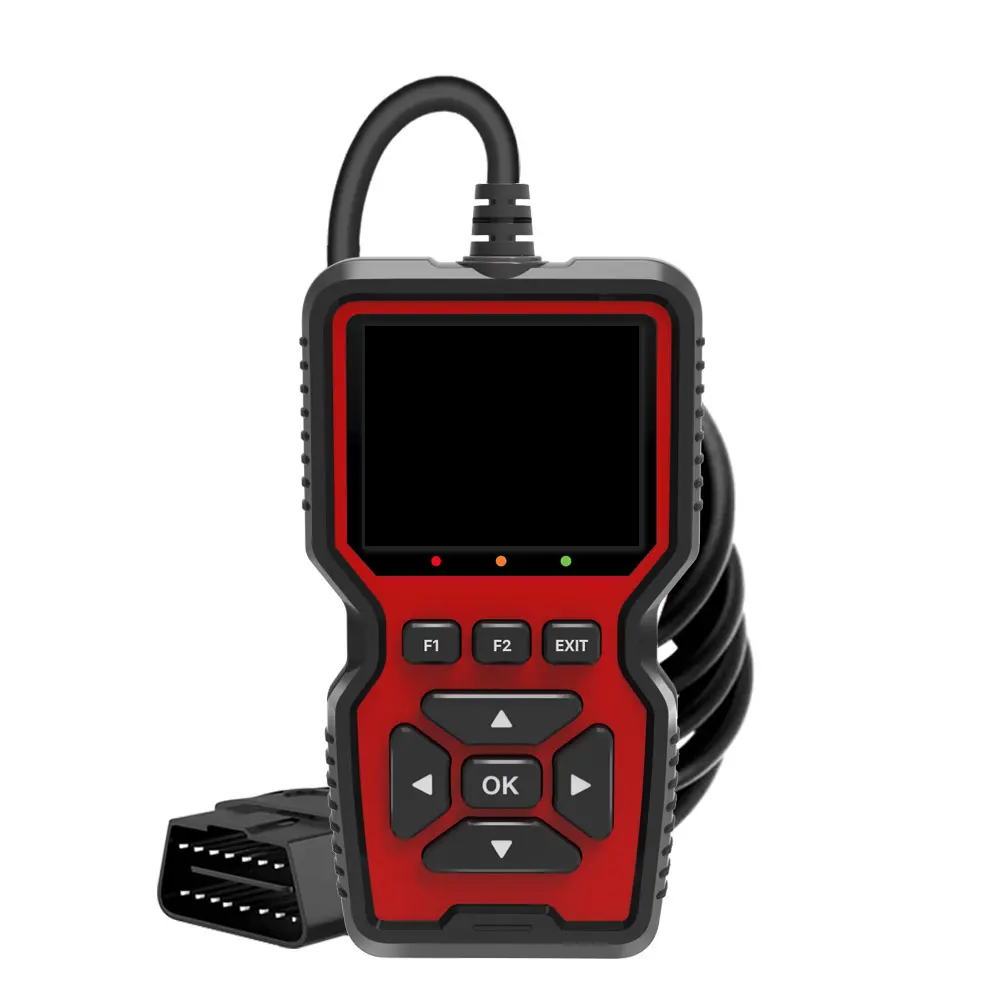
- Retrieve and Analyze Freeze Frame Data: Connect an OBD-II scan tool and retrieve the DTC P1404 along with any associated freeze frame data. This data provides a snapshot of engine parameters (RPM, engine load, coolant temp, etc.) at the moment the code was set, which can offer clues about the conditions under which the fault occurred.
- Visual Inspection:
- Inspect the EGR valve for obvious physical damage, corrosion, or excessive carbon buildup around the pintle area.
- Check the EGR valve wiring harness for chafing, breaks, loose connections, or corrosion.
- If a vacuum-actuated EGR, inspect all vacuum lines leading to the EGR solenoid and valve for cracks, leaks, or disconnections.
- Scan Tool Live Data Analysis:
- Monitor the EGR Position Sensor (or DPFE sensor if applicable) PID with the engine at idle. A fully closed EGR valve should typically show a low voltage (e.g., 0.4V to 0.8V) or a 0% commanded/actual position. If the sensor reads significantly higher (e.g., 1.5V or greater, or a percentage >0%), it suggests the valve is open or the sensor is faulty.
- Monitor EGR Command PID. At idle, this should typically be 0%. If the PCM is commanding EGR at idle and the valve is stuck open, this could indicate a PCM issue, though less common.
- Use a bi-directional scan tool to command the EGR valve open and closed. Observe the actual EGR position sensor feedback. The voltage/percentage should smoothly transition between closed and open values. If it sticks at an open value when commanded closed, or doesn’t move at all, the valve or its sensor is suspect.
- Digital Multimeter (DMM) Testing:
- EGR Position Sensor Testing: Disconnect the EGR valve connector. Identify the sensor’s 5V reference, ground, and signal wires. With the key on, engine off (KOEO), verify 5V reference voltage and a good ground at the connector. Reconnect the connector and back-probe the signal wire. Manually open the EGR valve pintle (if accessible) and observe voltage changes. It should smoothly increase as the valve opens and return to the closed position voltage as it closes.
- Wiring Continuity Check: With the PCM/ECM connector and EGR valve connector disconnected, check continuity of each wire between the EGR valve and the PCM/ECM. Check for shorts to ground or shorts to voltage.
- EGR Solenoid Testing (if applicable): For vacuum-actuated systems, test the resistance of the EGR solenoid coil. Compare to manufacturer specifications. Also, apply battery voltage and ground to the solenoid terminals (if safe and specified) to ensure it clicks and opens/closes the vacuum path.
- Vacuum System Check (for vacuum-actuated EGR): Using a vacuum gauge, test the vacuum supply to the EGR solenoid and the vacuum applied to the EGR valve diaphragm. Ensure there is no residual vacuum on the valve when it should be closed.
Recommended Repairs and Solutions
Once the root cause of P1404 has been identified, the following repairs are typically recommended:
- Replace the EGR Valve: This is the most common and effective solution, especially if carbon buildup is severe, the internal position sensor has failed, or the valve is mechanically stuck. When replacing, ensure the mating surfaces are clean and use a new gasket.
- Clean the EGR Valve and Passages: If the valve is not severely damaged or worn and the issue is primarily carbon buildup preventing proper closure, a thorough cleaning of the pintle and valve passages may resolve the issue. Use a dedicated carbon cleaner and suitable brushes. However, cleaning may only be a temporary fix if the valve itself is near the end of its service life or the internal sensor is failing.
- Repair or Replace Wiring Harness: If diagnostic steps indicate an open, short, or damaged wire in the EGR circuit, repair or replace the affected section of the wiring harness. Ensure all connections are secure and corrosion-free.
- Replace EGR Solenoid or Transducer: If the issue lies with a faulty EGR solenoid (for vacuum-actuated systems) that is failing to control vacuum effectively, replace the solenoid.
- Address Vacuum Leaks: If a vacuum leak is identified in the EGR control system, replace the damaged vacuum lines.
- PCM/ECM Replacement: Only consider this as a last resort after thoroughly ruling out all other possibilities and confirming a PCM fault through proper diagnostic procedures (e.g., verifying inputs/outputs at the PCM connector are correct but the PCM is not processing them correctly). This is a rare cause for P1404.
Important Mechanics’ Tips: After any repair, clear the DTCs with a scan tool. It is highly recommended to perform a comprehensive drive cycle to allow the PCM to re-run all relevant diagnostic monitors, including the EGR system monitor, to confirm the repair has been successful and the code does not return. Additionally, consider inspecting the intake manifold for excessive carbon buildup, as a persistent EGR issue can contribute to this, potentially affecting other engine systems.