What Does Code P1405 Mean?
The OBD-II diagnostic trouble code P1405 indicates a detected malfunction within the Differential Pressure Feedback EGR (DPFE) sensor circuit, specifically identifying an issue with the upstream hose connection or integrity. The Engine Control Module (ECM), also commonly referred to as the Powertrain Control Module (PCM), utilizes the DPFE sensor to accurately monitor the flow of exhaust gases recirculated back into the engine’s intake manifold via the Exhaust Gas Recirculation (EGR) system. The DPFE sensor is a transducer that measures the pressure difference across a calibrated orifice or restriction within the EGR tube, directly correlating this differential pressure to the volume of EGR flow. It accomplishes this by having two pressure ports: an upstream port (closer to the exhaust manifold) and a downstream port (closer to the EGR valve or intake manifold). The P1405 code is triggered when the ECM detects an abnormal signal from the DPFE sensor, specifically indicating a condition where the upstream pressure reading is inconsistent with expected values based on engine load, RPM, and commanded EGR valve position. This often manifests as an excessively high, implausible, or static upstream pressure signal, suggesting that the sensor’s upstream input is either disconnected, completely blocked, or experiencing an incorrect pressure input, preventing accurate measurement of the pressure differential.
Common Symptoms
- Malfunction Indicator Lamp (MIL) Illumination: The “Check Engine” light will be activated on the dashboard.
- Rough Idle or Stalling: Improper EGR flow can disturb the air-fuel mixture, leading to unstable engine operation at idle.
- Engine Hesitation or Poor Acceleration: Incorrect EGR rates during acceleration can impact combustion efficiency.
- Reduced Fuel Economy: An improperly functioning EGR system can indirectly affect fuel consumption.
- Failed Emissions Test: Elevated NOx emissions are a common result of an inoperative EGR system.
- Possible Engine Knock or Pinging: In some cases, especially under load, lack of EGR can lead to pre-ignition or detonation due to higher combustion temperatures.
What Causes the Code P1405?
- Disconnected or Damaged Upstream DPFE Sensor Hose: The most direct cause, as the brief description suggests, is the upstream hose being completely off the sensor or having a significant crack/tear.
- Clogged or Obstructed Upstream DPFE Sensor Hose: Carbon buildup or debris can fully block the hose, preventing proper pressure transmission to the sensor.
- Defective DPFE Sensor: While the code points to the hose, an internal failure of the DPFE sensor itself, especially if it’s reading a static high voltage indicative of an open circuit or internal short affecting the upstream input, can also trigger this code.
- Blocked EGR Passage/Tube: Severe carbon buildup within the EGR tube or the upstream pressure port leading to the DPFE sensor can mimic a clogged hose.
- Corroded or Damaged Electrical Connector/Wiring: An intermittent or poor electrical connection to the DPFE sensor, particularly affecting the signal wire, can lead to incorrect readings.
How to Diagnose and Troubleshoot
Diagnosing P1405 requires a systematic approach, combining visual inspection with digital multimeter (DMM) and OBD-II scanner analysis:
- Visual Inspection of DPFE Hoses and Connections: Begin by locating the DPFE sensor, typically mounted on or near the EGR valve or the EGR tube. Carefully inspect both the upstream and downstream rubber or silicone hoses connected to the sensor. Pay close attention to the upstream hose for any signs of being disconnected, cracked, split, or chafed. Ensure it is securely attached to both the sensor and the EGR tube port.
- Check for Clogs and Obstructions: Disconnect both DPFE hoses from the sensor and the EGR tube. Using compressed air or a thin wire, check for any blockages within the hoses themselves. Also, inspect the metal ports on the EGR tube and the DPFE sensor for carbon buildup or debris that could restrict flow. Clean any obstructions found.
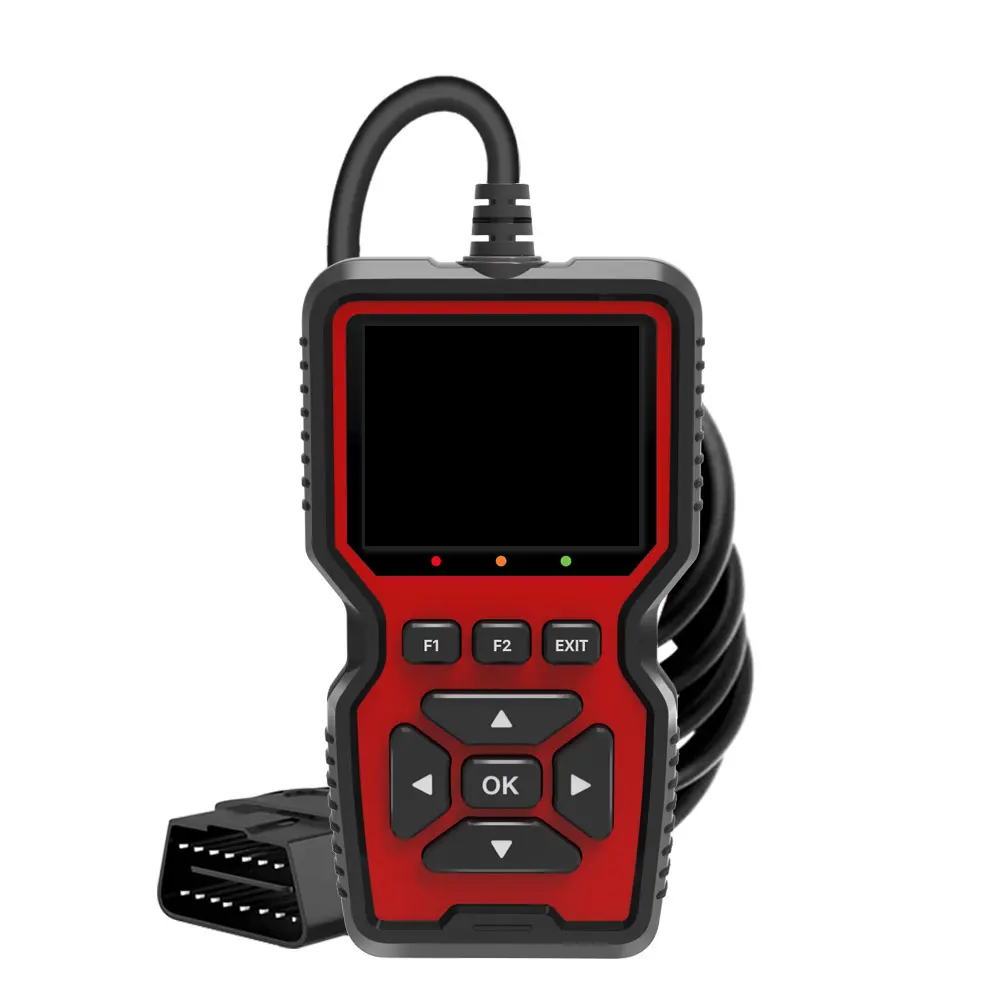
- OBD-II Scanner Live Data Analysis: Connect an OBD-II scanner and monitor the live data stream for the DPFE sensor voltage or percentage. With the engine off (KOEO – Key On Engine Off), the DPFE sensor voltage should be close to 0.5-1.0 volts, depending on the manufacturer. As the engine runs and the EGR system is commanded open (e.g., during a snap throttle or under specific driving conditions), the voltage should fluctuate. If the voltage remains static and high (e.g., 4.5-5.0V) under all conditions, it suggests an open circuit or a disconnected upstream hose. If it remains static and low (e.g., 0V), it could indicate a short or sensor failure. Compare the sensor’s reading to the commanded EGR position.
- DPFE Sensor Voltage Test with DMM:
- With the key ON, engine OFF (KOEO), backprobe the DPFE sensor connector to measure the reference voltage (typically 5V), ground, and the signal wire. Verify the 5V reference and a good ground.
- Measure the signal voltage. As noted above, it should be within the specified range (e.g., 0.5-1.0V KOEO).
- While monitoring the signal voltage, use a vacuum pump to apply a slight vacuum to the upstream port of the DPFE sensor (or apply pressure using a syringe carefully). The voltage output should change proportionally. A lack of change indicates a faulty sensor. Conversely, if applying pressure/vacuum to the upstream port produces the expected voltage change, but the hose was found to be clogged, the issue likely lies with the hose or the EGR tube port.
- EGR System Functional Test: If your scanner allows, perform an EGR system functional test. This will command the EGR valve to open and close, and you should observe corresponding changes in DPFE sensor voltage. If the voltage doesn’t change when the EGR is commanded, even after verifying hoses, it points to either a stuck EGR valve, a blocked EGR passage, or a faulty DPFE sensor.
- Wiring Integrity Check: Using a DMM, check for continuity and resistance between the DPFE sensor connector and the ECM/PCM connector. Inspect for any frayed, corroded, or shorted wires within the harness.
Recommended Repairs and Solutions
Once the root cause of P1405 has been identified through diagnosis, the following repairs are commonly indicated:
- Reconnect or Replace Damaged DPFE Hoses: If the upstream hose is found to be disconnected, simply reattach it securely. If it’s cracked, split, or otherwise compromised, replace both the upstream and downstream DPFE sensor hoses with new, high-quality silicone or rubber hoses designed for automotive applications. Ensure all connections are tight and leak-free.
- Clear Clogged Hoses and EGR Ports: If the hoses or the metal ports on the EGR tube are clogged with carbon, carefully clean them using a suitable carbon cleaner and a small brush or pick. Ensure all pathways are completely clear for accurate pressure transmission.
- Replace the DPFE Sensor: If diagnostic steps (especially the DMM voltage tests under applied pressure/vacuum) indicate that the DPFE sensor itself is faulty despite intact and clear hoses, replace the sensor. Always use an OEM equivalent part to ensure proper calibration and longevity.
- Clean EGR Passages: If the EGR passages within the intake manifold or the EGR valve itself are heavily carbon-fouled, preventing proper exhaust gas flow, a thorough cleaning of the EGR system may be necessary. This can involve removing and cleaning the EGR valve and its mating surfaces or using specialized intake cleaning procedures.
- Repair Wiring or Connectors: If a fault in the wiring harness or electrical connector was identified, repair or replace the affected section to restore proper electrical continuity and eliminate shorts or opens.
After performing any repairs, clear the DTCs with an OBD-II scanner and perform a drive cycle to confirm that the P1405 code does not return and that the EGR system operates correctly. Monitoring DPFE sensor live data during this test drive is crucial for validation.