What Does Code P1614 Mean?
DTC P1614 typically indicates an issue within a manufacturer-specific interactive system, often related to the vehicle’s security or immobilizer system, such as Nissan’s NATS (Nissan Anti-Theft System). The Engine Control Module (ECM) or Powertrain Control Module (PCM) detects an invalid, missing, or improperly synchronized signal from a networked control module that is crucial for engine operation or vehicle security. The “SBDS Interactive Codes” description suggests a communication integrity fault between the ECM/PCM and a specific interactive system module, where “SBDS” likely refers to a manufacturer-defined system for specialized diagnostics or component interaction. In most common applications, particularly for Nissan and Infiniti vehicles, P1614 signifies an Immobilizer Malfunction, specifically an incorrect or missing response from the Immobilizer Control Unit (IMMU) to the ECM/PCM during the startup sequence or an ongoing operational check. The ECM/PCM logs this code when it fails to receive the expected handshake signal, a correct identification code, or when the received data indicates a fault within the immobilizer system itself, thereby preventing engine start or continued operation as a security measure.
Common Symptoms
- Engine cranks but does not start (no-start condition).
- Engine starts momentarily and then immediately stalls.
- The security indicator light (often a key icon or car with a padlock) on the dashboard is continuously illuminated or flashing rapidly.
- Fuel pump may not activate, or ignition system may remain disabled.
- No noticeable symptoms other than the illuminated Malfunction Indicator Lamp (MIL) in some rare cases, but a no-start is most common.
What Causes the Code P1614?
- Faulty Immobilizer Control Unit (IMMU).
- Damaged or malfunctioning transponder chip within the ignition key.
- Issues with the transponder antenna ring located around the ignition cylinder, preventing key signal reception.
- Compromised or corroded wiring or connectors between the ECM/PCM, IMMU, and the ignition key antenna.
- Corrupted or mismatched programming/synchronization between the ECM/PCM and the IMMU.
- Insufficient voltage supply or ground integrity to the IMMU or related interactive modules.
- Internal failure of the ECM/PCM, though less common for this specific code.
- Interference from aftermarket electronic devices.
How to Diagnose and Troubleshoot
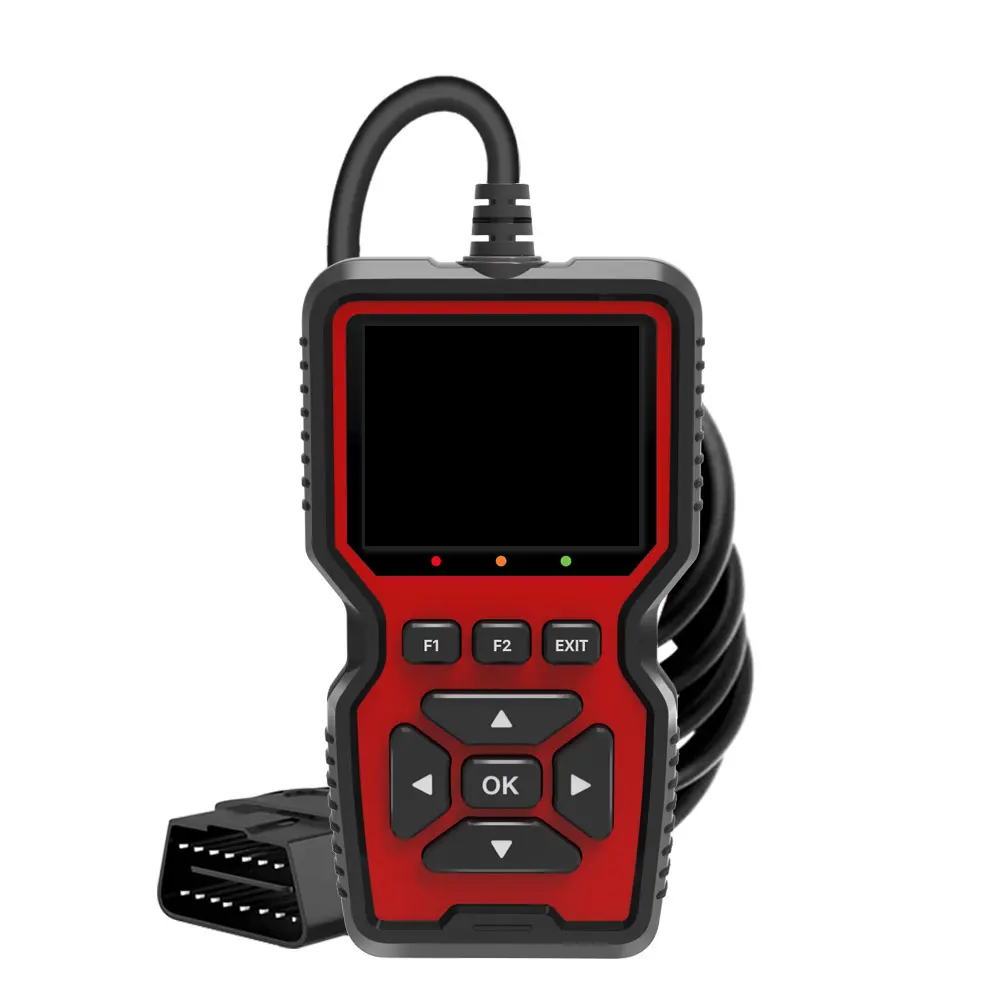
Diagnosis of P1614 requires a methodical approach, often utilizing an advanced OBD-II scanner capable of accessing manufacturer-specific data streams and communication protocols.
- Initial Scan and Code Analysis: Connect an advanced OBD-II scanner to the vehicle’s DLC. Retrieve all stored and pending Diagnostic Trouble Codes (DTCs), paying close attention to any U-codes (network communication codes) that may accompany P1614, as these can indicate broader communication issues. Note any specific manufacturer sub-codes.
- Battery Voltage Check: Verify the vehicle’s battery voltage using a Digital Multimeter (DMM). Ensure it is above 12.6 volts with the engine off. Low battery voltage can cause module communication errors and unreliable operation of security systems.
- Security Light Status: Observe the behavior of the security indicator light on the dashboard. A specific flash pattern or continuous illumination can often point directly to the nature of the immobilizer fault. Consult the manufacturer’s service manual for the interpretation of these patterns.
- Key Verification: If available, attempt to start the vehicle with a known-good, properly programmed spare key. If the vehicle starts with the spare key, the original key’s transponder chip is likely faulty or damaged.
- Visual Inspection of Wiring and Connectors: Carefully inspect the wiring harnesses and connectors between the ECM/PCM, the Immobilizer Control Unit (IMMU), and the transponder antenna ring around the ignition cylinder. Look for signs of chafing, corrosion, breaks, loose pins, or previous repair attempts. Ensure all connections are secure.
- Scan Tool Communication with IMMU: Using a professional-grade scan tool, attempt to establish communication with the Immobilizer Control Unit (IMMU) or related security module. Check for immobilizer status parameters, such as “Key ID,” “ECM ID Match,” “Key Registered,” “ECU ID Learn,” or similar live data. A “No Communication” status or an “ID Mismatch” is a strong indicator of a fault within the IMMU, wiring, or ECM/PCM.
- Power and Ground Checks (DMM): Using a DMM, back-probe the IMMU connector to verify proper power supply (B+) and ground integrity at all specified terminals, according to the vehicle’s wiring diagrams. Any deviation from specifications indicates a wiring or power supply issue.
- Transponder Antenna Check: If the immobilizer system utilizes an external antenna ring, consult the service manual for testing procedures, which may involve checking its resistance or signal output using an oscilloscope.
- ECM/PCM Interaction: If the IMMU appears to be functioning but reports an “ECM ID Mismatch,” it may indicate a problem with the ECM/PCM’s internal programming or a failure to properly communicate or synchronize with the IMMU.
Recommended Repairs and Solutions
The resolution for P1614 typically involves addressing the specific component identified during the diagnostic process:
- Key Replacement and Programming: If diagnostics confirm a faulty transponder chip in the ignition key, replace the key and have it programmed to the vehicle’s immobilizer system using a specialized scan tool. Ensure all keys are present for the programming procedure.
- Immobilizer Control Unit (IMMU) Replacement: If the IMMU is determined to be faulty, replace it. Following replacement, the new IMMU will typically need to be programmed or “synchronized” with the existing ECM/PCM and the vehicle’s keys using a dealer-level or advanced diagnostic tool.
- Wiring and Connector Repair: Repair or replace any damaged or corroded wiring harnesses or connectors between the ECM/PCM, IMMU, and the transponder antenna. Ensure all grounds are clean and secure.
- Transponder Antenna Ring Replacement: If the antenna ring around the ignition cylinder is found to be defective, replace it. This is generally a straightforward component swap.
- ECM/PCM Programming or Replacement: In cases where an ECM/PCM internal fault or a persistent ID mismatch is confirmed after ruling out all other components, the ECM/PCM may require reprogramming or replacement. If replaced, it will need to be programmed to the vehicle and synchronized with the immobilizer system, often requiring specialized dealer tools and procedures.
- System Synchronization: After replacing any component of the immobilizer system (key, IMMU, or ECM/PCM), it is absolutely critical to perform the necessary programming and synchronization procedures as outlined in the manufacturer’s service manual. Failure to do so will result in a continued no-start condition or the recurrence of P1614.
Mechanic’s Tip: Due to the highly integrated nature of modern vehicle security and immobilizer systems, diagnosing and repairing P1614 often requires access to manufacturer-specific diagnostic tools and software, which may only be available at dealership service centers or specialized automotive locksmiths. Attempting to bypass or improperly repair these systems can lead to further complications, security vulnerabilities, or render the vehicle inoperable.