What Does Code P1663 Mean?
The P1663 diagnostic trouble code signifies a malfunction within the Fuel Demand Command Signal Circuit. This circuit is an integral part of the powertrain’s electronic fuel delivery system, specifically governing the precise control of fuel pressure and volume. The Engine Control Module (ECM), also known as the Powertrain Control Module (PCM), generates a pulse-width modulated (PWM) or analog command signal to regulate the operation of the fuel pump, often through a dedicated Fuel Pump Driver Module (FPDM) or a smart fuel pump. The ECM continuously monitors this circuit to ensure that its command signal is being correctly transmitted and interpreted by the target component, and sometimes, that the feedback from the FPDM/fuel pump is within specified parameters. When the ECM detects a discrepancy—such as an open circuit, short to voltage, short to ground, or an implausible signal voltage/frequency—that deviates from its programmed operational range for a calibrated period, it registers the P1663 code. This directly impacts the ECM’s ability to precisely adjust fuel delivery based on real-time engine load, RPM, throttle position, and other critical parameters, potentially leading to incorrect fuel pressure and subsequent drivability issues.
Common Symptoms
- Reduced Engine Performance: The engine may experience a noticeable lack of power or sluggish acceleration, especially under load, due to improper fuel pressure or flow.
- Engine Misfires or Hesitation: Inconsistent fuel delivery, particularly lean conditions, can cause the engine to stumble, misfire, or hesitate during acceleration.
- Rough Idling: Fluctuations in fuel pressure or an inability to maintain stable fuel pressure can result in an unstable or rough idle quality.
- Engine Cranks But Won’t Start: In severe cases of circuit malfunction, the fuel pump may not activate at all, preventing the engine from starting due to a complete lack of fuel pressure.
- Check Engine Light (CEL) Illumination: The Malfunction Indicator Lamp (MIL) will illuminate on the dashboard, signifying a detected powertrain fault.
- Stalling: The engine may stall unexpectedly, particularly during deceleration or when coming to a stop, if fuel pressure drops critically or becomes erratic.
What Causes the Code P1663?
- Faulty Fuel Pump Driver Module (FPDM): This is a very common culprit, as the FPDM is directly responsible for interpreting the ECM’s command signal and controlling the fuel pump. Internal failures within the FPDM are frequent, leading to incorrect output or no output.
- Wiring Harness Issues: Open circuits, shorts (to power or ground), chafed wiring insulation, or severely corroded connectors within the fuel demand command signal circuit itself, between the ECM and the FPDM/fuel pump.
- Corroded or Loose Electrical Connections: Poor contact at the connectors for the ECM, FPDM, fuel pump, or main power relays can disrupt signal integrity and power supply.
- Faulty Fuel Pump: While less direct, a failing fuel pump (e.g., drawing excessive current, internal short, or intermittent failure) can sometimes overload or send erroneous feedback signals to the FPDM, which then impacts the FPDM’s ability to respond correctly to the ECM’s command.
- ECM/PCM Malfunction: Although less common, an internal failure within the ECM’s driver circuit responsible for generating or monitoring the fuel demand command signal can directly trigger this code.
How to Diagnose and Troubleshoot
Diagnosing P1663 requires a systematic approach, often involving an advanced scan tool, a digital multimeter (DMM), and potentially an oscilloscope for precise signal integrity analysis.
- Perform Initial Visual Inspection: Begin by visually inspecting the entire wiring harness and all associated connectors for the ECM, Fuel Pump Driver Module (FPDM), and the fuel pump. Look meticulously for signs of chafing, corrosion, burns, broken wires, or loose connections. Pay particular attention to areas where the harness might rub against chassis components, sharp edges, or exhaust system parts.
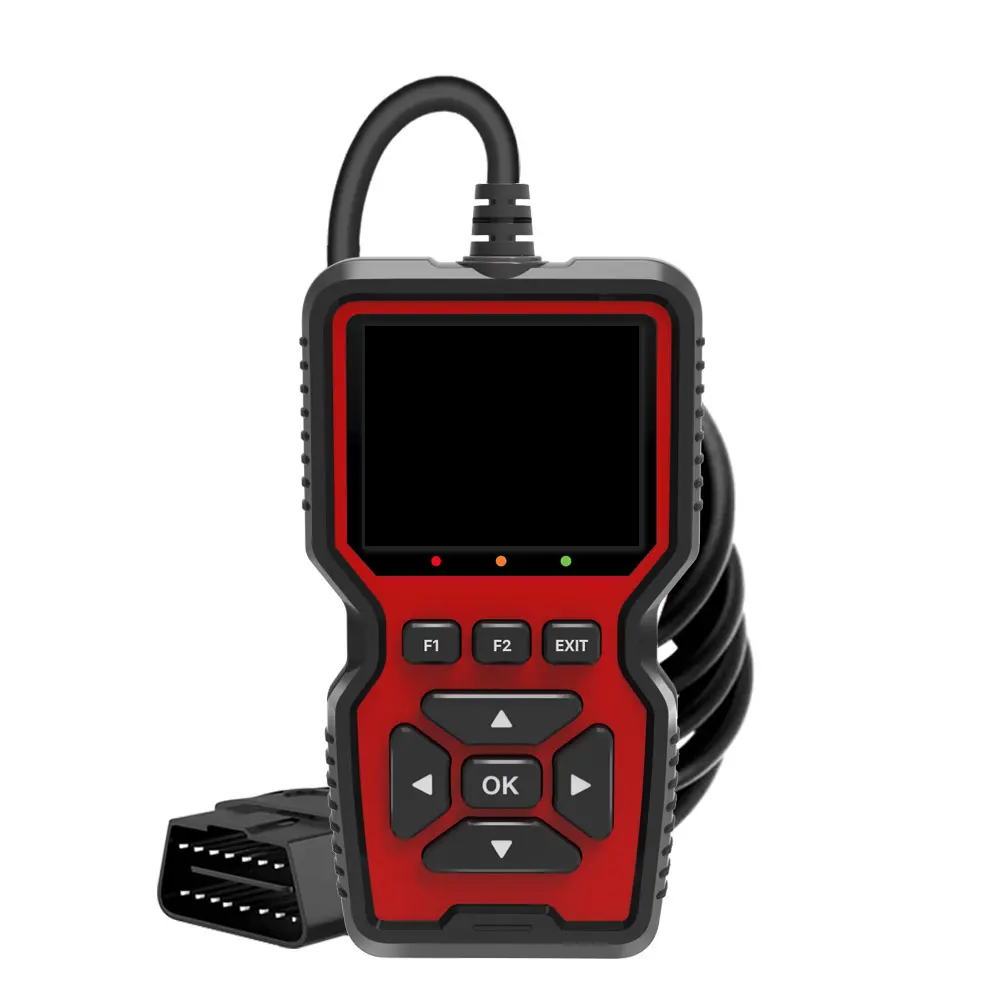
- Scan for Related Codes and Freeze Frame Data: Connect an OBD-II scanner to retrieve the P1663 code and any other co-occurring diagnostic trouble codes. Critically, examine the freeze frame data, which provides a snapshot of various engine conditions (e.g., RPM, engine load, vehicle speed, engine temperature, short/long term fuel trims) at the precise moment the P1663 code was initially set. This information is invaluable for replicating the fault condition during testing.
- Monitor Fuel Pump Driver Module (FPDM) PIDs (Parameter IDs): Using an advanced scan tool with live data capabilities, access and monitor relevant FPDM PIDs if available. These may include “Fuel Pump Duty Cycle Command,” “Fuel Pump Feedback Signal,” or “Fuel Pump Driver Output.” Observe if the command signal from the ECM changes appropriately with engine load, throttle input, and RPM. Also, verify if the FPDM’s feedback or actual output reflects this command accurately. An erratic, absent, or stuck signal indicates a problem within the circuit or the FPDM.
- Test FPDM Power and Ground Circuits: With the ignition ON (engine OFF) and the FPDM connected, use a DMM to verify stable battery voltage (B+) at the FPDM’s main power supply input and a robust ground connection. Refer to the vehicle’s specific wiring diagram for correct pin identification and expected voltage levels.
- Test Fuel Demand Command Signal (ECM to FPDM):
- Disconnect the FPDM electrical connector.
- Using the vehicle’s wiring diagram, accurately identify the signal wire originating from the ECM and terminating at the FPDM connector (harness side).
- With the ignition ON and the engine OFF (or cranking, if testing initial pump prime), back-probe this signal wire at the FPDM harness connector while monitoring voltage with a DMM. The signal might be a steady analog voltage, a varying analog voltage, or, most commonly, a pulse-width modulated (PWM) signal. A PWM signal is best observed with an oscilloscope to accurately verify its frequency and duty cycle. If no signal or an incorrect signal is present, test the continuity of this wire and check for any shorts (to power or ground) along its length back to the ECM.
- If the wiring is confirmed to be good and free of shorts, a faulty ECM output driver is highly suspected.
- Test FPDM Output to Fuel Pump:
- Reconnect the FPDM.
- Identify the output wire from the FPDM that goes directly to the fuel pump using the wiring diagram.
- Back-probe this wire with the engine running (if possible) or during cranking. Observe the voltage or PWM signal. This signal should consistently vary in response to the ECM’s command (as observed in step 5) and changing engine load conditions. An absence of signal or an incorrect signal to the fuel pump, despite a valid input from the ECM to the FPDM, definitively points to a faulty FPDM.
- Check Fuel Pump Current Draw (Optional but Recommended): While not a direct test for P1663, an oscilloscope equipped with an amp clamp can be used to measure the fuel pump’s current draw. An excessively high or unstable current draw could indicate an internal failure within the fuel pump, potentially stressing the FPDM or causing erratic feedback.
- Perform a Wiggle Test: With the engine idling and live data parameters being actively monitored on the scan tool, gently wiggle wiring harnesses and connectors associated with the ECM, FPDM, and fuel pump. A sudden fluctuation in monitored parameters, a change in engine operation, or the re-illumination of the MIL can effectively pinpoint an intermittent connection or wiring integrity issue.
Recommended Repairs and Solutions
Once the diagnostic steps have meticulously isolated the fault, the following repairs are typically recommended to resolve P1663:
- Replace the Fuel Pump Driver Module (FPDM): If comprehensive testing confirms that the FPDM is not correctly processing the ECM’s command signal or not providing the appropriate output to the fuel pump, replacement is necessary. This is a very common failure point for P1663, especially in certain vehicle makes like Ford. Ensure the new FPDM is of the correct part number and, if applicable, programmed or compatible with the vehicle’s specific make and model.
- Repair or Replace Wiring Harness: If damaged wiring (e.g., opens, shorts, chafing) or severely corroded connectors are identified within the fuel demand command signal circuit, perform precise repairs using appropriate automotive-grade connectors, heat shrink tubing, and soldering techniques. Avoid using simple crimp connectors for signal wires as they can introduce resistance and intermittent issues. For extensive damage or multiple compromised wires, replacement of the entire affected section of the wiring harness may be more effective and reliable.
- Clean Electrical Connections: If corrosion is present at any connector (ECM, FPDM, fuel pump), disconnect the battery’s negative terminal first. Then, carefully clean the affected pins and sockets using a specialized electrical contact cleaner and a small, non-abrasive brush. Apply a small amount of dielectric grease upon reassembly to prevent future corrosion and ensure a robust electrical connection.
- Replace Fuel Pump: If the fuel pump itself is determined to be faulty (e.g., internal short, excessive current draw, or intermittent failure that disrupts the FPDM’s operation or feedback), it must be replaced. Always replace the fuel filter concurrently when replacing a fuel pump to ensure optimal system longevity and prevent immediate contamination of the new pump.
- ECM/PCM Replacement/Reprogramming: Only consider ECM/PCM replacement as an absolute last resort, after meticulously and definitively ruling out all other possible causes and confirming the ECM’s output for the fuel demand command signal is absent or incorrect despite all wiring being sound. ECM replacement requires specialized programming and should only be performed by a qualified technician with the appropriate diagnostic and programming equipment.
- Clear Codes and Retest: After performing any repair, clear the Diagnostic Trouble Codes (DTCs) from the ECM using a scan tool. Then, perform a thorough road test under conditions similar to those present when the code initially set (refer to the saved freeze frame data) to verify the repair and ensure the code does not return. Monitor live data PIDs during the test drive to confirm proper operation of the fuel demand command circuit.