What Does Code P1777 Mean?
DTC P1777, often described as an “Ignition Retard Request Circuit Fault,” indicates that the Engine Control Module (ECM) or Powertrain Control Module (PCM) has detected an electrical malfunction within the dedicated circuit responsible for requesting ignition timing retard. This code does not necessarily signify a fault in the actual ignition timing execution mechanism, but rather an issue in the signal pathway or logic where an external system or internal ECM/PCM strategy requests a reduction in ignition advance. Such requests are critical for engine protection and performance optimization, typically originating from various inputs:
- Knock Control System: While a direct knock sensor fault usually has its own code, a fault in the circuit that relays a knock-induced retard request to the primary ignition system could trigger P1777.
- Transmission Control Module (TCM): During certain shift events or torque management strategies, the TCM might request ignition retard from the ECM/PCM to smoothly manage power delivery and reduce driveline shock.
- Engine Overheat Protection: In conditions of elevated engine temperature, the ECM/PCM may implement ignition retard to reduce combustion temperatures and protect critical components.
- Boost Control/Turbocharger Protection: For forced induction engines, retard may be requested under high boost conditions to prevent pre-ignition or safeguard the turbocharger.
When P1777 is set, the ECM/PCM has identified that the voltage, resistance, or signal integrity on this specific “request” circuit falls outside of its calibrated parameters. This could mean the signal is perpetually high, perpetually low, intermittently lost, or has an incorrect frequency/pulse width. The ECM/PCM, unable to reliably receive or process the retard request, may resort to a default ignition timing strategy, often a conservative one, to prevent potential engine damage.
Common Symptoms
- Check Engine Light (MIL) illumination: The most direct and common symptom.
- Reduced engine performance: The engine may enter a “limp mode” or have significantly reduced power, especially during acceleration or under load, as the ECM/PCM adopts a safer, less aggressive timing map.
- Poor acceleration or hesitation: Due to suboptimal ignition timing.
- Increased fuel consumption: An inefficient ignition timing strategy can lead to higher fuel usage.
- Rough idle or stalling: While less common for this specific code, severe timing deviations can affect idle stability.
- Engine knocking or pinging: Paradoxically, if the system responsible for requesting retard is faulty, the engine might experience pre-ignition without the ECM/PCM being able to properly respond. This symptom is more likely if the fault prevents retard from occurring when it’s genuinely needed.
What Causes the Code P1777?
- Damaged Wiring Harness: Frayed, corroded, open, or shorted wiring within the ignition retard request circuit. This often occurs near connectors, where wires pass through grommets, or in areas exposed to heat, vibration, or moisture.
- Faulty Connectors: Corroded, bent, or loose pins in the electrical connectors at the ECM/PCM, Ignition Control Module (if applicable), or other relevant control modules (e.g., TCM) involved in sending/receiving the retard request signal.
- Defective Control Module (Non-ECM/PCM): If an external module (e.g., a standalone Ignition Control Module, or the TCM) is responsible for generating or relaying the ignition retard request signal, its internal circuitry or output driver for this specific circuit could be faulty.
- ECM/PCM Internal Fault: While less common, an internal failure within the ECM/PCM’s input/output driver or processing circuitry for the ignition retard request signal can cause this code.
- Software/Calibration Issues: Rarely, corrupted ECM/PCM software or an outdated calibration might lead to misinterpretation of the circuit’s status.
How to Diagnose and Troubleshoot
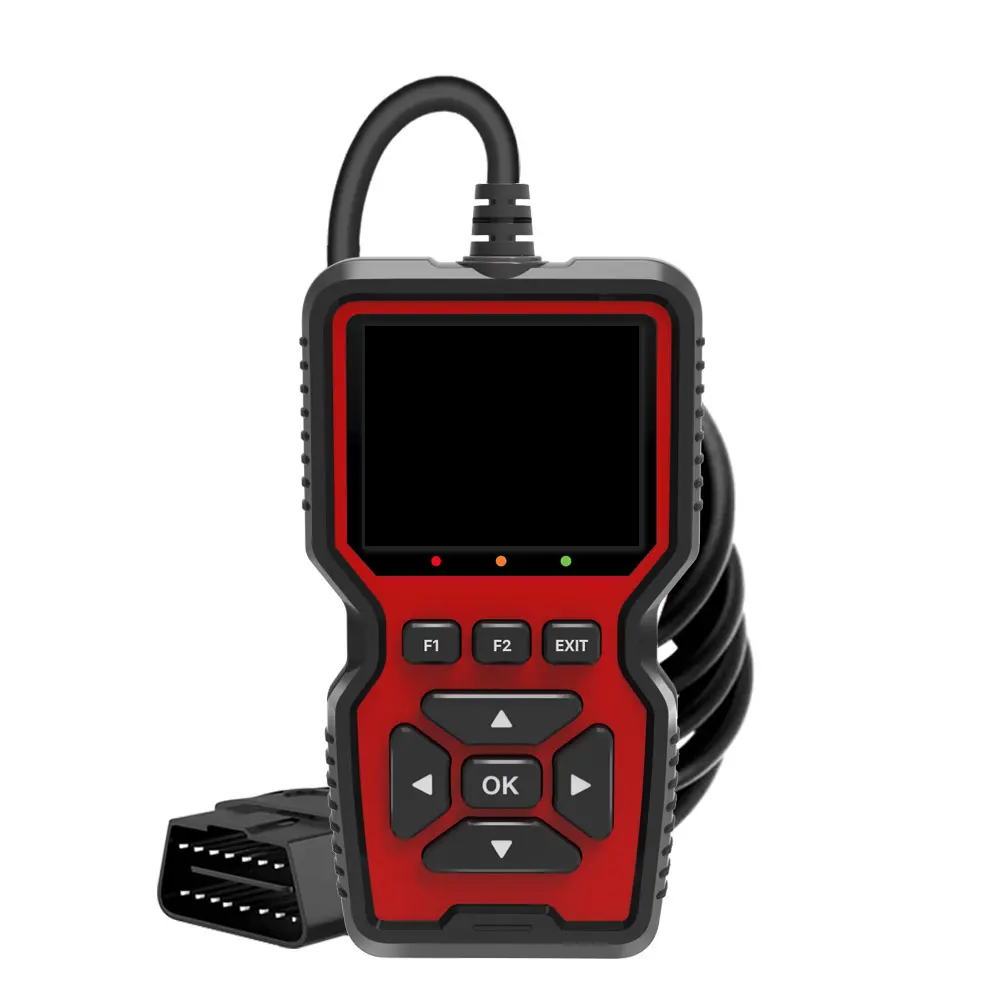
Diagnosing P1777 requires a methodical approach, utilizing an OBD-II scanner, Digital Multimeter (DMM), and comprehensive wiring diagrams.
- Verify DTC and Freeze Frame Data: Connect an OBD-II scanner to confirm P1777 is present. Crucially, examine the freeze frame data. This snapshot of engine conditions (RPM, load, engine temperature, vehicle speed, etc.) at the moment the code was set provides invaluable context for replicating the fault conditions.
- Perform a Comprehensive Visual Inspection:
- Disconnect the battery for safety when inspecting connections.
- Locate the ECM/PCM and any other control modules identified in the vehicle’s service manual as participating in the ignition retard request circuit (e.g., ICM, TCM).
- Thoroughly inspect the entire wiring harness leading to and from these modules, paying close attention to areas prone to damage: sharp edges, heat sources, pinch points, and areas exposed to road debris or moisture. Look for signs of chafing, cuts, bare wires, corrosion, or rodent damage.
- Carefully inspect all associated electrical connectors. Look for bent, pushed-back, or corroded pins. Ensure connectors are fully seated and securely latched.
- Consult Wiring Diagrams: Obtain the precise wiring diagrams for your vehicle’s make and model. Identify the specific wires and pins associated with the “Ignition Retard Request” circuit between the relevant control modules and the ECM/PCM. This is critical for accurate testing.
- Perform DMM Checks on the Circuit:
- Continuity Check (Open Circuit): With the battery disconnected and relevant connectors separated, use your DMM to check for continuity on the specific wire(s) of the retard request circuit. Test from one end of the wire to the other. A reading of infinite resistance or “OL” (Open Line) indicates an open circuit.
- Short to Ground Check: Test each wire of the retard request circuit for continuity to a known good chassis ground. Any low resistance reading (close to 0 ohms) indicates a short to ground.
- Short to Voltage Check: Reconnect the battery. With the ignition key in the ON position (engine OFF), back-probe the relevant pins at the ECM/PCM connector (or other module) while monitoring for unexpected voltage on the signal wire. This can indicate a short to battery voltage.
- Resistance Check (Component-Specific): If the circuit includes a passive component or a specific module output has a specified resistance range, test its resistance against manufacturer specifications.
- Voltage/Signal Monitoring (Live Data):
- With the engine running (if safe to do so), use the OBD-II scanner to monitor live data streams related to ignition timing, knock sensor activity, and any available PIDs for “Ignition Retard Request Status.”
- If possible, back-probe the signal wire(s) of the retard request circuit with a DMM or oscilloscope to observe actual voltage fluctuations during varying engine conditions, especially those from the freeze frame data. Look for erratic signals, sudden drops, or fixed voltage values when a dynamic signal is expected.
- Module Testing (if applicable): If the fault points to an external module (e.g., ICM or TCM) as the source of the faulty request signal, follow the manufacturer’s specific diagnostic steps to test that module’s output for the retard request circuit. This may involve specific jumper harnesses or diagnostic tools.
Recommended Repairs and Solutions
Once the root cause of P1777 has been precisely identified through diagnostic steps, the following repairs are typically recommended:
- Repair or Replace Damaged Wiring: This is the most common resolution. If damaged wires are found, perform professional wiring repairs. This involves cutting out the damaged section, soldering in a new section of wire of the correct gauge, and sealing the splice with heat-shrink tubing. For extensive damage, replacing the entire harness section might be necessary.
- Clean and Secure Connectors: If corrosion or poor connection is found, use an electrical contact cleaner to thoroughly clean the connector pins. Carefully use a pick or small screwdriver to gently reshape any bent pins. Ensure all connectors are fully seated and securely latched. Applying a dielectric grease can help prevent future corrosion.
- Replace Faulty Control Module: If testing definitively points to an internal fault within a specific control module (e.g., an Ignition Control Module, the TCM, or in rare cases, the ECM/PCM itself), replace the identified module.
- Mechanic’s Tip: When replacing a control module, always ensure the new module is correctly programmed and calibrated to the vehicle’s VIN and specifications using a factory-compatible scan tool. Failure to do so can lead to further DTCs or drivability issues.
- PCM Software Update: In very rare instances, the vehicle manufacturer might release a software update or technical service bulletin (TSB) that addresses known issues with the interpretation or generation of the ignition retard request signal. Check with a dealer or reliable repair information system for any relevant updates.
- Post-Repair Verification: After performing any repair, clear the DTCs from the ECM/PCM memory. Then, perform a comprehensive test drive that includes conditions similar to those present in the freeze frame data when the code initially set. Monitor live data to ensure the ignition retard request circuit is functioning correctly and that P1777 does not return. This step is crucial to confirm the effectiveness of the repair.