What Does Code P1916 Mean?
DTC P1916 signifies a detected malfunction within the circuit of the High Clutch Drum Speed Sensor. This is a manufacturer-specific code, commonly observed in vehicles equipped with sophisticated automatic transmissions, such as those found in BMW, Audi, and Ford, which utilize multi-plate clutch designs. The Transmission Control Module (TCM), often integrated into or communicating directly with the Powertrain Control Module (PCM), continuously monitors the rotational speed of various internal transmission components, including specific clutch drums. The High Clutch Drum Speed Sensor provides critical feedback regarding the rotational velocity of the clutch drum responsible for engaging specific gears or gear ranges (e.g., often associated with higher gears or specific drive modes).
The TCM/PCM uses this sensor’s input, in conjunction with other transmission speed sensors (input shaft speed, output shaft speed), to accurately calculate gear ratios, determine clutch slip, and precisely control transmission shifting strategies. When the signal from the High Clutch Drum Speed Sensor is deemed implausible, erratic, absent, or inconsistent with other sensor inputs for a calibrated period, the TCM/PCM registers a fault, illuminates the Malfunction Indicator Lamp (MIL), and stores code P1916. An implausible signal could mean a reading that is permanently zero when motion is detected, a reading that is excessively high, or a reading that does not correlate with the expected rotational speed based on input/output shaft speeds and the selected gear.
Common Symptoms
- Malfunction Indicator Lamp (MIL) Illumination: The “Check Engine” light will be illuminated on the dashboard.
- Transmission Entering Limp Mode: The transmission may enter a “failsafe” or “limp-home” mode, limiting available gears (e.g., stuck in 3rd or 4th gear) to prevent further damage.
- Harsh or Delayed Shifting: Gear changes may become noticeably rough, abrupt, or take longer than usual to engage.
- Erratic or Incorrect Gear Engagements: The transmission might shift into the wrong gear, “hunt” between gears, or experience premature upshifts/downshifts.
- Loss of Specific Gears: Certain gears, particularly higher ratios associated with the affected clutch drum, may become unavailable.
- Reduced Fuel Economy: Inefficient shifting and improper gear selection can lead to increased fuel consumption.
- Intermittent Loss of Power: Incorrect gear ratios can result in the engine operating outside its optimal power band.
What Causes the Code P1916?
- Faulty High Clutch Drum Speed Sensor: The sensor itself may have failed internally, leading to an inaccurate, intermittent, or absent signal. This can be due to electrical breakdown, contamination, or physical damage.
- Wiring Harness Issues: Damage to the sensor’s wiring harness, such as open circuits, short circuits (to ground or power), chafing, or corrosion, preventing proper signal transmission to the TCM/PCM.
- Poor Electrical Connections: Corroded, loose, or damaged terminals at the sensor connector or the TCM/PCM connector, leading to high resistance or intermittent signal loss.
- Contaminated Transmission Fluid: While less direct, excessive metallic debris or sludge in the transmission fluid can sometimes interfere with the magnetic sensing capabilities of the speed sensor, or indicate severe internal wear.
- Internal Transmission Mechanical Fault: In rare instances, physical damage to the high clutch drum itself or its associated bearing/bushing, causing inconsistent rotation that the sensor accurately reports as an anomaly. This is less common than an electrical fault.
- Transmission Control Module (TCM)/Powertrain Control Module (PCM) Malfunction: Although infrequent, a faulty TCM/PCM failing to correctly interpret the sensor’s signal, provide proper reference voltage, or process the data can trigger this code.
How to Diagnose and Troubleshoot
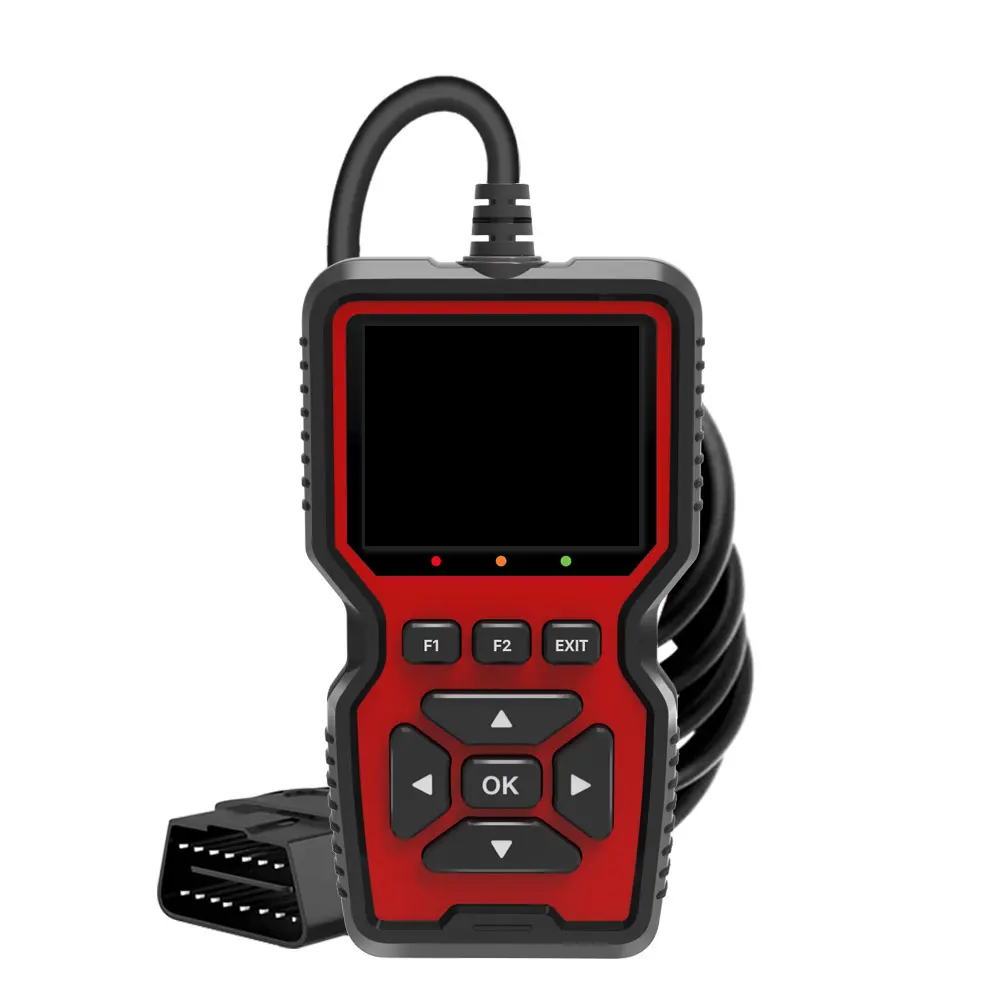
Diagnosing P1916 requires a systematic approach involving an OBD-II scanner, a digital multimeter (DMM), and thorough visual inspection.
- Retrieve and Document DTCs and Freeze Frame Data: Connect an OBD-II scanner to the vehicle’s DLC. Note all stored DTCs, as other transmission-related codes could be present and provide additional context. Record freeze-frame data, which captures engine conditions at the moment the code was set. Clear the DTCs and perform a brief test drive to see if P1916 immediately resets.
- Visual Inspection of Transmission Components:
- Inspect the transmission fluid level and condition. Burnt, dark, or excessively dirty fluid, especially with metallic particles, indicates potential internal mechanical issues.
- Locate the High Clutch Drum Speed Sensor. Consult a vehicle-specific service manual for its precise location, often mounted externally on the transmission case or internally within the valve body area.
- Examine the sensor’s wiring harness from the sensor to the TCM/PCM for any signs of physical damage, chafing, cuts, or areas where it might be exposed to excessive heat or sharp edges.
- Check the sensor’s electrical connector and the corresponding TCM/PCM connector for corrosion, bent pins, or loose connections. Ensure connectors are fully seated and latched.
- Electrical Diagnostics with a Digital Multimeter (DMM):
- Sensor Resistance Check (if applicable): Disconnect the sensor. Using a DMM set to ohms, measure the resistance across the sensor’s terminals. Compare this reading to manufacturer specifications. An open circuit (OL) or a resistance value significantly outside the specified range indicates an internal sensor fault. Note: Some speed sensors (e.g., Hall-effect) require power and cannot be accurately tested by resistance alone.
- Reference Voltage and Ground Check: Disconnect the sensor’s harness connector. With the ignition ON (engine OFF), back-probe the harness connector to check for proper reference voltage (typically 5V or 12V, depending on the sensor type) and a solid ground connection.
- Continuity and Short to Ground/Power Check: Disconnect both the sensor connector and the TCM/PCM connector. Use the DMM to check for continuity between the corresponding terminals of the sensor harness and the TCM/PCM harness. Additionally, check each wire for a short circuit to vehicle ground and to the B+ (battery voltage) circuit.
- Signal Integrity Check (Hall-effect sensors): If it’s a 3-wire Hall-effect sensor, back-probe the signal wire at the sensor connector (with the sensor connected and ignition ON). Carefully lift and rotate the vehicle’s drive wheels (if safely supported and transmission in neutral) or monitor with the vehicle driving slowly to observe a pulsating voltage signal on an oscilloscope or a varying voltage with a DMM (though a DMM will show an average).
- Live Data Analysis with an Advanced OBD-II Scanner:
- Access the transmission’s live data stream. Monitor the parameter for “High Clutch Drum Speed,” “Intermediate Shaft Speed,” or similar nomenclature, depending on the vehicle manufacturer.
- Compare the readings of this sensor to other transmission speed sensors (e.g., input shaft speed, output shaft speed). If the high clutch drum speed sensor shows an erratic, zero, or implausible reading while other speed sensors are functioning correctly, it strongly indicates a fault in the sensor or its immediate circuit.
- Observe how the sensor reading changes during gear shifts and while accelerating/decelerating. A properly functioning sensor should show a logical progression of speeds corresponding to engine and road speed.
- TCM/PCM Fault Confirmation: If all sensor and wiring checks confirm integrity, and a known-good sensor has been tested, the TCM/PCM itself may be faulty. This should be a last resort, as module replacement is costly and often requires reprogramming.
Recommended Repairs and Solutions
Once the root cause of P1916 has been identified through thorough diagnosis, implement the following repairs:
- Repair or Replace Wiring Harness: If electrical tests reveal damaged, open, shorted, or corroded wiring in the sensor circuit, repair the affected section of the harness using appropriate automotive-grade wiring and connectors. Ensure proper soldering, heat shrink tubing, and routing to prevent future damage.
- Clean and Secure Electrical Connectors: If corrosion or poor connections were identified, carefully clean the terminals using electrical contact cleaner and a small brush. Ensure all connectors are fully seated and securely latched.
- Replace High Clutch Drum Speed Sensor: If the sensor itself is determined to be faulty (e.g., incorrect resistance, no signal, erratic readings), replace it with a new, OE-quality component. Access to this sensor may require removing the transmission pan and/or valve body on some transmission designs. If this is the case, it is highly recommended to replace the transmission filter and perform a full fluid service with the manufacturer-specified fluid at the same time.
- Perform Transmission Fluid and Filter Service: If the transmission fluid was found to be contaminated or in poor condition, or if internal transmission work was performed to access the sensor, a complete transmission fluid and filter change using the manufacturer’s recommended fluid type is crucial.
- TCM/PCM Replacement (Last Resort): If all other components and circuits have been meticulously tested and confirmed to be functioning correctly, and the code persists, the TCM/PCM may require replacement. Be aware that this is a complex and expensive repair that typically requires programming and adaptation to the specific vehicle using specialized diagnostic tools.
- Post-Repair Verification: After completing any repair, clear all stored DTCs from the TCM/PCM. Perform an extended test drive under various load and speed conditions to confirm that the P1916 code does not return and that transmission operation is smooth and normal. Monitor live data during the test drive to ensure the new sensor is providing accurate and consistent readings.