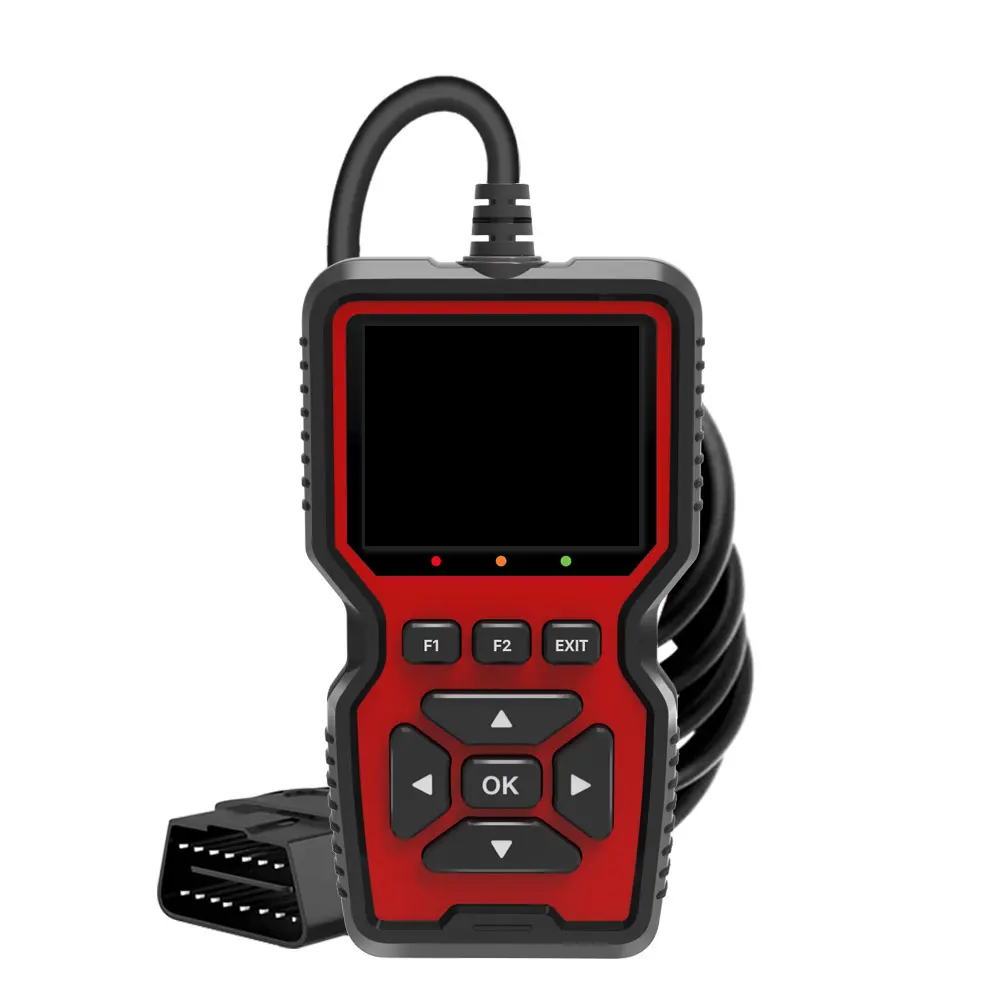
What Does Code P1314 Mean?
DTC P1314 signifies a Misfire Rate Catalyst Damage Fault – Bank 2. This diagnostic trouble code is set by the Engine Control Module (ECM) or Powertrain Control Module (PCM) when it detects a misfire rate on engine Bank 2 that is sufficiently high to cause impending or actual damage to the catalytic converter on that bank. The ECM continuously monitors crankshaft rotation speed fluctuations via the crankshaft position sensor. A momentary deceleration in crankshaft speed, beyond a calibrated threshold, indicates a misfire event in one or more cylinders. When the frequency of these misfires on Bank 2 reaches a critical level, the ECM determines that an excessive amount of unburnt fuel is entering the exhaust stream, leading to thermal overload and potential substrate meltdown of the Bank 2 catalytic converter. Unlike P030x codes which simply indicate a misfire, P1314 is a more severe warning, emphasizing the detrimental impact on the expensive emission control component. The subsystem directly affected is the misfire monitoring system’s catalyst protection strategy for Bank 2, which typically triggers a flashing Malfunction Indicator Lamp (MIL) to alert the driver to the severe condition.
Common Symptoms
- Flashing Malfunction Indicator Lamp (MIL): A flashing Check Engine Light indicates a severe misfire condition that can damage the catalytic converter.
- Rough Engine Idle or Vibration: Noticeable shaking or instability at idle.
- Reduced Engine Power and Acceleration: Engine feels sluggish or lacks responsiveness, especially under load.
- Poor Fuel Economy: Increased fuel consumption due to incomplete combustion.
- Hesitation or Stumbling During Acceleration: Engine struggles to accelerate smoothly.
- Strong Exhaust Odor (Rotten Egg Smell): Indicative of sulfur dioxide conversion issues within an overheated or damaged catalytic converter.
- Audible Engine Knocking or Pinging: In severe cases, due to pre-ignition or detonation from unburnt fuel.
What Causes the Code P1314?
- Faulty Spark Plugs or Ignition Coils: Worn, fouled, or improperly gapped spark plugs, or weak/failing ignition coils specific to cylinders on Bank 2.
- Clogged or Failing Fuel Injectors: Restricted or inoperative fuel injectors on Bank 2 cylinders leading to lean or no-fuel conditions.
- Vacuum Leaks: Leaks in the intake manifold gaskets, vacuum hoses, or PCV system affecting specific cylinders on Bank 2, leading to unmetered air and lean misfires.
- Low Engine Compression: Mechanical issues such as worn piston rings, burnt or bent valves, faulty valve seats, or a compromised head gasket on Bank 2 cylinders.
- Exhaust System Leaks: Leaks upstream of the Bank 2 oxygen sensor, causing the sensor to read falsely lean and the ECM to enrich the mixture, potentially leading to misfires.
- Faulty Oxygen Sensor (Upstream Bank 2): An inaccurate upstream O2 sensor can cause incorrect fuel trim adjustments for Bank 2, resulting in persistent rich or lean misfires.
- Dirty or Faulty Mass Air Flow (MAF) Sensor: Incorrect air mass readings can affect overall fuel trim, contributing to misfires across one or both banks.
- Damaged Wiring or Connectors: Corrosion, chafing, or poor connections in the ignition, fuel injector, or sensor circuits on Bank 2.
- Contaminated or Low-Quality Fuel: Poor fuel quality can lead to incomplete combustion and misfires.
- ECM/PCM Malfunction: Although less common, an internal fault within the ECM/PCM can lead to incorrect misfire detection or control strategies.
How to Diagnose and Troubleshoot
Diagnosis of P1314 requires a systematic approach, focusing on identifying the root cause of the severe misfire on Bank 2:
- Retrieve and Analyze DTCs and Freeze Frame Data: Connect a professional OBD-II scan tool. Record P1314 and any other pending or active codes. Crucially, examine the freeze frame data to understand engine conditions (RPM, engine load, temperature, short/long term fuel trims) when the code was set. This provides valuable clues about the operating state during the misfire event.
- Check Misfire Counters and Live Data: With the engine running, monitor live misfire data for individual cylinders on Bank 2. Identify which specific cylinders are experiencing the highest misfire rates. Simultaneously, observe short and long-term fuel trims for Bank 2. Significant positive fuel trims suggest a lean condition, while negative trims suggest rich.
- Perform Visual Inspection: Carefully inspect all ignition components (spark plugs, ignition coils, plug wires if applicable) on Bank 2. Look for signs of carbon fouling, oil contamination, cracks, or burnt terminals. Check fuel injector wiring and connectors for damage or loose connections. Inspect all vacuum lines and intake manifold gaskets on the Bank 2 side for visible cracks or deterioration.
- Ignition System Testing:
- Spark Plug Inspection/Replacement: Remove spark plugs from misfiring cylinders on Bank 2. Examine their condition. If fouled or worn, replace them.
- Ignition Coil Testing: Use a DMM to test primary and secondary resistance of ignition coils (if specifications are available). A more practical method is to swap a suspected faulty coil from a misfiring Bank 2 cylinder with a known good coil from Bank 1 (assuming Bank 1 is not misfiring) and see if the misfire follows the coil. Use a spark tester to confirm spark presence.
- Fuel System Testing:
- Fuel Pressure Test: Connect a fuel pressure gauge and verify fuel pressure is within manufacturer specifications. Low pressure can cause lean misfires across multiple cylinders.
- Fuel Injector Testing: Perform an injector balance test using the scan tool if supported, or manually test injector resistance with a DMM (should be within specs). Listen to each injector with a stethoscope to confirm it’s clicking. If a misfire is isolated to one or two cylinders, swap injectors between a misfiring Bank 2 cylinder and a non-misfiring Bank 1 cylinder to see if the misfire moves.
- Engine Mechanical Inspection:
- Compression Test: If misfires persist despite ignition and fuel system checks, perform a dry and wet compression test on the Bank 2 cylinders. Low compression indicates internal engine issues.
- Leak-Down Test: For more precise diagnosis of compression issues, perform a leak-down test to pinpoint the source of leakage (e.g., valves, piston rings, head gasket).
- Vacuum Leak Detection: Use a smoke machine to introduce smoke into the intake system. Observe for smoke escaping from intake manifold gaskets, vacuum hoses, or other components on Bank 2. Alternatively, carefully spray unlit propane or carburetor cleaner around potential leak areas while monitoring RPM or short-term fuel trims for changes.
- Oxygen Sensor and Exhaust System Check: Monitor upstream Bank 2 oxygen sensor activity on the scan tool. Compare its voltage readings and switching speed to Bank 1 (if applicable and healthy). Look for exhaust leaks near the upstream Bank 2 O2 sensor, which can skew readings and cause incorrect fuel trim.
Recommended Repairs and Solutions
Once the root cause of the P1314 code has been identified through thorough diagnosis, the following repairs are commonly performed:
- Replace Spark Plugs and/or Ignition Coils: Replace all spark plugs, especially if they are old or fouled. Replace any faulty ignition coils or spark plug wires identified during testing. It’s often recommended to replace coils in sets on the affected bank if they are of similar age or mileage.
- Clean or Replace Fuel Injectors: If injectors are clogged, a professional fuel injector cleaning service might suffice. However, if an injector is electrically faulty or severely restricted, replacement is necessary. Consider replacing injectors in a set on Bank 2 if multiple are problematic.
- Repair Vacuum Leaks: Replace deteriorated vacuum hoses, intake manifold gaskets, or PCV components found to be leaking. Ensure all connections are secure.
- Address Engine Mechanical Issues: If low compression is detected, repairs could range from replacing a head gasket to a more extensive valve job or engine overhaul, depending on the severity and cause of the compression loss.
- Replace Faulty Sensors: Replace any oxygen sensors, MAF sensors, or other relevant sensors that were diagnosed as defective and contributing to the misfire condition.
- Repair Wiring or Connectors: Repair or replace any damaged wiring harnesses or corroded electrical connectors affecting the ignition or fuel systems on Bank 2.
- Important Mechanics’ Tip (Post-Repair Catalyst Inspection): Because P1314 specifically indicates a catalyst damage fault, it is critical to inspect the Bank 2 catalytic converter after addressing the misfire source. Listen for rattling sounds (indicating broken substrate), or perform a backpressure test to check for restriction. A severely damaged catalytic converter, even after the misfire is fixed, will continue to impede exhaust flow and can lead to recurring performance issues and potentially set other catalytic efficiency codes (e.g., P0430). If damage is evident, the Bank 2 catalytic converter will likely need replacement.
- Clear Codes and Verify Repair: After completing repairs, clear all DTCs from the ECM. Perform a comprehensive test drive under varying conditions, ensuring that the misfire does not return and that the ECM’s readiness monitors complete successfully.