
Overview & Design Features
The GMC EcoTec3 L87 engine is a prominent 6.2-liter (6162 cc) naturally aspirated V8 power unit, developed by General Motors and a key member of the Gen V Small Block engine family. Introduced in 2014, it represents a significant advancement in GM’s long-standing pushrod V8 heritage, combining robust performance with enhanced fuel efficiency. This engine is a cornerstone of GM’s full-size truck and SUV lineup, engineered to deliver substantial power and torque for demanding applications while incorporating modern fuel-saving technologies. Its historical significance lies in continuing the legacy of the Small Block while integrating contemporary direct injection and cylinder deactivation strategies.
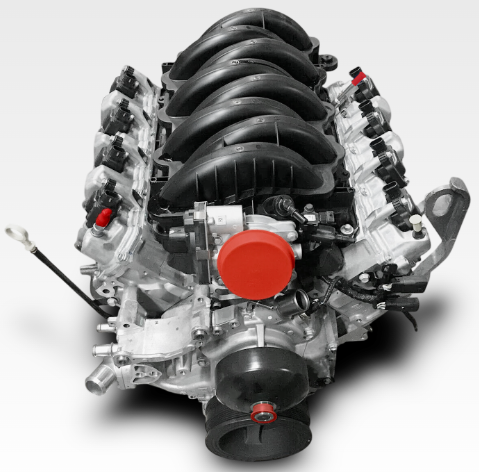
At its core, the L87 features a high-pressure die-cast aluminum cylinder block, optimized for strength and weight reduction, paired with lightweight aluminum cylinder heads. A key engineering feature is its advanced direct fuel injection (DI) system, which precisely atomizes fuel directly into the combustion chambers, improving combustion efficiency and power output. Complementing this is Variable Valve Timing (VVT), which continuously adjusts valve timing to optimize performance and efficiency across the engine’s RPM range. Furthermore, the engine incorporates Active Fuel Management (AFM), later updated to Dynamic Fuel Management (DFM) in some iterations, allowing seamless transitions between V8 and V4 operation to conserve fuel during light-load conditions, alongside an Auto Stop/Start system.
The EcoTec3 L87 engine has been widely deployed across a range of General Motors’ premium trucks and SUVs. Its primary applications include the Chevrolet Silverado (LTZ, High Country trims) and GMC Sierra (SLT, Denali trims) full-size pickup trucks, typically from the 2014 model year onwards. It also powers the Chevrolet Tahoe and Suburban, GMC Yukon and Yukon XL, and the Cadillac Escalade and Escalade ESV across various trim levels, serving as the top-tier engine option in many of these models, particularly the Denali and High Country variants.
Technical Specifications
| Displacement (cc) | 6162 |
| Max Power (hp (kW) @ RPM) | 420 hp (313 kW) @ 5600 RPM |
| Max Torque (Nm (kg*m) @ RPM) | 624 Nm (63.6 kg*m) @ 4100 RPM |
| Fuel Type | Gasoline (Premium 91+ RON Recommended) |
| Fuel Consumption (l/100 km) | Varies significantly by vehicle application and driving conditions. Refer to specific vehicle’s official EPA/WLTP ratings for precise figures. |
| Engine Type | Naturally Aspirated V8, OHV (Pushrod) |
| Compression Ratio | 11.5:1 |
| Cylinder Bore (mm) | 103.25 |
| Piston Stroke (mm) | 92 |
| Valvetrain | Overhead Valve (OHV), Variable Valve Timing (VVT) |
| Valves per Cylinder | 2 |
| Additional Info | Direct Injection (DI), Active Fuel Management (AFM) / Dynamic Fuel Management (DFM), Auto Stop/Start, Aluminum Block & Heads |
Common Problems & Reliability
While the EcoTec3 L87 generally demonstrates robust reliability, several specific mechanical weak points have been identified. One of the most frequently reported issues pertains to the Active Fuel Management (AFM) or Dynamic Fuel Management (DFM) lifters. These lifters can fail, leading to misfires, excessive valvetrain noise, and in severe cases, camshaft damage. This often manifests as a ticking or knocking sound from the engine and can require significant repair work, including lifter replacement and potentially camshaft replacement. Another concern common to direct injection engines is carbon buildup on intake valves, as fuel is not sprayed over the valve stems to clean them. This can lead to reduced airflow, decreased performance, and rough idling over higher mileage. While less severe than some earlier generations, some L87 engines may exhibit elevated oil consumption between service intervals, particularly when the AFM/DFM system is frequently active, though this is often within manufacturer specifications.
Under proper and consistent maintenance, including regular oil changes with manufacturer-recommended fluids and addressing known issues proactively, the GMC EcoTec3 L87 engine can achieve an impressive service life. A realistic expected service life before requiring a major overhaul is typically between 250,000 to 350,000 kilometers (approximately 155,000 to 220,000 miles).
Maintenance Tips & Service Schedule
Maintaining the EcoTec3 L87 engine properly is crucial for maximizing its longevity and performance. Adherence to a strict service schedule and the use of specified fluids are paramount. For engine oil changes, intervals should be guided by the vehicle’s Oil Life Monitoring (OLM) system, typically every 8,000 to 12,000 kilometers (5,000 to 7,500 miles) or annually, whichever comes first. Use a full synthetic motor oil conforming to GM dexos1 Gen 2 specification, typically 0W-20 viscosity, to ensure optimal lubrication and AFM/DFM system operation. The engine air filter should be inspected at every oil change and replaced as necessary, usually every 25,000 to 50,000 kilometers (15,000 to 30,000 miles).
Spark plugs should be replaced approximately every 160,000 kilometers (100,000 miles) with OEM-specified iridium-tipped plugs to maintain optimal combustion. The cooling system requires attention, with coolant flushes recommended every 240,000 kilometers (150,000 miles) or every five years, using GM-approved Dex-Cool extended-life coolant. While the L87 utilizes a timing chain designed for the life of the engine, it is advisable to inspect it during major service intervals for any signs of wear or stretch, particularly in high-mileage examples or if valvetrain noise is present. Regular fuel system cleaning additives can help mitigate direct injection carbon buildup, especially if premium fuel is not consistently used. Addressing any check engine lights promptly and performing diagnostic checks is vital for identifying potential AFM/DFM lifter issues before they escalate.
Conclusion
The GMC EcoTec3 L87 is a potent and generally reliable engine choice, offering strong performance and respectable efficiency for a large V8. For a used vehicle buyer, it represents a solid option, provided a comprehensive pre-purchase inspection is conducted to check for common AFM/DFM-related issues and signs of carbon buildup. With diligent adherence to recommended maintenance schedules, especially regarding oil changes with specified synthetic fluids, and prompt attention to any developing symptoms, the L87 can provide many years of dependable service, making it a safe choice for those seeking a powerful and capable full-size truck or SUV.