
Before being restyled, the 2.0-liter turbo engine Great Wall GW4C20, also known as 2.0 GDIT, was installed on well-known concern models like the H6 Coupe, H8, and H9. It was manufactured from 2013 to 2019. This motor is often confused with the GW4C20NT engine found in the F7 and F7x crossovers.
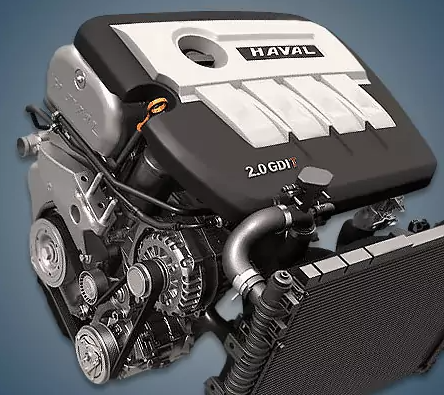
GW4C20, GW4C20A, GW4C20B, and GW4C20NT are your own 2.0-liter engines.
Specifications
| Production years | 2013-2019 |
| Displacement, cc | 1967 |
| Fuel system | direct injection |
| Power output, hp | 190 – 218 |
| Torque output, Nm | 310 – 324 |
| Cylinder block | cast iron R4 |
| Block head | aluminum 16v |
| Cylinder bore, mm | 82.5 |
| Piston stroke, mm | 92 |
| Compression ratio | 9.6 |
| Features | DOHC |
| Hydraulic lifters | yes |
| Timing drive | chain |
| Phase regulator | on both shafts |
| Turbocharging | BorgWarner K03 |
| Recommended engine oil | 5W-40 |
| Engine oil capacity, liter | 5.5 |
| Fuel type | petrol |
| Euro standards | EURO 5 |
| Fuel consumption, L/100 km (for Haval H6 Coupe 2018) — city — highway — combined |
13.0 8.4 10.3 |
| Engine lifespan, km | ~220 000 |
| Weight, kg | 175 (with attachments) |
The engine was installed on:
- Haval H6 Coupe I in 2015 – 2019;
- Haval H8 I in 2013 – 2018;
- Haval H9 I in 2014 – 2017.
Disadvantages of the Great Wall GW4C20 engine
As of right now, the motor has shown itself to be reliable and trouble-free.
Floating engine speeds caused by soot on the valves account for the majority of complaints.
A bent impeller or a burst pipe can cause turbine failure in certain situations.
The fuel pump and ignition system are also weak points of the power unit.
Oil and antifreeze leaks, as well as electrical malfunctions, are the remaining issues.