
The company has been producing the 2.2-liter Hyundai D4HF, also known as the Genesis 2.2 CRDi engine, since 2020. As of right now, only the GV70 crossover and the G80 executive sedan are equipped with this engine. This diesel engine is an adaptation of the D4HE engine for vehicles with rear-wheel drive.
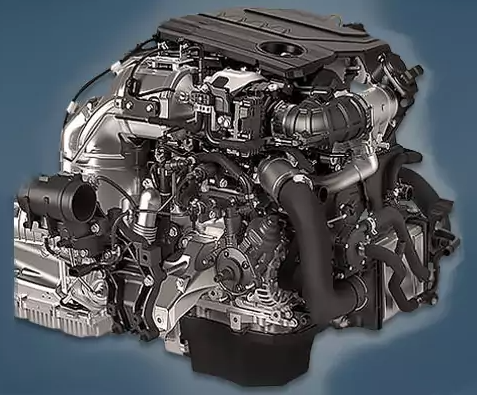
Diesels D4HA, D4HB, D4HC, D4HD, and D4HE are also members of the R family.
The engine was mounted on:
- Genesis GV70 1 (JK1) since 2020;
- Genesis G80 2 (RG3) since 2020.
Specifications
| Production years | since 2020 |
| Displacement, cc | 2151 |
| Fuel system | Common Rail |
| Power output, hp | 210 |
| Torque output, Nm | 441 |
| Cylinder block | aluminum R4 |
| Block head | aluminum 16v |
| Cylinder bore, mm | 83 |
| Piston stroke, mm | 99.4 |
| Compression ratio | 16.0 |
| Features | intercooler |
| Hydraulic lifters | yes |
| Timing drive | belt |
| Phase regulator | no |
| Turbocharging | e-VGT |
| Recommended engine oil | 5W-30 |
| Engine oil capacity, liter | 5.6 |
| Fuel type | diesel |
| Euro standards | EURO 5/6 |
| Fuel consumption, L/100 km (for Genesis GV70 2021) — city — highway — combined |
8.9 6.8 7.9 |
| Engine lifespan, km | ~330 000 |
| Weight, kg | 197.1 |
Disadvantages of the Hyundai D4HF engine
There are no breakdown statistics for this recently introduced diesel.
Here, simpler electromagnetic injectors are installed in place of erratic piezo ones.
Timing chains have been replaced by belts, which are required by law to check and inspect every 120,000 kilometers.
The new aluminum block’s long-term performance is unknown.
Typical issues with the EGR valve or particulate filter are also anticipated.