
Overview & Design Features
The Lexus 4VZ-FE is a 2.5-liter (2496 cc) V6 gasoline engine, part of the broader VZ engine family developed by Toyota. It was primarily engineered for the Japanese domestic market, serving as a robust and refined powertrain for mid-size luxury sedans during its production era. Introduced in the early 1990s, this engine exemplifies Toyota’s commitment to smooth operation and reliability, becoming a staple in applications demanding a balance of performance and fuel efficiency for its time.
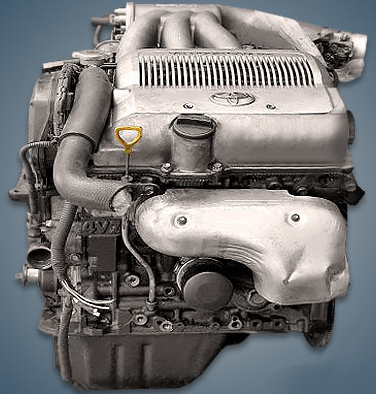
Engineered with a cast iron cylinder block and aluminum cylinder heads, the 4VZ-FE utilizes a Dual Overhead Camshaft (DOHC) valvetrain with four valves per cylinder, totaling 24 valves. Fuel delivery is managed by a multi-point electronic fuel injection (EFI) system, ensuring precise fuel metering and combustion efficiency. Unlike later Toyota engines, the 4VZ-FE does not incorporate variable valve timing technology (such as VVT-i), relying instead on its optimized fixed camshaft profiles for intake and exhaust flow. This design prioritizes mechanical simplicity and long-term durability.
This specific V6 engine found its primary applications in the Japanese market. Notable vehicles equipped with the 4VZ-FE include the 1990-1992 Toyota Camry Prominent (VZV30 series) and the 1991-1996 Toyota Windom (VCV10 series), which was the Japanese domestic market equivalent of the Lexus ES 250/300. Its deployment highlighted its suitability for front-wheel-drive configurations within Toyota’s luxury and executive sedan lines.
Technical Specifications
| Specification | Value |
|---|---|
| Displacement | 2496 cc (2.5 L) |
| Max Power | 173 hp (127 kW) @ 6000 RPM |
| Max Torque | 227 Nm (23.1 kg*m) @ 4800 RPM |
| Fuel Type | Gasoline (Unleaded Premium recommended) |
| Fuel Consumption | 9.5 – 11.5 l/100 km (Combined, varies by vehicle) |
| Engine Type | V6, 4-stroke, naturally aspirated |
| Compression Ratio | 10.0:1 |
| Cylinder Bore | 87.5 mm |
| Piston Stroke | 69.2 mm |
| Valvetrain | DOHC 24-valve |
| Valves per Cylinder | 4 |
| Additional Info | Multi-point EFI, timing belt driven camshafts, non-interference engine |
Common Problems & Reliability
The Lexus 4VZ-FE engine generally maintains a reputation for strong reliability, characteristic of Toyota engineering from its era. However, like many engines of its age and design, it has specific areas prone to wear or common issues. One prevalent problem involves oil leaks, often originating from the valve cover gaskets, camshaft seals, and the distributor O-ring. These components can harden and crack over time due to heat cycling, leading to external oil seepage. Another concern for some VZ-series engines, particularly with high mileage or neglect, can be a deteriorating head gasket. While less common than on other VZ variants, it remains a potential failure point, often manifesting as coolant consumption or mixing with oil.
Timing belt maintenance is also critical. A neglected timing belt can lead to catastrophic engine damage if it snaps, though the 4VZ-FE is a non-interference engine, meaning valve-to-piston contact is unlikely if the belt breaks. However, a broken timing belt will still leave the vehicle inoperable and require significant repair. With proper and diligent maintenance, the 4VZ-FE is capable of achieving service lives well beyond 250,000 kilometers, with many examples exceeding 300,000 kilometers before requiring major internal overhauls.
Maintenance Tips & Service Schedule
To ensure the longevity and optimal performance of the 4VZ-FE engine, adherence to a strict maintenance schedule is essential. Engine oil and filter changes should occur every 8,000 to 10,000 kilometers or every six months, whichever comes first, using a high-quality synthetic or semi-synthetic 5W-30 engine oil. Regular checks for oil leaks from valve covers and the distributor seal are recommended to prevent minor issues from escalating.
The timing belt, along with its tensioner and idler pulleys, should be replaced every 90,000 to 100,000 kilometers. It is also prudent to replace the water pump and camshaft/crankshaft seals during this service, as they are easily accessible and aging components in this mileage range. Spark plugs (standard copper or platinum) typically require replacement every 40,000 to 60,000 kilometers. Coolant flushes and replacements should be performed every 40,000 kilometers or every two years to maintain cooling system integrity. Air filter and fuel filter replacement intervals should follow manufacturer guidelines, generally every 30,000 to 45,000 kilometers to ensure proper air-fuel mixture and prevent premature wear.
Conclusion
The Lexus 4VZ-FE engine represents a well-engineered and generally reliable V6 powertrain from the early 1990s. Its robust construction and straightforward design contribute to its impressive durability, making it a safe and dependable choice for a used vehicle buyer, provided the vehicle has a documented history of consistent maintenance. Prospective owners should prioritize vehicles with evidence of regular oil changes and, crucially, timely timing belt replacements. While minor oil leaks are common with age, they are typically manageable. Overall, the 4VZ-FE offers a smooth and durable driving experience, standing as a testament to Toyota’s engineering principles of quality and longevity.