
The company produced the 1.8-liter Mazda L813 engine between 2002 and 2012, which was fitted in two iterations of the well-liked sixth model. This power unit’s modification for the Mazda 5 minivan had a unique index, L823.
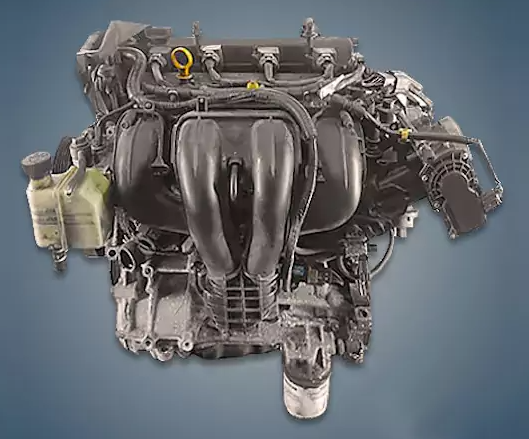
The L-engine family also includes:
- 1.8 L – L8‑DE, L813;
- 2.0 L – LF‑DE, LF‑VD, LF17, LFF7;
- 2.3 L – L3‑VE, L3‑VDT, L3C1;
- 2.5 L – L5‑VE.
The engine was installed on:
- Mazda 6 I (GG) in 2002 – 2007;
- Mazda 6 II (GH) in 2007 – 2012.
Specifications
| Production years | 2002-2012 |
| Displacement, cc | 1798 |
| Fuel system | distributed injection |
| Power output, hp | 120 |
| Torque output, Nm | 165 |
| Cylinder block | aluminum R4 |
| Block head | aluminum 16v |
| Cylinder bore, mm | 83 |
| Piston stroke, mm | 83.1 |
| Compression ratio | 10.8 |
| Features | DOHC |
| Hydraulic lifters | no |
| Timing drive | chain |
| Phase regulator | no |
| Turbocharging | no |
| Recommended engine oil | 5W-30 |
| Engine oil capacity, liter | 4.3 |
| Fuel type | petrol |
| Euro standards | EURO 4 |
| Fuel consumption, L/100 km (for Mazda 6 2008) — city — highway — combined |
9.6 5.3 6.8 |
| Engine lifespan, km | ~280 000 |
| Weight, kg | 102 |
Disadvantages of the Mazda L813 engine
The primary grievances pertain to floating turnover, which is challenging to eliminate.
The control unit’s firmware facilitates throttle assembly cleaning and modification.
The pump, alternator, thermostat, and right motor support are additional weaknesses.
Frequently, oil seeps directly into the spark plug wells from beneath the valve cover.
The valves must be adjusted every 100,000 kilometers because there are no hydraulic lifters.