
From 2002 to 2015, the company produced the Mazda ZJ-VE 1.3-liter gasoline engine, which was limited to the base models of the first Mazda 3 and two generations of the Mazda 2 or Demio. A particularly cost-effective variant of this motor has the ZJ-VEM index and runs on the Miller cycle.
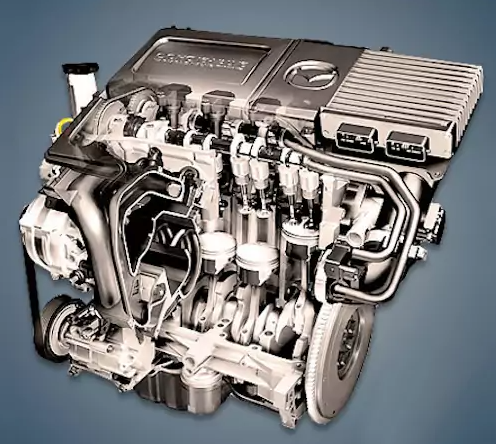
The Z-engine family also includes:
- 1.3 L – ZJ‑VE;
- 1.5 L – Z5‑DE, ZL‑DE, ZL‑VE, ZY‑VE;
- 1.6 L – Z6, ZM‑DE.
The engine was installed on:
- Mazda 2 DY in 2002 – 2007;
- Mazda 2 DE in 2007 – 2015;
- Mazda Demio DY in 2002 – 2007;
- Mazda Demio DE in 2007 – 2015;
- Mazda 3 BK in 2003 – 2009.
Specifications
| Production years | 2002-2015 |
| Displacement, cc | 1348 |
| Fuel system | distributed injection |
| Power output, hp | 75 – 90 |
| Torque output, Nm | 120 – 125 |
| Cylinder block | aluminum R4 |
| Block head | aluminum 16v |
| Cylinder bore, mm | 74 |
| Piston stroke, mm | 78.4 |
| Compression ratio | 10.0 |
| Features | DOHC |
| Hydraulic lifters | no |
| Timing drive | chain |
| Phase regulator | S-VT, intake |
| Turbocharging | no |
| Recommended engine oil | 5W-30 |
| Engine oil capacity, liter | 3.7 |
| Fuel type | petrol |
| Euro standards | EURO 4/5 |
| Fuel consumption, L/100 km (for Mazda 2 2008) — city — highway — combined |
6.9 4.2 5.2 |
| Engine lifespan, km | ~240 000 |
| Weight, kg | 103.5 |
Disadvantages of the Mazda ZJ-VE engine
The only thing that makes this engine prone to carbon formation is its dependability; if decarbonization is neglected, it will start to lose power before 100,000 kilometers; idle speeds frequently float due to throttle or EGR valve contamination;
The timing chain functions fairly well, but replacing it is challenging; there are no hydraulic lifters, so remember to adjust the valves every 90,000 kilometers.