
The Mercedes M112 E32 engine was developed in 1997 to replace the out-of-date E32 engine from the M104 series. The main difference between the new and old series was the V-shaped motors with a 90-degree breakup angle.
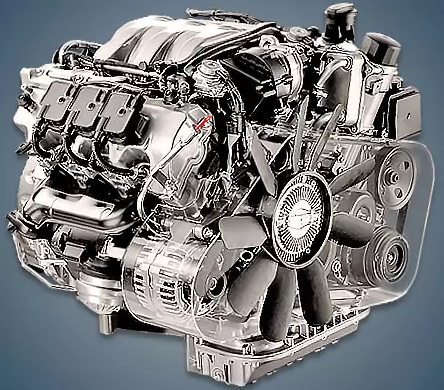
Members of the V6-family include M112 E24, M112 E26, M112 E28, M112 E32, M112 E37, M272 E25, M272 E30, M272 E35, M276 DE30, and M276 DE35.
Moving away from the in-line arrangement of the cylinders made it possible to install both series of engines in the same car models, making the 6- and 8-cylinder engines as unified and compact as possible. To lighten the engine, Mercedes engineers opted for an aluminum alloy block instead of a cast iron block, and silumin was utilized for the cylinder liners. To reduce the inertial forces in the engine block, a balancer shaft was placed along the cylinder banks.
Specifications
| Production years | 1997-2007 |
| Displacement, cc | 3199 |
| Fuel system | distributed injection |
| Power output, hp | 190 – 224 (M 112 E 32) 354 (M 112 E 32 ML) |
| Torque output, Nm | 270 – 315 (M 112 E 32) 450 (M 112 E 32 ML) |
| Cylinder block | aluminum V6 |
| Block head | aluminum 18v |
| Cylinder bore, mm | 89.9 |
| Piston stroke, mm | 84 |
| Compression ratio | 10.0 (M 112 E 32) 9.0 (M 112 E 32 ML) |
| Features | no (M 112 E 32) intercooler (M 112 E 32 ML) |
| Hydraulic lifters | yes |
| Timing drive | chain |
| Phase regulator | yes |
| Turbocharging | no (M 112 E 32) compressor (M 112 E 32 ML) |
| Recommended engine oil | 5W-30 |
| Engine oil capacity, liter | 7.5 |
| Fuel type | petrol |
| Euro standards | EURO 3/4 |
| Fuel consumption, L/100 km (for E320 W211) — city — highway — combined |
14.4 7.5 9.9 |
| Engine lifespan, km | ~350 000 |
| Weight, kg | 160 |
Disadvantages of the M112 E32 engine
The destruction of the crankshaft pulley is the characteristic failure of this engine series.
The remaining engine issues are connected to higher oil consumption in some way.
Grease seeps out from beneath the gaskets and seals due to crankcase ventilation contamination.
Oil burnout is typically caused by hardened valve stem seals.
Additionally, the oil filter housing and heat exchanger are potential sources of lubrication leaks.