
The Renault-Nissan R9M, also known as the 1.6 dCi, is a 1.6-liter diesel engine that has been manufactured since 2011 and is found in the Megane, Scenic, Espace, Koleos, Qashqai, and X-trail models. This diesel engine is identified by its own indices, OM622 and OM626, on Mercedes vehicles.
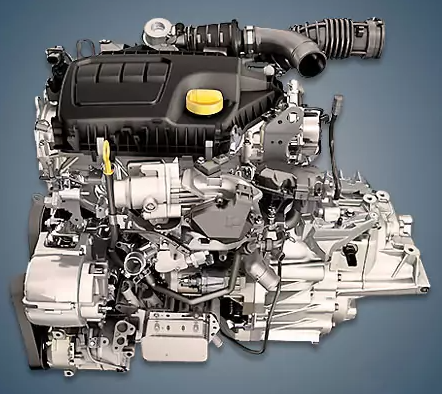
R9N is another R-series diesel.
Another diesel that Renault and Nissan engineers worked together to develop was released in 2011. This 1.6-liter engine has a timing chain drive, a Bosch Common Rail fuel system with piezo injectors, a 16-valve head with hydraulic lifters, and a cast-iron block. A variable displacement oil pump and a Start-Stop system were also added to this engine. Apart from the 130 horsepower version with a single turbine, a 160 horsepower Twin-Turbo version was also available.
Derated versions of this engine with a single turbine for 95–115 horsepower and a twin turbocharger for 125–145 horsepower were introduced for commercial vehicles in 2014. In contrast to the diesel for civilian models, which has already been replaced by the new R9N engine, they are still found on minibuses like the Mercedes Vito, Nissan NV300, and Renault Trafic.
The engine was mounted on:
- Renault Espace 5 (JFC) in 2015 – 2018;
- Renault Fluence 1 (L38) in 2012 – 2015;
- Renault Kadjar 1 (HA) in 2015 – 2018;
- Renault Koleos 2 (HC) in 2017 – 2018;
- Renault Megane 3 (X95) in 2012 – 2016; Megane 4 (XFB) in 2016 – 2018;
- Renault Scenic 3 (J95) in 2011 – 2016; Scenic 4 (JFA) in 2016 – 2018;
- Renault Talisman 1 (L2M) in 2015 – 2018;
- Renault Trafic 3 (X82) since 2014;
- Nissan NV300 X82 since 2016;
- Nissan Qashqai 1 (J10) in 2011 – 2013; Qashqai 2 (J11) in 2013 – 2018;
- Nissan X-Trail 3 (T32) in 2015 – 2018;
- Fiat Talento II (X82) since 2016;
- Opel Vivaro B (X82) in 2014 – 2018;
- Mercedes C-Class W205 in 2014 – 2018 (as OM622, OM626);
- Mercedes Vito W447 since 2014 (as OM622, OM626).
Specifications
| Production years | since 2011 |
| Displacement, cc | 1598 |
| Fuel system | Common Rail |
| Power output, hp | 130 (Single-Turbo) 160 (Twin-Turbo) 95 – 115 (Single-Turbo for minibuses) 125 – 145 (Twin-Turbo for minibuses) |
| Torque output, Nm | 320 (Single-Turbo) 380 (Twin-Turbo) 260 – 300 (Single-Turbo for minibuses) 320 – 340 (Twin-Turbo for minibuses) |
| Cylinder block | cast iron R4 |
| Block head | aluminum 16v |
| Cylinder bore, mm | 80 |
| Piston stroke, mm | 79.5 |
| Compression ratio | 15.4 |
| Hydraulic lifters | yes |
| Timing drive | chain |
| Turbocharging | yes |
| Recommended engine oil | 5W-30 |
| Engine oil capacity, liter | 6.5 |
| Fuel type | diesel |
| Euro standards | EURO 5/6 |
| Fuel consumption, L/100 km (for Renault Scenic 2014) — city — highway — combined |
5.2 4.1 4.5 |
| Engine lifespan, km | ~400 000 |
| Weight, kg | 177 |
Disadvantages of the Renault R9M engine
The erratic behavior of piezo injectors, the quick contamination of the EGR valve—of which there are two at once—and a particulate filter are the reasons why owners contact the service the most frequently.
Numerous examples of cranking liners for 150,000 kilometers are discussed on specialized forums, but this is limited to modifications of a motor with two turbines and a 160 horsepower capacity.
Here, the chain-based gas distribution system is built to last the engine’s whole life. However, there are numerous reviews about extending the chain up to 150,000 kilometers on the forums.
The heat exchanger in the EGR system on some Renault models frequently malfunctions; it just stops passing exhaust gases, which then leak into the passenger compartment.
A recall campaign was implemented for diesel engines with twin turbocharging in order to replace the exhaust pipe on the EGR valve, which occasionally burst here.
Oil leaks frequently occur from beneath the oil filter housing or timing chain cover.