
From 1993 to 1999, the company’s factory produced the Saab B204L 2.0-liter turbo engine, which was used in both the 9-3 in its first year of production and the second generation of the 900. The average power in its line of units was this 0.73 bar supercharged turbo engine.
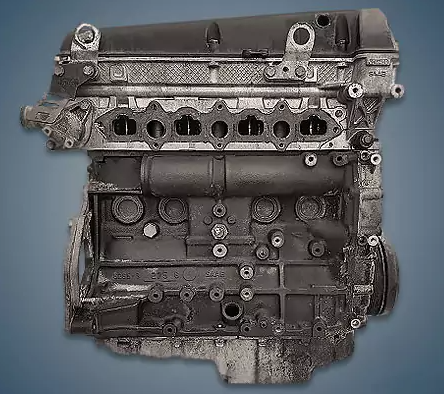
B204E, B204i, B204L, and B205E are 2.0-liter H-series engines.
Specifications
| Production years | 1993-1999 |
| Displacement, cc | 1985 |
| Fuel system | distributed injection |
| Power output, hp | 185 |
| Torque output, Nm | 263 (in the version with automatic transmission, the torque is limited to 230 Nm) |
| Cylinder block | cast iron R4 |
| Block head | aluminum 16v |
| Cylinder bore, mm | 90 |
| Piston stroke, mm | 78 |
| Compression ratio | 9.2 |
| Features | Trionic 5 |
| Hydraulic lifters | yes |
| Timing drive | chain |
| Phase regulator | no |
| Turbocharging | Garrett TB25 |
| Recommended engine oil | 5W-30 |
| Engine oil capacity, liter | 4.0 (together with an oil change in the cooler, 5.4 liters are needed) |
| Fuel type | petrol |
| Euro standards | EURO 2/3 |
| Fuel consumption, L/100 km (for Saab 900 1997) — city — highway — combined |
11.9 6.5 8.5 |
| Engine lifespan, km | ~290 000 |
The engine was installed on:
- Saab 900 II (NG) in 1993 – 1998;
- Saab 9-3 I (YS3D) in 1998 – 1999.
Disadvantages of the Saab B204L engine
The unit is incredibly dependable, and the following breakdowns happen at high mileage;
The owners merely remove the balancer block, which causes the most problems;
The life of the ignition cassette is shortened when spark plugs are not changed frequently;
Oil pump wear or timing chain stretching may occur after 250,000 kilometers;
There were documented instances of engine failure brought on by connecting rod caps coming loose.