
The 9-liter Scania DSC9 engine is built to transport cargo over long distances with dependability and efficiency as well as in urban settings with smooth acceleration and braking performance.
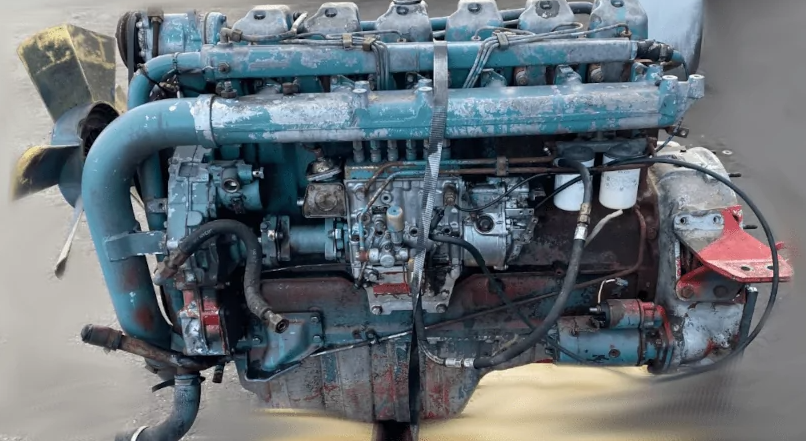
The engines in the DSC9 family have undergone a number of modifications. They are all connected by several parameters that have the same value. For instance, every device in this model has six cylinders. Because the cylinders are arranged in a single row, servicing or repairing them in the event of malfunctions or breakdowns is made much easier. There are two valves in each cylinder. All Scania DSC9 engine versions have the same bore and stroke, which are 115 and 144 mm, respectively.
Specifications
| Manufacturer | Scania |
| Also called | DSC 9 |
| Cylinder block alloy | cast iron |
| Fuel system | direct injection |
| Configuration | inline |
| Number of cylinders | 6 |
| Piston stroke, mm | 144 |
| Cylinder bore, mm | 115 |
| Compression ratio | 16,7 |
| Displacement, cc | 8970 |
| Power output, hp | 220-310/2000 |
| Torque output, Nm / rpm | 1005-1355/1350 |
| Fuel type | diesel |
| Firing order | 1-5-3-6-2-4 |
| Euro standards | Euro 2 |
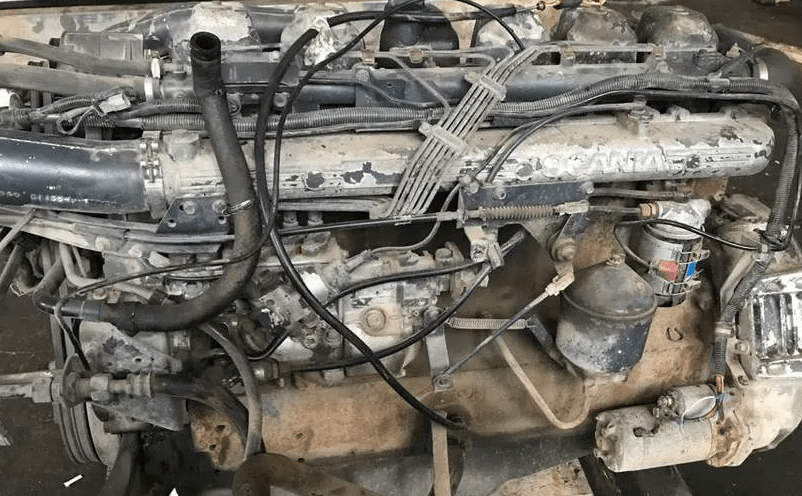
This model’s engines rely on a mechanical fuel supply system. This sets the DSC9 engine apart from the general range of engines, which typically have an electronic direct injection system.
Power is the primary distinction between the engine versions. The most widely used engines are those with 220, 260, and 310 horsepower. The engine speed at which the Scania DSC9 reaches its maximum power level is 2000 rpm.
This model’s engines are compliant with the Euro 2 environmental standard. They are distinguished by the length of time that passes between planned engine oil changes, which have a 27-liter capacity.
Explanation of DSC 9 markings
| DSC | Diesel engine with turbocharger and air-cooled intercooler. |
| 9 | Total working volume, dm3. |