
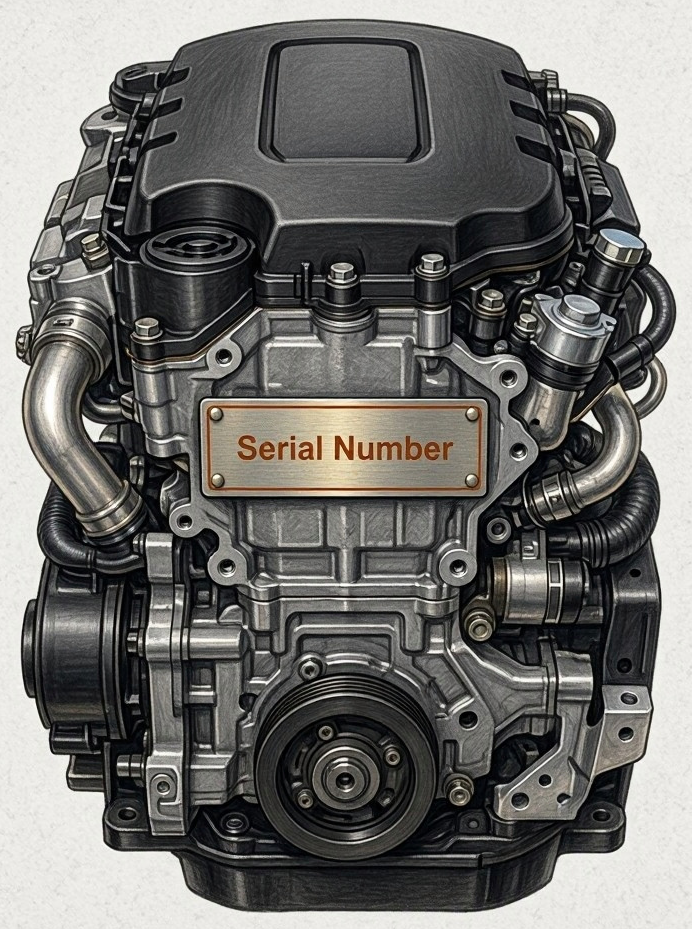
Identifying the precise Caterpillar engine code and serial number is an absolutely critical first step for any automotive or heavy equipment professional, owner, or prospective buyer. This unique identifier serves as the DNA of the engine, unlocking a wealth of essential information. Without it, accurately ordering correct OEM replacement parts becomes a high-stakes guessing game, often leading to costly errors, delays, and incompatibility issues. Furthermore, the engine serial number is indispensable for verifying the engine’s complete service history, checking applicability for factory recalls or technical service bulletins (TSBs), and confirming emissions compliance. For those inspecting a used vehicle or considering a replacement engine, validating the serial number is paramount to prevent fraud, assess engine age and provenance, and ensure the unit is suitable for its intended application. This comprehensive guide will equip you with the knowledge to expertly locate and decode Caterpillar engine codes and serial numbers across their most popular engine series.
Where to Find the Engine Serial Number and Code on Caterpillar Engines
| Engine Series / Layout | Physical Stamp Location | Secondary Sticker / Plate |
|---|---|---|
| 3116, 3126 (Inline 6-Cylinder) | Stamped directly into a machined pad on the left rear side of the cylinder block, typically above the starter motor or oil cooler housing. | Riveted metal Engine Information Data Plate often found on the valve cover, front timing cover, or a prominent location on the left side of the block. |
| 3306, 3406B/C/E (Inline 6-Cylinder) | Stamped into the machined boss on the upper left rear side of the cylinder block, often adjacent to the flywheel housing joint or below the cylinder head. | Metal Engine Information Plate usually riveted to the valve cover or mounted on the front gear cover housing. |
| C7, C9, C10, C11, C12, C13, C15, C16 (Inline 6-Cylinder) | Stamped or laser-etched into a machined pad on the left rear side of the cylinder block, typically above the starter motor, oil filter, or near the bellhousing. | Riveted metal Engine Information Data Plate often located on the valve cover, or a sticker on the front gear housing or fuel system components. |
| C18, C27, C32 (V8, V12, V16 Configuration) | Stamped into a machined pad on the top front or side of the left cylinder block bank, often near the cylinder head deck or behind the timing cover. | Metal Engine Information Plate riveted to the valve cover (typically left bank), timing cover, or a dedicated bracket on the engine. |
| 3508, 3512, 3516 (V8, V12, V16 Heavy-Duty Industrial) | Stamped on a machined pad on the front upper left side of the cylinder block, near the top deck of the block or on the front gear housing. | Metal data plate typically riveted to a prominent location on the engine, often on the front timing cover, left valve cover, or a side inspection cover. |
Locating the engine serial number (ESN) on a Caterpillar engine requires careful inspection, as its exact position can vary slightly by series and application. The most authoritative and legally recognized identification is almost always stamped or laser-etched directly into a machined, unpainted pad on the cylinder block itself. For many inline-six Caterpillar engines, including the 3116, 3126, 3306, 3406 series, and most C-series (C7, C9, C10, C11, C12, C13, C15, C16), this critical stamping is found on the left rear side of the cylinder block, typically positioned above the starter motor or oil cooler housing. This area is often obscured by accessories, wiring harnesses, or road grime, necessitating thorough cleaning with a degreaser and a wire brush (use caution not to damage wiring or sensors) to reveal the characters. For larger V-configurations such as the C18, C27, C32, and the 3500 series, the block stamping may be located on a front upper pad of the left cylinder bank, or sometimes on the front gear housing. In addition to the direct block stamping, Caterpillar engines are typically equipped with a secondary identification source: a riveted metal Engine Information Data Plate. This plate provides comprehensive engine specifications and prominently displays the full engine serial number and often the Engine Arrangement Number (EAN). Common locations for these data plates include the valve cover, the front timing cover, or a dedicated bracket on the side of the cylinder block. The 3-character prefix (e.g., 6NZ, MXS, SDP) displayed on both the stamped block and the data plate is the crucial identifier that defines the exact engine family, generation, and base configuration, providing an immediate snapshot of the engine’s fundamental architecture.
How to Decode Caterpillar Engine Codes and Serial Numbers
Caterpillar engine identification is structured to provide a clear, concise summary of the engine’s core specifications and its unique production identifier. Unlike some manufacturers who embed extensive details directly into the serial string, Caterpillar primarily uses a distinct prefix followed by a sequential number. The prefix, often referred to as the Engine Arrangement Number (EAN) or Engine Serial Number (ESN) prefix, is the key to understanding the engine’s family and design.
- Engine Family & Generation Prefix: The initial 3-character alphanumeric code (e.g., 6NZ, MXS, SDP, WAX, BXS) is the most critical element. This prefix identifies the specific engine family, its fundamental architecture (e.g., 3126, C7, C15), and often a particular generation or emissions tier within that family. It dictates the base block material, cylinder head design, and overall engine design series. For instance, ‘MXS’ and ‘BXS’ both refer to C15 ACERT engines, but represent different internal revisions or emissions compliance levels.
- Displacement & Cylinder Configuration: While not explicitly spelled out in the serial number itself, the engine family prefix indirectly encodes the displacement and cylinder configuration. For example, a ‘SDP’ prefix immediately tells an expert that it’s a C7 engine, which is a 7.2-liter inline 6-cylinder diesel. Similarly, a ‘WAX’ prefix identifies a C13, a 12.5-liter inline 6.
- Fuel System, Aspiration & Valvetrain: The engine family prefix also inherently defines these characteristics. For instance, C-series ACERT engines (like C15 MXS or BXS) will feature Cat’s Advanced Combustion Emissions Reduction Technology, including common rail or mechanically actuated electronic unit injection (MEUI) fuel systems, often sequential turbocharging, and specific valvetrain designs (e.g., overhead camshaft). The prefix acts as a lookup key for these details.
- Power Output, Revision & Emissions Spec: Later characters or specific prefix variations within an engine family can sometimes subtly indicate power output ranges, minor technical revisions, or regional emissions standards (e.g., EPA 04, EPA 07, Euro III/IV/V). However, the precise power rating is usually part of the full engine arrangement number or product link information retrieved from Caterpillar’s Electronic Technician (ET) software using the complete ESN.
- Sequential Serial Number String: The numeric characters following the 3-character prefix represent the sequential unit number. This portion is a unique identifier for that specific engine within its family and generation. It indicates the production order but does not typically embed manufacturing plant codes or specific date characters directly into the sequential digits. Each engine built under that specific prefix will have a unique sequential number.
Real-World Caterpillar Engine Code Examples
Understanding these real-world examples provides practical insight into Caterpillar’s identification system, focusing on the crucial 3-character prefix and its associated engine characteristics.
- 6NZ14892: The 6NZ prefix identifies this as a Caterpillar C15 engine. Specifically, ‘6NZ’ represents an earlier generation of the C15 ACERT (Advanced Combustion Emissions Reduction Technology) engine, known for its strong performance and often found in heavy-duty trucks and industrial applications prior to stricter emissions mandates. The 14892 is the unique sequential production number for this specific engine within the 6NZ series. This engine features an inline 6-cylinder configuration with a displacement of 15.2 liters, utilizing electronic unit injection.
- MXS08412: The MXS prefix denotes a Caterpillar C15 ACERT engine. ‘MXS’ signifies a later generation of the C15 ACERT compared to the 6NZ, often indicating compliance with updated emissions standards (e.g., EPA 07). These engines typically feature improved fuel systems and emissions controls. The 08412 is the unique sequential production number. Like other C15s, it is an inline 6-cylinder, 15.2-liter diesel, commonly found in Class 8 trucks, vocational vehicles, and heavy equipment.
- BXS19402: The BXS prefix also identifies a Caterpillar C15 ACERT engine. ‘BXS’ represents another distinct generation or revision of the C15 ACERT, often associated with a particular emissions tier or engineering update that differentiates it from ‘MXS’ or ‘6NZ’ engines. The 19402 is the unique sequential production number. This engine shares the fundamental 15.2-liter, inline 6-cylinder diesel architecture, popular in on-highway trucking for its balance of power and efficiency for its time.
- WAX04819: The WAX prefix designates a Caterpillar C13 ACERT engine. ‘WAX’ identifies a specific configuration or emissions version of the C13 platform. The C13 is a mid-range heavy-duty diesel, smaller than the C15 but still powerful. The 04819 is the unique sequential production number for this unit. This engine is an inline 6-cylinder with a displacement of 12.5 liters, often used in vocational trucks, regional haul applications, and medium-duty equipment, balancing power with improved fuel economy for its class.
- SDP18492: The SDP prefix identifies this as a Caterpillar C7 ACERT engine. ‘SDP’ represents a particular build or emissions standard for the C7. The C7 is a popular medium-duty diesel engine. The 18492 is the unique sequential production number. This engine is an inline 6-cylinder with a displacement of 7.2 liters. It was widely used in a variety of applications including school buses, emergency vehicles, delivery trucks, motorhomes, and various types of construction equipment, valued for its reliability and compact size.
How to Identify Production Year and Manufacturing Plant
While the sequential serial number string itself does not directly embed the manufacturing year or plant in a human-readable format, determining this information for a Caterpillar engine is achievable through several methods. The most accurate and definitive way is to utilize Caterpillar’s Electronic Technician (ET) diagnostic software. When the full Engine Serial Number (ESN) is entered into Cat ET or accessed via a dealer’s system, it provides a comprehensive build sheet for that specific engine, including the original manufacturing date, assembly plant, and detailed engineering revisions. For physical inspection, observant technicians can often find casting date clocks or date stamps directly on major engine components such as the cylinder block, cylinder head, or turbocharger housings. These date codes, typically a circle with a year and an arrow pointing to the month, provide an approximate manufacturing timeframe for that specific component, which usually aligns closely with the engine’s final assembly date. Additionally, for engines installed in vehicles, a VIN-to-engine cross-reference may exist on a vehicle identification plate or in documentation, which can help correlate the engine’s build period with the vehicle’s manufacturing date. However, always defer to the official ESN lookup for the most precise data regarding production year and specific engineering revisions, as component casting dates can predate the final engine assembly.
Common Mistakes When Checking Caterpillar Engine Numbers
- Confusing Casting Numbers with the Serial Number: A frequent error is mistaking the raised, rough-cast foundry part numbers (often large, multi-digit numbers found on the cylinder block or head) for the actual engine serial number. Casting numbers identify the specific component design, not the unique engine unit. The true serial number is always either stamped, laser-etched, or dot-peened onto a smooth, machined, flat pad, or clearly printed on a riveted data plate.
- Corrosion, Paint, and Road Grime Obscuration: Caterpillar serial numbers are usually stamped or etched directly into the metal. Over years of service, these critical markings can become heavily obscured by layers of dirt, grease, oil, rust, and paint. Attempting to read them without proper cleaning is often futile. Always use appropriate degreasers, a stiff brush (like a wire brush), and good lighting. Exercise care not to use abrasive tools that could inadvertently grind away the identification marks.
- Short-Block or Remanufactured Engine Swaps: It’s crucial to be aware that an engine may have been replaced or extensively rebuilt during its lifetime. Factory remanufactured short-blocks or long-blocks from Caterpillar or authorized remanufacturers will have their own unique serial numbers, often beginning with prefixes like “REM” or “REP.” If an engine has been swapped, the serial number on the block may not match the original vehicle’s documentation, or an unnumbered service block might be in use, necessitating careful verification of documentation provided with the replacement unit.
- Misreading Similar Alphanumeric Characters: The stamping or etching font used for Caterpillar serial numbers can sometimes lead to confusion between visually similar characters. Common misreadings include: ‘0’ (zero) vs. ‘O’ (letter O), ‘1’ (one) vs. ‘I’ (letter I), ‘5’ (five) vs. ‘S’ (letter S), and ‘8’ (eight) vs. ‘B’ (letter B). Always double-check by comparing with multiple sources if possible, and pay close attention to the context of the characters.