
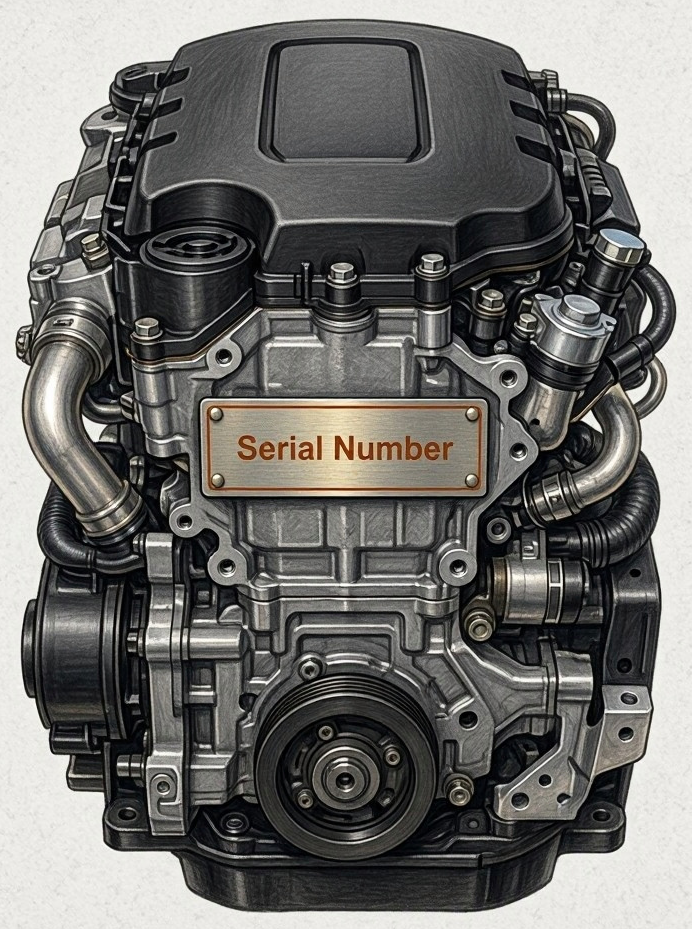
Understanding the exact engine code and serial number of any Cadillac is paramount for a multitude of critical automotive operations, from routine maintenance to complex powertrain overhauls. This comprehensive guide, authored by a team of expert automotive engineers and powertrain specialists, is designed to equip mechanics, parts professionals, vehicle inspectors, and Cadillac owners with the definitive knowledge to accurately locate and decode these vital identifiers. Precision in identifying your engine ensures the correct OEM parts are ordered, preventing costly errors and ensuring optimal vehicle performance. Furthermore, these numbers are indispensable for verifying a vehicle’s history, confirming recall applicability, checking technical service bulletin relevance, and thoroughly inspecting a used vehicle or replacement engine for authenticity and integrity. Misidentification can lead to incorrect repairs, incompatibility issues, and potential safety hazards.
Where to Find the Engine Serial Number and Code on Cadillac Engines
| Engine Series / Layout | Physical Stamp Location | Secondary Sticker / Plate |
|---|---|---|
| Northstar V8 (L37, LD8, LH2) | Located on the rear block flange, adjacent to the transmission bellhousing, typically on the driver’s side. The partial VIN and engine serial are laser-etched directly into the machined surface. | Often found on a white paper label affixed to the cam cover or plenum, sometimes on a metal tag attached to the engine harness or timing cover. |
| High Feature V6 (LY7, LLT, LFX, LGX, LGW) | Most commonly laser-etched on the rear block flange, near the transmission bellhousing, often on the passenger side for easier access in transverse applications, or on the lower left block deck above the oil pan rail for longitudinal applications. | May have a barcode sticker on the front of the intake manifold, valve cover, or timing cover. Service replacement engines may have a tag on the bellhousing bolt boss. |
| 3800 V6 (Series I, II, III) | Stamped on a machined pad on the front of the block, below the passenger-side cylinder head, often behind the power steering pump bracket. In some applications, it may be found on the rear block flange near the transmission. | A metal tag or sticker might be present on the valve cover, front engine cover, or air intake plenum. |
| LS/LT V8 (LQ9, L92, LSA, LT1, LT4) | Laser-etched on the rear block flange, near the transmission bellhousing, generally on the driver’s side. On some variants, it can be on the lower left block deck above the oil pan rail. | A broadcast code label or sticker is typically located on the passenger side valve cover, sometimes on the front timing cover, or on the side of the oil pan. |
| LTG / LSY 2.0T I4 | Laser-etched on the lower left block deck, directly above the oil pan rail, facing upwards or towards the driver’s side. A partial VIN and the engine serial number are present here. | A small barcode sticker or label is often affixed to the front timing cover, intake manifold, or directly on the cylinder head. |
| LTA Blackwing 4.2L Twin-Turbo V8 | The partial VIN and engine serial number are laser-etched on the rear block flange, positioned near the transmission bellhousing, accessible from underneath the vehicle. | A specific engine build sheet label or tag may be present on the top of the intake manifold or the front cam cover, detailing production information. |
| Duramax Diesel (LM2, LZ0) | Laser-etched on the lower left block deck, above the oil pan rail, generally towards the front or middle of the block on the driver’s side. Also on the rear block flange near the bellhousing for a partial VIN. | Emission compliance label on the front of the engine cover, or a specific engine information label on the valve cover or fuel filter housing. |
Physically locating and deciphering Cadillac engine numbers requires a methodical approach. The primary identification on modern Cadillac engines, including the critical partial VIN and engine serial number, is consistently laser-etched onto the rear block flange, situated close to the transmission bellhousing interface, or on the lower left block deck, just above the oil pan rail. For V-engines (Northstar, High Feature V6, LS/LT V8, Blackwing), the rear block flange location is predominant, requiring careful inspection from underneath the vehicle, often necessitating removal of heat shields or exhaust components for clear visibility. On inline engines (LTG/LSY 2.0T, Duramax), the lower left block deck is more common, usually accessible by looking down from the top or peering from the side, near the transmission. These markings are shallow and precise. Before attempting to read, ensure the area is thoroughly cleaned of road grime, oil, and corrosion. Use a mild degreaser and a soft brush or shop towel; avoid abrasive tools like wire brushes, which can damage the delicate etching and obscure the numbers permanently. A strong flashlight and a mirror on an extendable handle are invaluable tools for reaching and illuminating these often recessed areas. In addition to these primary stamped or etched numbers, secondary identification can often be found on barcode stickers or metal data plates on components like the valve covers, intake manifold, or front timing cover. While these stickers provide valuable RPO codes and build data, the block-stamped serial number remains the definitive legal identifier.
How to Decode Cadillac Engine Codes and Serial Numbers
Cadillac engine codes and serial numbers follow a structured logic, primarily based on General Motors’ standardized identification system. The engine code, typically a three-character RPO (Regular Production Option) code, defines the engine model, while the subsequent serial number provides granular detail about its individual production. Understanding this structure is key to accurate identification.
- Engine Family & Generation Prefix: The initial letters of the engine code (e.g., L37, LFX, LT1) directly identify the engine architecture, such as Northstar V8, High Feature V6, or Gen V Small Block. These prefixes denote fundamental characteristics like block material (aluminum vs. iron), valvetrain design, and overall generational advancements.
- Displacement & Cylinder Configuration: While not always explicitly coded within the serial, the RPO code inherently defines the engine’s displacement (e.g., 3.6L, 6.2L) and cylinder count/layout (V6, V8, I4). Subsequent digits or letters within the serial might, in some rare cases, differentiate minor displacement variants if the RPO is shared.
- Fuel System, Aspiration & Valvetrain: Specific characters or an inherent part of the RPO code indicate critical features like direct injection (DI), port injection (PI), turbocharging (T), supercharging (S), or advanced valvetrain technologies such as Variable Valve Timing (VVT) or Active Fuel Management (AFM). For instance, an ‘L’ prefix often denotes a gasoline engine, while a ‘D’ might signify diesel.
- Power Output, Revision & Emissions Spec: Trailing letters or digits, sometimes part of an extended RPO, can denote different horsepower tuning tiers, minor technical revisions within a generation, or specific regional emissions compliance (e.g., ULEV, SULEV). These often indicate calibrations or hardware changes for specific markets or vehicle models.
- Sequential Serial Number String: Following the engine RPO code, the serial number typically comprises a sequence of alphanumeric characters. This string uniquely identifies the individual engine, detailing its manufacturing year, the assembly plant where it was built, and a unique sequential production number. This sequence ensures no two engines share the exact same identifier.
Real-World Cadillac Engine Code Examples
To illustrate the decoding process, let’s break down actual Cadillac engine codes and their corresponding serial numbers, character by character, providing insight into their meaning and typical applications.
- LFX 14H289104:
- LFX: This is the RPO (Regular Production Option) code identifying the engine as a 3.6L High Feature V6, Gen II with Spark Ignition Direct Injection (SIDI) and Variable Valve Timing (VVT). It typically produces around 300-320 horsepower, depending on the application. Common in Cadillac ATS, CTS (2012-2015), XTS (2013-2019), SRX (2012-2016).
- 1: Often indicates the last digit of the model year the engine was produced or certified for. In context, this could represent 2011, 2021, etc. (requires cross-referencing VIN or specific production guides). Assuming a mid-2010s vehicle application, this would likely be 2011.
- 4: This digit can sometimes indicate a specific manufacturing facility’s shift or a month code.
- H: This alphanumeric character typically identifies the specific manufacturing plant where the engine was assembled. ‘H’ might correspond to a plant like St. Catharines, Ontario, Canada, or Spring Hill, Tennessee, USA (GM plant codes vary and can change over time).
- 289104: This is the unique sequential production number, assigned to this specific engine as it moved through the assembly line at the identified plant.
- L92 8K194028:
- L92: This RPO code designates a 6.2L Gen IV Small Block V8 engine, featuring Variable Valve Timing (VVT) and Active Fuel Management (AFM) in some applications. It was commonly used in larger SUVs like the Cadillac Escalade (2007-2014) and certain Cadillac CTS-V models.
- 8: Represents the last digit of the model year the engine was produced or certified for, likely 2008.
- K: This character signifies the engine manufacturing plant. ‘K’ often corresponds to the St. Catharines, Ontario, Canada engine plant, a major producer of GM V8 engines.
- 194028: This is the sequential production number, uniquely identifying this specific L92 engine from its assembly plant.
- LSY 21A049281:
- LSY: This RPO code identifies a 2.0L Twin-Scroll Turbocharged I4 engine, equipped with Direct Injection (DI), Variable Valve Timing (VVT), and Active Fuel Management (AFM). It’s a key engine in modern Cadillac applications like the CT4 (2020-present) and CT5 (2020-present).
- 2: Likely signifies the last digit of the model year, here indicating 2022.
- 1: This can be an internal GM production identifier or a secondary year digit, confirming the decade.
- A: This letter denotes the engine assembly plant. ‘A’ commonly refers to the Romulus, Michigan, USA engine plant, a significant GM powertrain facility.
- 049281: This is the unique sequential production number assigned to this specific LSY engine.
- L37 04B194820:
- L37: This RPO code identifies a high-output version of the 4.6L Northstar V8 engine, known for its dual overhead camshafts (DOHC) and four valves per cylinder. It was typically found in sportier Cadillac models like the STS, Seville SLS/Eldorado Touring Coupe (ETC), and DTS, often producing over 300 horsepower.
- 0: This digit often represents the last digit of the model year, in this context likely 2000 or 2010. Given the typical production span of the L37, 2000 is a strong possibility.
- 4: This character could be an internal plant code or a month indicator within the production year.
- B: This letter indicates the manufacturing plant. ‘B’ has historically been associated with the Romulus, Michigan, USA engine plant, which produced a significant number of Northstar engines.
- 194820: This is the unique sequential production number for this particular L37 engine.
How to Identify Production Year and Manufacturing Plant
Determining the precise manufacturing year, month, assembly plant, and even specific engineering revision of a Cadillac engine often involves cross-referencing multiple data points. The engine serial number itself usually contains key indicators: the first one or two digits often represent the model year (e.g., ‘8’ for 2008, ‘1’ for 2011/2021), and an embedded letter (e.g., ‘H’, ‘K’, ‘A’, ‘B’) corresponds to a specific General Motors assembly plant. A more detailed breakdown of the year might be present as a Julian date code within the serial, though this is less common on the primary engine serial and more typical on casting numbers. For definitive year and plant information, especially when the serial is ambiguous (e.g., a ‘1’ could be 2011 or 2021), cross-referencing with the vehicle’s VIN (Vehicle Identification Number) is crucial. The tenth character of the VIN directly decodes the vehicle’s model year. While the engine’s serial date might not perfectly align with the vehicle’s model year (engines are often built ahead of vehicle assembly), it should fall within a reasonable timeframe. Additionally, many engine components feature casting date clocks (a circle with digits indicating year and an arrow for month/day) which, while not the engine serial, can provide further corroborating evidence for the component’s production period. For service replacement engines, a “service part” identifier or different numbering scheme might be used, in which case the original engine’s VIN tag on the block would be absent, and a service block would have its own serial number often denoting its replacement status.
Common Mistakes When Checking Cadillac Engine Numbers
- Confusing Casting Numbers with the Serial Number: A frequent error is mistaking raised, sand-cast or die-cast foundry part numbers (often starting with ’12’ or ‘8’) found on various parts of the block, cylinder heads, or intake manifold for the actual engine serial number. These casting numbers are for component identification during manufacturing and spare parts ordering, not for unique engine identification. The true engine serial number is always either stamped or laser-etched onto a flat, machined pad on the block itself, distinct from the rougher texture of cast surfaces.
- Corrosion, Paint, and Road Grime Obscuration: Cadillac engine serial numbers, especially laser-etched ones, are often shallow and susceptible to obscuration by years of dirt, oil, rust, and even factory paint. Attempting to read through heavy grime or corrosion can lead to misinterpretation. Always thoroughly clean the area using a mild degreaser and a non-abrasive brush or cloth. Never use harsh scraping tools or wire brushes, as this can permanently damage or erase the delicate etchings. Patience and good lighting are essential.
- Short-Block or Remanufactured Engine Swaps: When an engine has been replaced with a factory short-block, long-block, or a remanufactured unit, the serial number on the block will no longer match the vehicle’s original VIN. Factory replacement engines typically carry a unique service serial number, which might indicate its remanufactured status (e.g., ‘REMAN’ prefix or specific number pattern). It is critical to be aware of such swaps, as they affect vehicle history, warranty, and sometimes emissions compliance. Always check for signs of engine replacement (e.g., different paint, new gaskets, service tags) if the block serial doesn’t align with the vehicle’s age.
- Misreading Similar Alphanumeric Characters: The stamping or etching process, combined with environmental wear, can sometimes make similar-looking alphanumeric characters difficult to distinguish. Common confusions include ‘0’ (zero) and ‘O’ (letter O), ‘1’ (one) and ‘I’ (letter I), ‘5’ (five) and ‘S’ (letter S), or ‘8’ (eight) and ‘B’ (letter B). Always double-check with multiple angles and lighting conditions. If possible, compare a partial reading with known GM serial number formats for similar engines to infer the correct character.