
Many of the company’s well-known SUVs, including Kyron, Actyon, and Actyon Sports, were equipped with the 2.0-liter SsangYong D20DT diesel engine, which was manufactured in Korea between 2005 and 2012. Such a power unit can be modified for both Euro 3 and Euro 4 environmental standards.
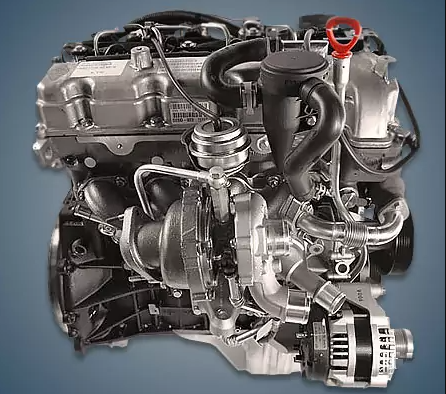
D16DTF, D20DT, D20DTF, D20DTR, D22DTF, D22DTR, D23DT, D27DT, D27DTP, and D29DT are Ssangyong diesel engines.
The Kyron SUV made its debut with a new 2.0-liter diesel engine at the end of 2005. With its in-line 4-cylinder cast-iron block, Delphi Common Rail fuel system, double-row chain timing chain drive, aluminum 16-valve cylinder head with hydraulic lifters, and Garrett GTB1549V turbocharger, this unit had a very traditional design.
This diesel engine received additional injectors and an upgrade to Euro 4 in 2008. The aluminum EGR cooler, which replaces the previous cast iron one, is what sets the new engine apart.
Specifications
| Production years | 2005-2012 |
| Displacement, cc | 1998 |
| Fuel system | Common Rail |
| Power output, hp | 141 |
| Torque output, Nm | 310 |
| Cylinder block | cast iron R4 |
| Block head | aluminum 16v |
| Cylinder bore, mm | 86.2 |
| Piston stroke, mm | 85.6 |
| Compression ratio | 17.5 |
| Hydraulic lifters | yes |
| Timing drive | chain |
| Phase regulator | no |
| Turbocharging | Garrett GTB1549V |
| Recommended engine oil | 5W-30, 5W-40 |
| Engine oil capacity, liter | 7.5 |
| Fuel type | diesel |
| Euro standards | EURO 3/4 |
| Fuel consumption, L/100 km (for SsangYong Kyron 2009) — city — highway — combined |
9.8 6.2 7.5 |
| Engine lifespan, km | ~400 000 |
The engine was installed on:
- SsangYong Actyon 1 (CJ) in 2005 – 2010;
- SsangYong Actyon Sports 1 (QJ) in 2006 – 2012;
- SsangYong Kyron 1 (DJ) in 2005 – 2012.
Disadvantages of the SsangYong D20DT engine
Fuel quality is crucial for the Delphi Common Rail fuel system, and using subpar diesel fuel quickly results in injector or injection pump failure. The issue is made worse by the fact that injectors frequently become so bonded to the cylinder head that they must be drilled out, which increases the risk of head cracks.
Here, a dependable two-row chain with good resources performs the timing drive; this is not the case for its hydraulic tensioner. It occasionally covers less than 50,000 kilometers. A weak drive belt tensioner is another engine weakness.
An unreliable turbine vacuum modulator, an EGR valve that quickly clogs with soot, a continuously leaking oil heat exchanger, and hydraulic compensators—which are highly sensitive to the quality of the oil and the schedule for changing it—are among the other troublesome parts of the motor.