
The second generation of the German company’s most well-known models, the Golf and Jetta, were equipped with the 1.6-liter Volkswagen PN carburetor engine, which was manufactured between 1985 and 1992. The Audi 80’s B3 body had a comparable power unit installed under a different PP index.
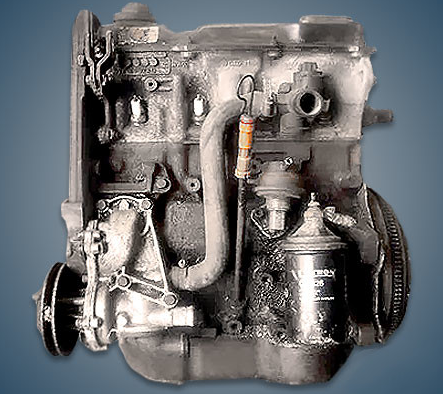
PN, AFT, and ADP are part of the EA827 1.6l series.
Specifications
| Production years | 1985-1992 |
| Displacement, cc | 1595 |
| Fuel system | carburetor |
| Power output, hp | 69 |
| Torque output, Nm | 118 |
| Cylinder block | cast iron R4 |
| Block head | aluminum 8v |
| Cylinder bore, mm | 81 |
| Piston stroke, mm | 77.4 |
| Compression ratio | 9.0 |
| Features | SOHC |
| Hydraulic lifters | yes |
| Timing drive | belt |
| Phase regulator | no |
| Turbocharging | no |
| Recommended engine oil | 5W-40 |
| Engine oil capacity, liter | 4.0 |
| Fuel type | petrol |
| Euro standards | EURO 1 |
| Fuel consumption, L/100 km (for VW Golf 2 1988) — city — highway — combined |
10.2 6.4 7.7 |
| Engine lifespan, km | ~300 000 |
The engine was installed on:
- Volkswagen Golf 2 (1G) in 1985 – 1992;
- Volkswagen Jetta 2 (1G) in 1985 – 1992.
Disadvantages of the VW PN engine
The majority of this motor’s malfunctions are caused by aging, despite its straightforward structure and dependability;
The primary engine issues are associated with Pierburg 2EE carburetor malfunctions;
The ignition system’s candles, distributor, and high-voltage wires are the next to fail.
Hydraulic lifters can knock closer to 100,000 kilometers if you reduce your oil consumption;
The unit’s cooling system pipes and thermostat are its weak points.