
The second generation Audi A3 and seat models like the Altea or Toledo 3 were equipped with the Audi BYT or A3 1.8 TFSI 1.8-liter turbo engine, which was assembled between January and June 2007. Sometimes referred to as a generation gen0, this unit was the first in the EA888 series.
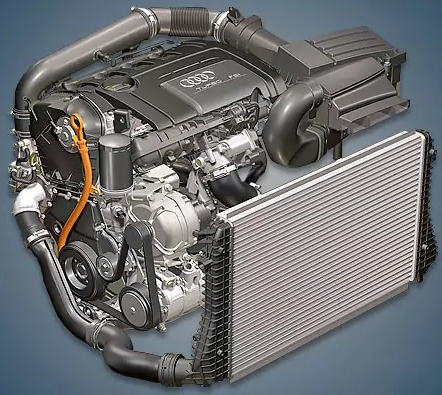
The EA888 gen1 series includes: BYT, BZB, CABA, CABB, CABD, CAWA, CAWB, CBFA, CCTA, CCTB.
Specifications
| Production years | 2007 |
| Displacement, cc | 1798 |
| Fuel system | direct injection |
| Power output, hp | 160 |
| Torque output, Nm | 250 |
| Cylinder block | cast iron R4 |
| Block head | aluminum 16v |
| Cylinder bore, mm | 82.5 |
| Piston stroke, mm | 84.2 |
| Compression ratio | 9.6 |
| Features | DOHC |
| Hydraulic lifters | yes |
| Timing drive | chain |
| Phase regulator | on the intake shaft |
| Turbocharging | KKK K03 |
| Recommended engine oil | 5W-30 |
| Engine oil capacity, liter | 4.6 |
| Fuel type | petrol |
| Euro standards | EURO 4 |
| Fuel consumption, L/100 km (for Audi A3 2007) — city — highway — combined |
8.7 5.3 6.6 |
| Engine lifespan, km | ~230 000 |
| Weight, kg | 154 |
The engine was installed on:
- Audi A3 2 (8P) in 2007;
- Seat Altea 1 (5P) in 2007;
- Seat Toledo 3 (5P) in 2007.
Disadvantages of the Audi BYT engine
Information regarding the dependability of this engine, which was only manufactured for six months, is at least
The manufacturer modified the crankcase ventilation system during modernization, most likely as a result of its issues;
Every engine in this series has a limited timing chain resource—sometimes less than 100,000 kilometers;
The catalyst, pump, and ignition coils are the engines’ weak points; the network frequently complains about floating speed caused by soot on the intake valves.