
Overview & Design Features
The Acura B18A1 is a 1.8-liter (1834 cc) naturally aspirated, inline four-cylinder engine produced by Honda for its premium Acura division. Primarily featured in the first and second-generation Acura Integra models, this engine represented a significant step in Honda’s performance offerings in the late 1980s and early 1990s. Renowned for its robust construction, reliability, and free-revving nature, the B18A1 laid much of the groundwork for Honda’s subsequent DOHC engine development, becoming a popular choice for enthusiasts and a foundational piece in the brand’s performance legacy.
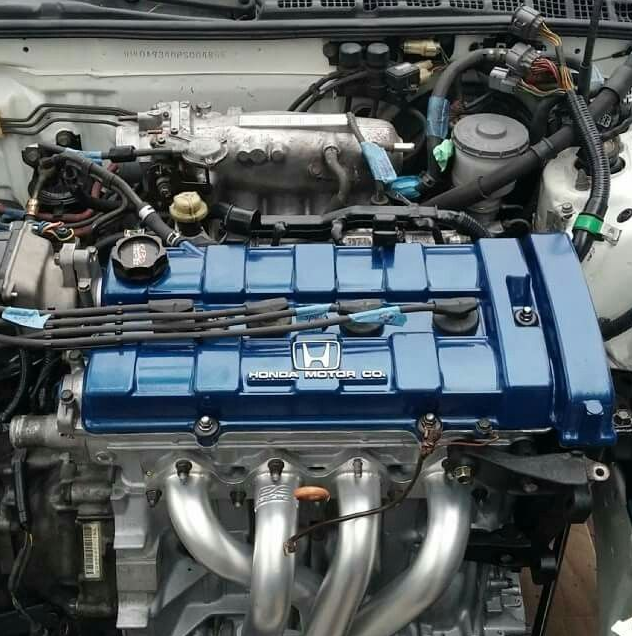
Engineered for durability and efficiency, the B18A1 features an aluminum alloy cylinder head paired with a cast-iron open-deck cylinder block, providing a sturdy yet relatively lightweight foundation. It utilizes a dual overhead camshaft (DOHC) valvetrain with four valves per cylinder, ensuring efficient airflow for both intake and exhaust, but notably lacks Honda’s VTEC variable valve timing system. Fuel delivery is managed by a multi-point fuel injection (MPFI) system, precisely controlled by an engine control unit (ECU) to optimize performance and fuel economy. Its design prioritizes linear power delivery and a broad torque curve, characteristic of Honda’s non-VTEC DOHC engines of the era.
This specific iteration of the B-series engine was officially deployed in the North American market primarily in the 1990-1993 Acura Integra GS, LS, and RS models (chassis code DA9/DB1). A minor revision in 1992 increased horsepower slightly, distinguishable by the casting stamp on the cylinder head and a revised intake manifold design.
Technical Specifications
| Displacement (cc) | 1834 |
| Max Power (hp (kW) @ RPM) | 140 hp (104 kW) @ 6300 RPM (1992-1993 models) |
| Max Torque (Nm (kg*m) @ RPM) | 164 Nm (16.7 kg*m) @ 5000 RPM |
| Fuel Type | Unleaded Gasoline (RON 91 recommended) |
| Fuel Consumption (l/100 km) | Approx. 8.5 – 9.5 (Combined) |
| Engine Type | Inline 4-cylinder, DOHC |
| Compression Ratio | 9.2:1 |
| Cylinder Bore (mm) | 81 |
| Piston Stroke (mm) | 89 |
| Valvetrain | DOHC, 16 valves |
| Valves per Cylinder | 4 |
| Additional Info | Multi-Point Fuel Injection (MPFI), Non-VTEC |
Common Problems & Reliability
The B18A1 is generally regarded as a highly reliable engine, often exceeding 200,000 miles (320,000 km) with diligent maintenance. However, due to its age and widespread use, several common issues can arise. One frequent problem involves oil leaks, particularly from the distributor O-ring and the rear main seal, which typically manifest as oil drips under the vehicle. Worn valve stem seals can also contribute to increased oil consumption and visible blue smoke upon startup, especially in higher mileage examples. Furthermore, the crankshaft pulley (harmonic balancer) can delaminate over time, leading to belt misalignment or squealing. Timely replacement of these components is crucial to maintain engine integrity.
Maintenance Tips & Service Schedule
Proactive maintenance is key to the longevity of the B18A1 engine. Regular engine oil and filter changes are paramount; using a high-quality 5W-30 or 10W-30 synthetic blend or full synthetic oil every 5,000 km (3,000 miles) or 6 months is recommended. Spark plugs should be inspected and replaced every 60,000-80,000 km (30,000-50,000 miles). The timing belt, along with the water pump and tensioner, must be replaced every 100,000-105,000 km (60,000-65,000 miles) or every 7 years, whichever comes first, as failure can lead to catastrophic engine damage. Coolant flushes are advised every 2-3 years or 50,000 km (30,000 miles). Additionally, a valve clearance inspection and adjustment should be performed every 100,000 km (60,000 miles) to ensure optimal engine breathing and quiet operation.
Conclusion
The Acura B18A1 engine stands as a testament to Honda’s engineering prowess from its era, offering a combination of respectable performance, excellent fuel economy for its class, and legendary reliability. For a used vehicle buyer, an Integra equipped with a B18A1 can be a safe and rewarding choice, provided a comprehensive service history is available and regular maintenance has been observed. Its simple, robust design makes it relatively easy and inexpensive to maintain, positioning it as a highly durable and capable powerplant for enthusiasts and daily drivers alike.