
Overview & Design Features
The Acura J37A5 engine is a prominent member of Honda’s J-series V6 engine family, manufactured by Acura, the luxury vehicle division of Honda. This 3.7-liter (3664 cc) naturally aspirated V6 power plant is recognized for its blend of performance, refinement, and characteristic Honda reliability. It represents an evolution of the J-series architecture, integrating advanced technologies for enhanced power delivery and fuel efficiency within its segment.
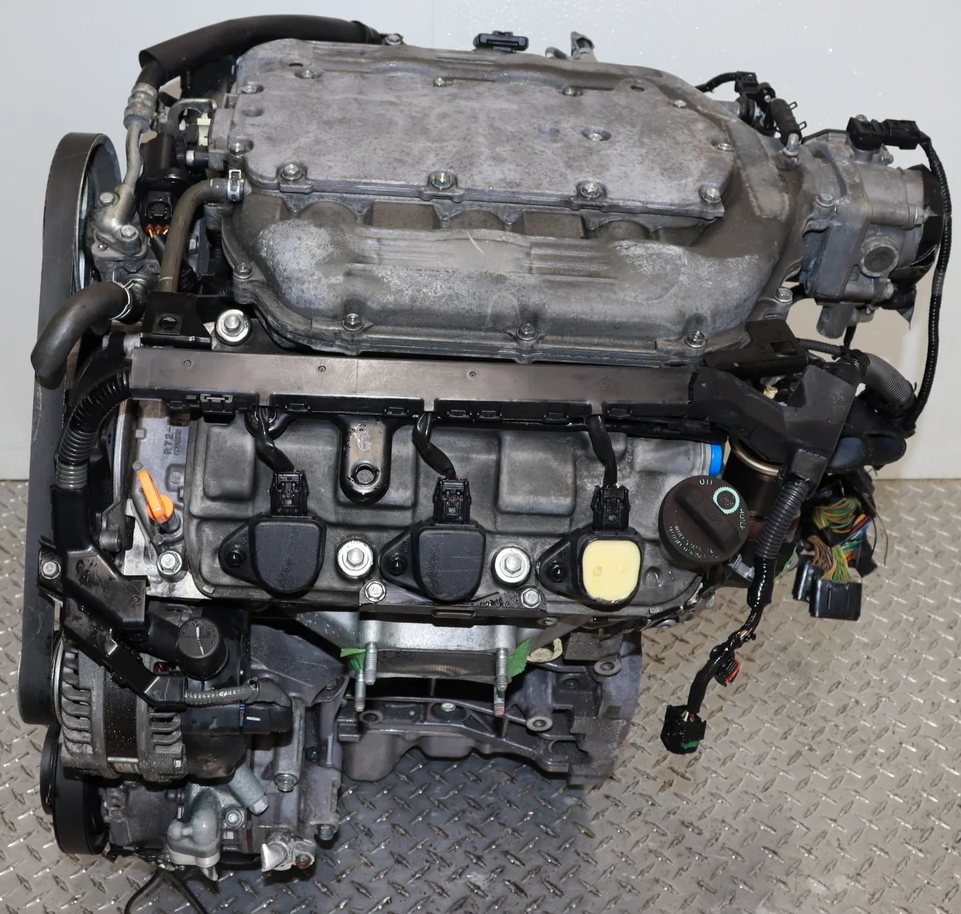
Engineered with an all-aluminum block and aluminum cylinder heads, the J37A5 features a Single Overhead Camshaft (SOHC) design with four valves per cylinder, totaling 24 valves. A cornerstone of its design is Honda’s Variable Valve Timing and Lift Electronic Control (VTEC) system, which optimizes valve operation for improved breathing across the RPM range. The engine utilizes multi-point sequential fuel injection (PFI) and incorporates Variable Cylinder Management (VCM), a technology designed to deactivate cylinders under light load conditions to improve fuel economy. Drive-by-wire throttle control further refines accelerator response and integration with other vehicle systems.
The J37A5 engine was primarily deployed in several key Acura models. It powered the Acura MDX from 2007 to 2013, serving as the sole engine option for the performance-oriented SUV. In the Acura TL, it was utilized in the SH-AWD (Super Handling All-Wheel Drive) models from 2009 to 2014, offering a performance advantage over the front-wheel-drive variants. Additionally, the J37A5 found its way into the Acura RL sedan from 2009 to 2012, underscoring its role in Acura’s luxury and performance lineup during its production years.
Technical Specifications
| Specification | Value |
|---|---|
| Displacement (cc) | 3664 cc |
| Max Power (hp (kW) @ RPM) | 305 hp (227 kW) @ 6300 RPM |
| Max Torque (Nm (kg*m) @ RPM) | 370 Nm (37.7 kg*m) @ 5000 RPM |
| Fuel Type | Premium Unleaded (91+ RON) |
| Fuel Consumption (l/100 km) | Approximately 11.5 – 13.0 l/100 km (combined, model dependent) |
| Engine Type | Naturally Aspirated V6, Gasoline |
| Compression Ratio | 11.2:1 |
| Cylinder Bore (mm) | 93 mm |
| Piston Stroke (mm) | 90 mm |
| Valvetrain | SOHC VTEC |
| Valves per Cylinder | 4 |
| Additional Info | Variable Cylinder Management (VCM) |
Common Problems & Reliability
The J37A5 engine, while fundamentally reliable, has specific characteristics and potential issues primarily related to its Variable Cylinder Management (VCM) system. One common concern is increased oil consumption, which can manifest as the VCM system activates and deactivates cylinders. This can lead to spark plug fouling, particularly on the cylinders that are frequently deactivated, resulting in misfires and check engine lights. Prolonged VCM operation without proper maintenance can also contribute to piston ring wear. Another issue observed is the failure of the VCM pressure switch, which can cause the VCM system to malfunction or trigger dashboard warning lights.
Beyond VCM, typical high-mileage concerns include minor oil leaks from valve cover gaskets or the rear main seal, which are common wear items on many engines over time. The engine utilizes a timing belt, which requires periodic replacement. Neglecting timing belt service can lead to catastrophic engine damage if the belt fails. Under proper maintenance and timely address of VCM-related concerns, the Acura J37A5 engine is known to achieve a service life exceeding 200,000 miles (approximately 320,000 km) before requiring major overhaul, with many examples surpassing 300,000 miles.
Maintenance Tips & Service Schedule
Diligent maintenance is crucial for the longevity and optimal performance of the J37A5 engine. Regular oil changes are paramount, utilizing a high-quality synthetic oil with a viscosity typically recommended as 0W-20 or 5W-20, according to the manufacturer’s specifications. Intervals should adhere to Acura’s Maintenance Minder system, generally falling between 5,000 and 7,500 miles (8,000 to 12,000 km). Consistent oil level monitoring is especially important for engines equipped with VCM to mitigate potential oil consumption issues.
The timing belt is a critical service item requiring replacement every 105,000 miles (168,000 km) or 7 years, whichever comes first. This service should comprehensively include the water pump, tensioner, and idler pulleys. Spark plugs, typically iridium-tipped, should be replaced around 100,000 miles (160,000 km). The coolant should be flushed and replaced with Honda Type 2 Long-Life Coolant every 10 years or 120,000 miles (192,000 km) for the initial change, then every 5 years or 60,000 miles (96,000 km) thereafter. Addressing any VCM-related symptoms promptly, such as misfires or excessive oil consumption, often involves software updates, VCM deactivation devices, or specific component replacements, which can prevent more significant issues.
Conclusion
The Acura J37A5 engine stands as a robust and generally reliable V6 power unit, upholding Honda’s reputation for engineering excellence. For a used vehicle buyer, it represents a safe choice, particularly if its service history is well-documented. While the Variable Cylinder Management (VCM) system is a known area for potential maintenance, diligent adherence to the recommended service schedule—especially regarding oil changes and the timing belt—significantly enhances the engine’s long-term durability. When properly cared for, vehicles equipped with the J37A5 engine can provide many years and miles of smooth, powerful, and dependable operation.