
From 2008 to 2013, the company produced the VW CBFA 2.0 TSI 2.0-liter turbo engine, which was exclusively fitted to American-market models like the Eos, Golf GTI, and Passat CC. The motor was developed in accordance with California’s stringent SULEV environmental regulations.
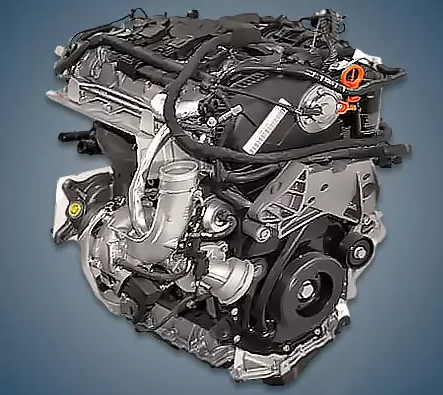
BYT, BZB, CABA, CABB, CABD, CAWA, CAWB, CBFA, CCTA, and CCTB are all part of the EA888 gen1 series.
Specifications
| Production years | 2008-2013 |
| Displacement, cc | 1984 |
| Fuel system | direct injection |
| Power output, hp | 200 |
| Torque output, Nm | 280 |
| Cylinder block | cast iron R4 |
| Block head | aluminum 16v |
| Cylinder bore, mm | 82.5 |
| Piston stroke, mm | 92.8 |
| Compression ratio | 9.6 |
| Features | DOHC |
| Hydraulic lifters | yes |
| Timing drive | chain |
| Phase regulator | on the intake shaft |
| Turbocharging | KKK K03 |
| Recommended engine oil | 5W-30 |
| Engine oil capacity, liter | 4.6 |
| Fuel type | petrol |
| Euro standards | SULEV |
| Fuel consumption, L/100 km (for VW Passat CC 2012) — city — highway — combined |
12.1 6.4 8.5 |
| Engine lifespan, km | ~280 000 |
| Weight, kg | 152 |
The engine was installed on:
- Audi A3 2 (8P) in 2008 – 2013;
- Audi TT 2 (8J) in 2008 – 2010;
- Volkswagen Golf 5 (1K) in 2008 – 2009; Golf 6 (5K) in 2009 – 2013;
- Volkswagen Eos 1 (1F) in 2008 – 2009;
- Volkswagen Passat CC (35) in 2008 – 2012.
Disadvantages of the VW CBFA engine
The timing chain’s limited resources – sometimes less than 100,000 km – are the primary source of complaints.
The engine’s erratic performance as a result of soot on the valves comes in second.
Contamination of the swirl flaps is frequently the cause of floating revolutions.
Lubricant consumption results from the regular oil separator’s frequent failures.
Unreliable ignition coils and a catalyst are the motor’s weak points.